Seraph Abdiel’s Scorn of Satan’s Rebels
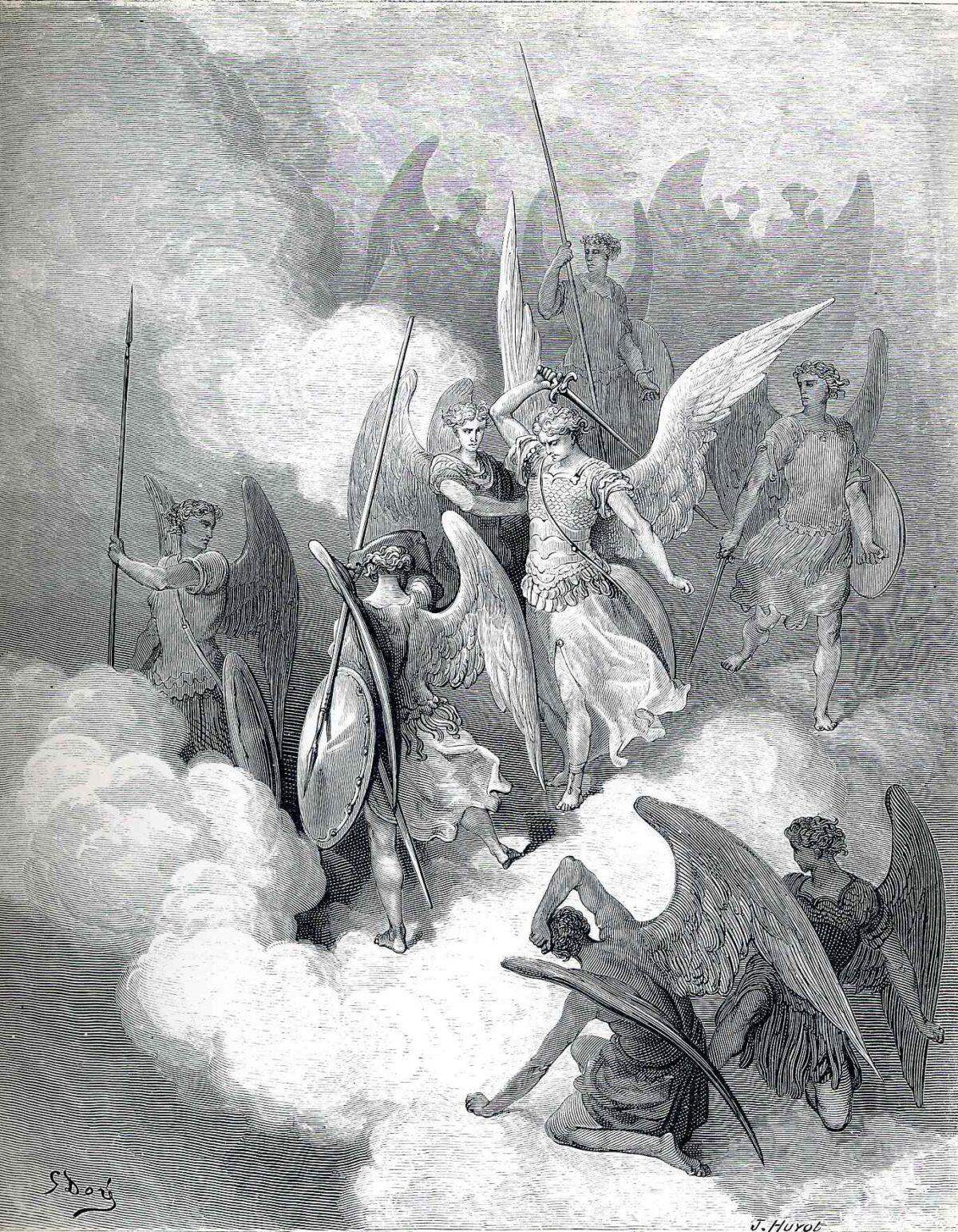
My first favorite line comes from perhaps one of my all-time favorite passages of poetry. It comes at the very end of Book V: “On those proud Towers to swift destruction doomed.”
The first part is a phrase—without a verb and therefore static, that is, Satan is trapped in his own mental state; but the second is a clause. It ends with a verb, “doomed.” And so, the shattering movement that finally, at the end, destroys the towers.
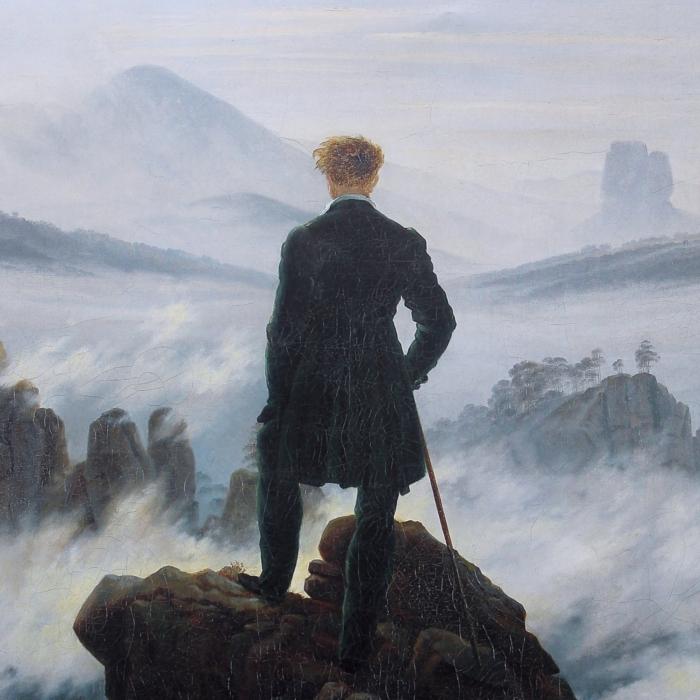
Furthermore, Milton fuses architectural grandeur, martial precision, and prophetic doom into a single line. The sonic contrasts (the long vowels) of the grand “proud” and “towers” versus the military percussive consonants, the d- and t-sounds in clusters, and then the metrical weight, the inverted syntax of “doomed” coming at the end. In addition, the symbolic freight of “proud Towers,” recalling Babel, all work together to make the fall of Satan’s stronghold feel both inevitable and imminent.
So spake the Seraph Abdiel, faithful found Among the faithless, faithful only he; Among innumerable false, unmoved, Unshaken, unseduced, unterrified, His loyalty he kept, his love, his zeal; Nor number, nor example with him wrought To swerve from truth, or change his constant mind, Though single. From amidst them forth he passed, Long way through hostile scorn, which he sustained Superior, nor of violence feared aught; And, with retorted scorn, his back he turned On those proud Towers to swift destruction doomed.
Isn’t that purely sublime? It does not merely describe courage; it enacts it in the verse. We feel what being heroic means.Satan’s Hell
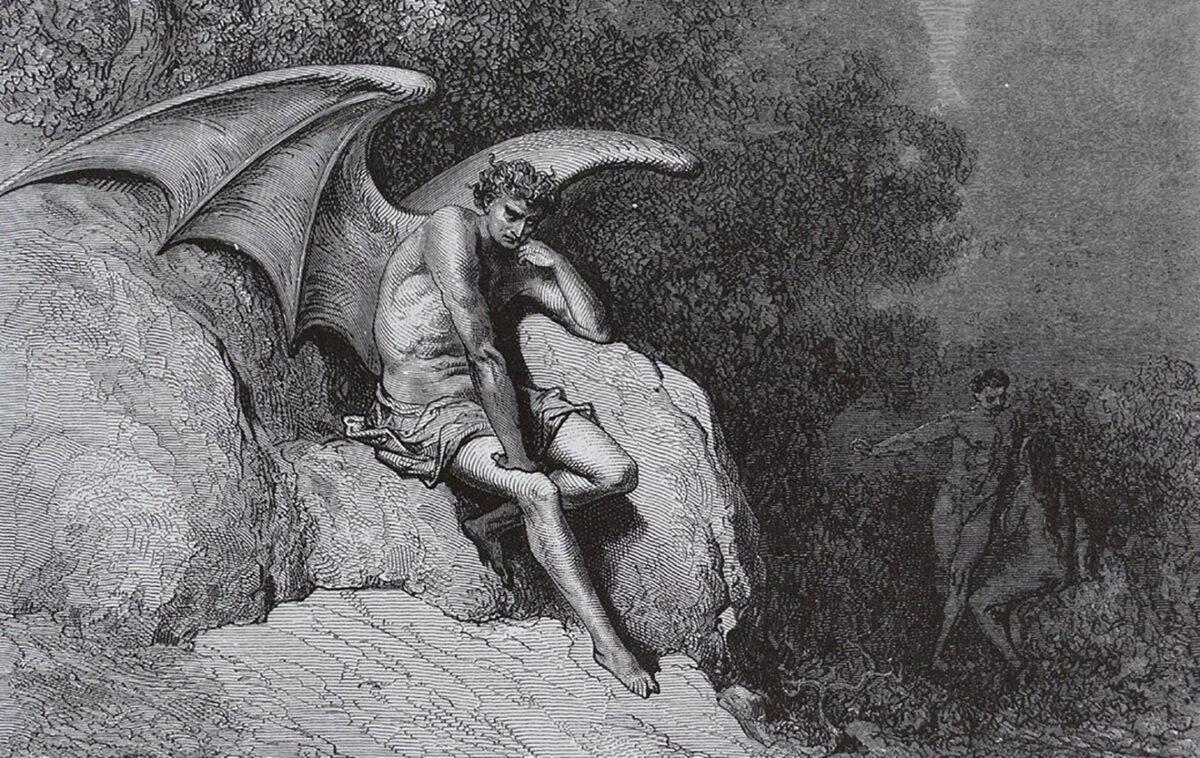
A second favorite line—by way of contrast with Abdiel’s heroics—is from Book IV, line 20: “The Hell within him; for within him Hell.”
Here, Satan has newly landed on Earth in order to tempt and destroy humanity; in order to do so, he has escaped the literal place called Hell. But what the line reveals is that he has not escaped it at all: He has carried Hell inside himself. Wherever he is, that place is and becomes Hell.
Why, this is hell, nor am I out of it. Think’st thou that I that saw the face of God And tasted the eternal joys of heaven Am not tormented with ten thousand hells, In being deprived of everlasting bliss?
This is a stunning theological insight that Milton picks up on, too; Hell is not just a place but a state of mind. And indeed, it does give Satan an aura of tragic grandeur. We can, almost, pity him. There is a dark interiority and exposure through the language of Satan’s psychology and torment, both pithily exposed: Notice how the two pronouns, “him,” are encased—on both sides of the line— with “hell.” Whichever way he goes—to the left or the right—he is still in hell!Christ Is at the Center
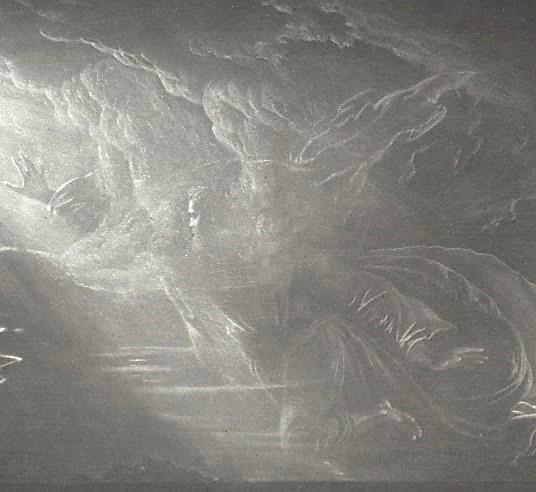
My third and final example here is in Book VI, lines 761 to 762: “Of radiant urim, work divinely wrought,/ Ascended; at his right hand Victory/ Sat ...”
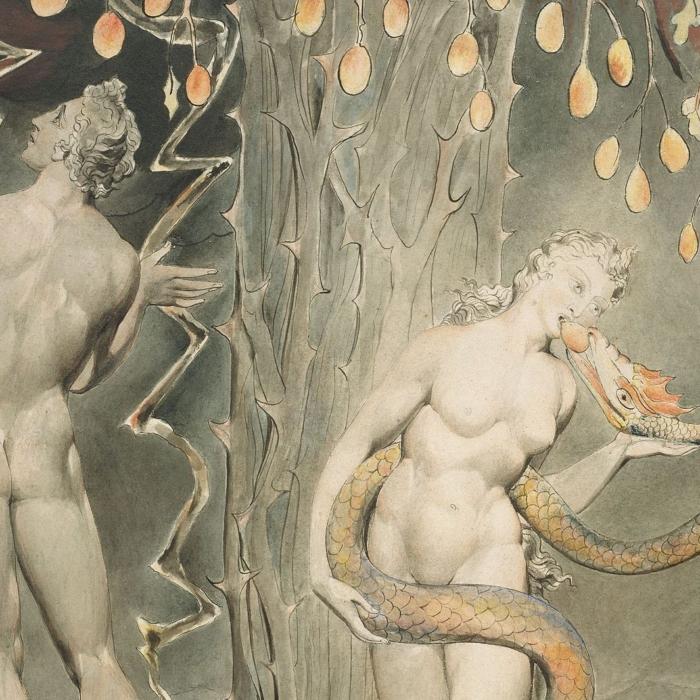
“Ascended, at his right hand Victory” doesn’t sound like much, after all the wonderful mimetic effects we have described previously. But let me explain why this line is so powerful. Since the time of English poet William Blake, readers have taken a view that the hero of “Paradise Lost” is Satan, not God, not Adam, not Christ, but the Devil himself.
If this were true, it would mean the whole purpose of Milton’s epic, which he describes as “to justify the ways of God to man,” would be fatally undermined. It is certainly true that Satan is a dynamic and fascinating presence in the poem, but is he actually the hero?
Milton had a numerologist’s sensitivity to number and proportion. The final edition of “Paradise Lost” was in 12 books to align it with the classical epic tradition (“Aeneid”) and with the biblical symbolism of 12 (tribes of Israel, apostles). But originally, the first edition was in 10 books (symbolically resonant with completeness, law, and the Ten Commandments).
Milton’s Power
To read “Paradise Lost” is to immerse oneself in the grandest of poetic enterprises, one that not only aspires to be epic but achieves it with a scale and precision unmatched in English literature. These three one-liners are not isolated flourishes, but flashes of brilliance within a vast, architectonic structure of profound theological, psychological, and philosophical insight.Milton’s verse offers us more than literary beauty: It challenges us to wrestle with questions of freedom, loyalty, inner torment, and cosmic justice.
In an age often impatient with difficulty and depth, reading “Paradise Lost” is a countercultural act of attention and imagination. For those willing to enter its demanding rhythms and elevated diction, the reward is immense: a renewed sense of language’s power and of poetry’s capacity to reveal the human condition in all its grandeur and fallibility.
We should read Milton not because he is old or great, but because he still speaks. In an early prose work, written long before “Paradise Lost,” he hoped, saying that he may “perhaps leave something so written to aftertimes, as they shall not willingly let it die.” Amen to that.