This copy is for your personal, non-commercial use only. Distribution and use of this material are governed by our Subscriber Agreement and by copyright law. For non-personal use or to order multiple copies, please contact The Epoch Times Reprints.
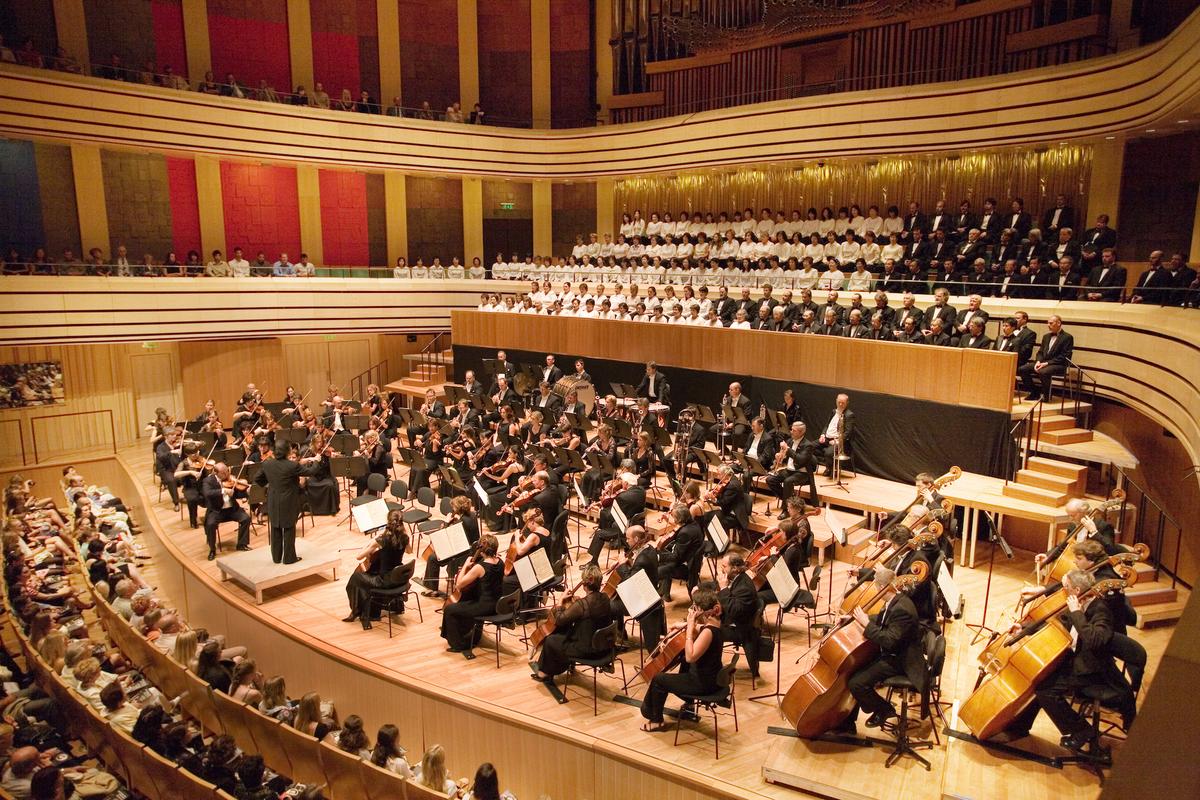
Russian director Dmitri Liss directs musicians of the Ural Philharmonic Orchestra (Orchestre Philharmonique de l'Oural) on Jan. 31, 2018 in Nantes, western France. LOIC VENANCE/AFP/Getty Images
Anyone who searches the internet with the question, “Is classical music dying?,” will encounter hundreds of articles and blogs that take a position on this question.
What most of these people really mean is that classical music isn’t popular, relatively speaking. For example, while the cellist Yo-Yo Ma has sold over 2 million albums worldwide and by most standards, is wildly successful as one of the biggest names in classical music today, his sales still pale in comparison to chart-topping pop stars of the past like Michael Jackson or Madonna.
However, one can measure popularity in different ways. In absolute terms, more people are performing and listening to the great composers than they ever have. There are so many recordings of great classical works that even the most die-hard connoisseur finds it impossible to keep track of them all. The following brief list summarizes a few of the most recorded pieces in music history.
Learning the sounds of different instruments is the first step to truly appreciating classical music. Ferenc Szelepcsenyi/Shutterstock
Pachelbel’s ‘Canon in D Major,’ P 37
Poor Johann Pachelbel. He composed more than 500 works in his lifetime, and now people only listen to one. It has been suggested that he wrote his famous Canon in D Major to celebrate the wedding of Johann Christoph Bach, Johann Sebastian’s older cousin. No one knows for sure, but since Pachelbel was friends with the Bach family, this theory is plausible. If it’s true, Pachelbel might be reassured if he knew that his piece is now used to celebrate weddings all over the world.
The Canon, in which one melody is imitated by two other voices in overlapping layers, is certainly memorable. Just as good, if less famous, is the Gigue for three violins, a lively dance movement that Pachelbel wrote to accompany the Canon.
According to Presto Music, a website that maintains an exhaustive discography of classical works, the Canon has been recorded more than 200 times. In the words of the producers of a 1983 recordingby the Academy of Ancient Music, it’s usually heard “with the gratuitous addition of viola parts.”
Those who wish to listen to it in its original purity should seek out arrangements for three violins and basso continuo.
Mozart’s ‘Requiem in D Minor,’ K 626
Wolfgang Amadeus Mozart has sold over 500 million records worldwide. This is roughly comparable with the Beatles, when considering their sales across all formats. If the website “chartmasters” included dead classical composers in its ranking of the most successful artists, the best ones would, no doubt, knock many modern musicians off the list. In 2016, a complete box set of Mozart’s works released by Decca and Deutsche Grammophon topped the Billboard charts for the year, even beating out Beyonce.
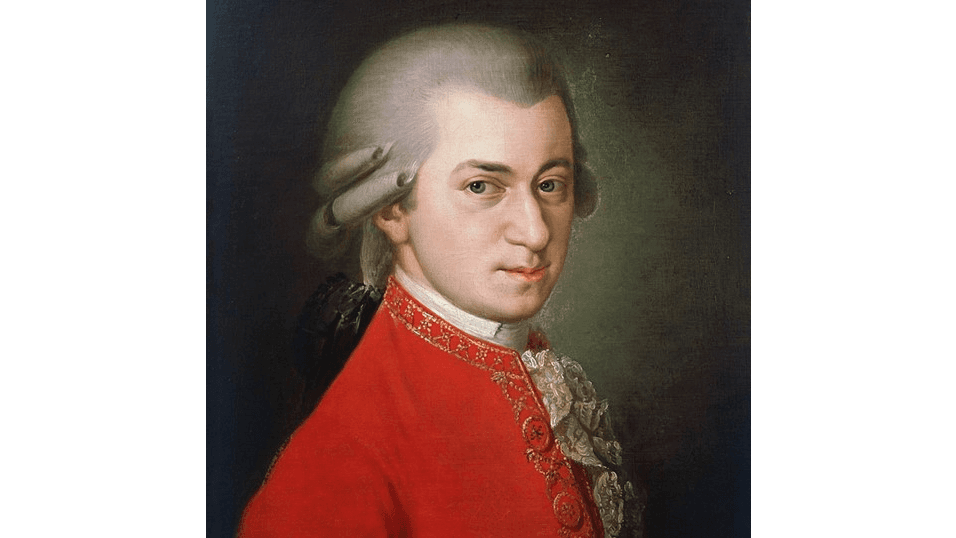
Posthumous painting of Mozart by Barbara Krafft in 1819. Public Domain
Of all Mozart’s works, his most adapted is probably his great, unfinished “Requiem.” Presto Music lists 281 recordings.
When Mozart died in 1791, only two of the work’s sections were complete, though he left sketches for others. Its unfinished status has prompted different composers to orchestrate the movements, relying on their own interpretations of how Mozart himself might have done it.
The most widely performed version today was written by Mozart’s pupil, Franz Süssmayr, though there are approximately 15 different versions in all.
Tchaikovsky’s 1812 Overture, Op. 49
Pyotr Ilyich Tchaikovsky is arguably Russia’s greatest composer. He wrote the world’s most celebrated and frequently performed ballets, and his wonderful melodies have been immortalized in countless films.
His most popular work of all, though, is the 1812 overture, which celebrates Russia’s victory over Napoleon. With nearly 300 recordings, it’s one of the most performed pieces in the classical repertoire.
"Napoleon in His Study at the Tuileries," 1812, by Jacques-Louis David. Public Domain
The 1812 overture has been arranged numerous times for concert band, emphasizing the piece’s martial character and making it a favorite at July Fourth celebrations.
Tchaikovsky’s original score calls for 16 cannon shots to be fired at the climax. Most arrangements have used pre-recorded artillery fire. For Antal Dorati’s version with the Minneapolis Symphony Orchestra, military effects were separately recorded at West Point and mixed in later. The curator of the West Point Museum, Gerald C. Stowe, used a French cannon made in Douay, France, in 1775.
Beethoven’s ‘Moonlight’ Sonata, Op. 27
Ludwig van Beethoven has 7.6 million monthly listeners on Spotify, making him the number two classical composer on that platform.
Of all his works, the most popular is his Piano Sonata No. 14 in C sharp minor, Op. 27 No. 2, more commonly known as the “Moonlight” Sonata. There are more than 500 distinct recordings of it.
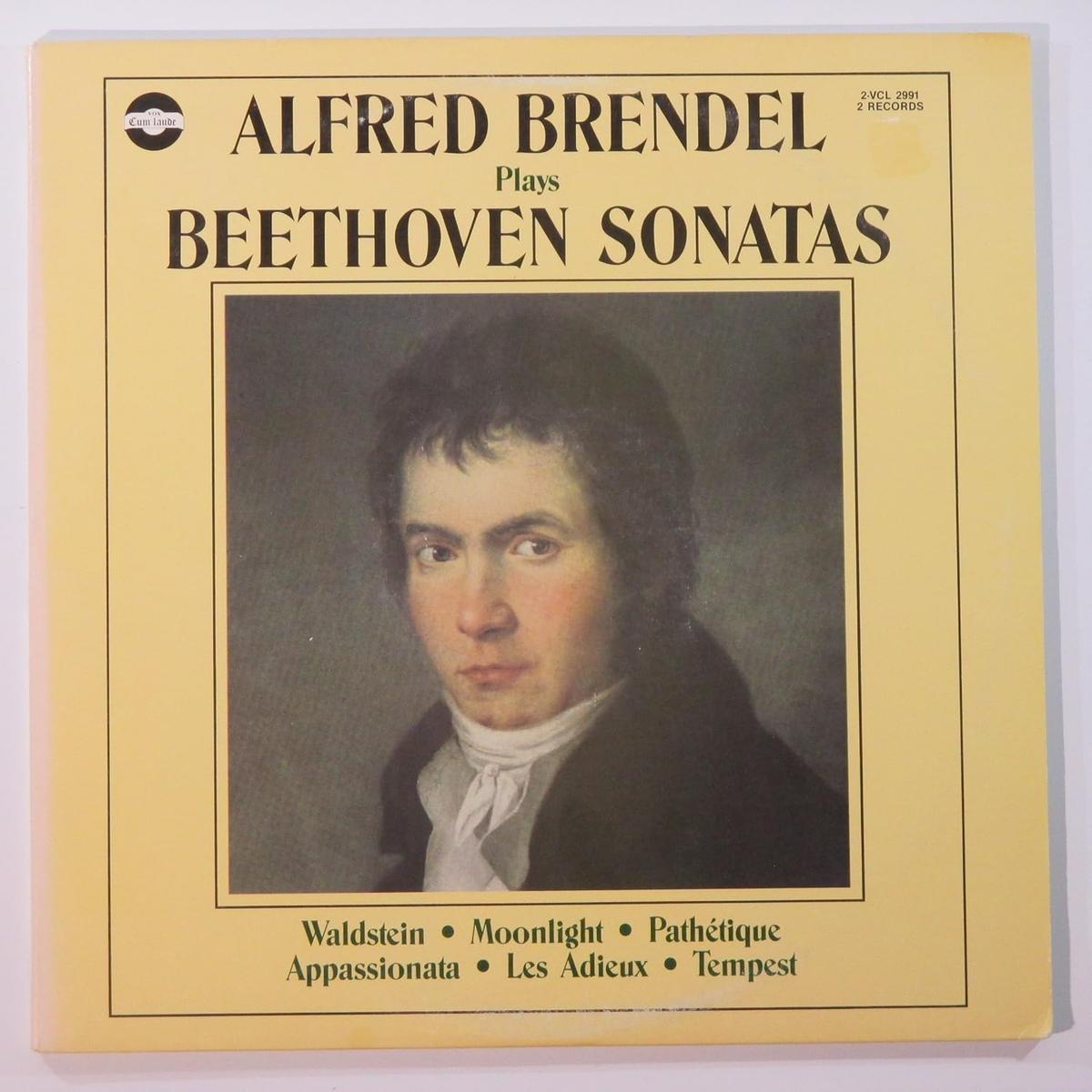
Most of these are for piano, but every performer seems to have their own interpretation of its emotional expression, tempo, and technical focus. Glenn Gould, for example, has been criticized for playing the piece too fast and not using the pedal enough, resulting in a loss of clarity. In contrast, Alfred Brendel’s approach is considered thoughtful and restrained.
"Beethoven Sonatas," played by Alfred Brendel.
Bach’s ‘Toccata & Fugue in D minor,’ BWV 565
Searching Johann Sebastian Bach’s name on the Presto Music database returns over 15,000 titles.
Of all these works, the “Toccata & Fugue in D minor” is the most performed. It slightly edges out Beethoven’s “Moonlight Sonata” as the most arranged piece in music history, with approximately 550 recordings.
While recordings for organ predominate, the diversity of arrangements is dizzying. The Toccata and Fugue has been transcribed for orchestra, guitar, violin, saxophone, lute, and almost every other conceivable instrument.
Bach is also the most streamed classical composer on Spotify, with 7.9 million monthly listeners. Were he alive today, he would earn far more income from his social media presence than he ever made from his humble salary as a church musician. For a composer as deeply spiritual as Bach though, was, such material wealth ultimately would have meant very little.
Popularity and greatness are more closely connected than is generally recognized, when considered over the ages. As this list shows, there is a strong correlation between the “greatest” composers and their level of public esteem, measured by both the number of recordings and listeners on audio streaming services. By almost any metric, classical music is thriving.
What arts and culture topics would you like us to cover? Please email ideas or feedback to [email protected]
Andrew Benson Brown is the outreach director for the Society of Classical Poets and the author of “Legends of Liberty,” an epic poem about the American Revolution.