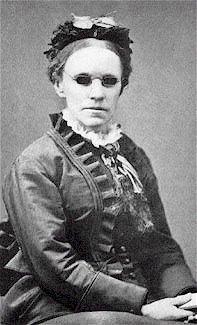
Fanny Crosby (1820–1915) composed approximately 8,000 hymns published under her name and over 200 pseudonyms during her long life. In addition to her lyrical compositions, she published four books of poetry. She also spent her early adult years as a teacher, then devoted decades to mission work on behalf of the poor, immigrants, and prisoners.
In 1843, Crosby became the first woman in U.S. history to testify before the U.S. Senate, speaking on the need to help people with disabilities, and in 1844 she read one of her poems to a joint session of Congress, where John Quincy Adams complimented her verse. She was acquainted with several presidents, including Grover Cleveland, who had worked for her as a secretary and assistant when he was 15 years old. By the time of her death, Crosby had become a household name among Americans.
Published in 1844, her first book of poetry was titled “The Blind Girl, and Other Poems.” The title was appropriate. Fanny Crosby had been blind since she was 6 weeks old.
The Gift
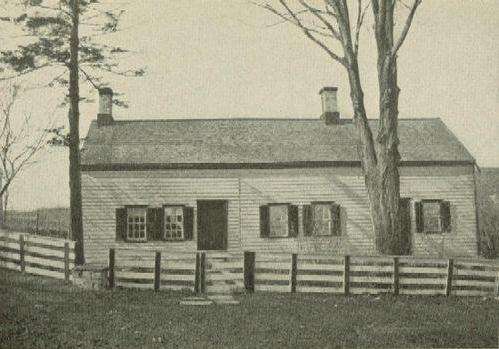
Accounts vary as to the cause of her blindness. Doctors today believe that her affliction was congenital, that Crosby was blind from birth. Others, including Crosby, said that mistreatment of an eye infection had stolen her sight. Before she was a year old, her father died, and she was left to the care of her mother and maternal grandmother.The influence of these two women and a neighbor, Mrs. Hawley, on Crosby can scarcely be overestimated. Her grandmother, in particular, undertook to become the girl’s eyes, describing her surroundings and reading aloud to her. Later, when Crosby and her mother moved away from the grandmother on account of work, Mrs. Hawley stepped up and undertook her education.
All three women were fervent Christians who instilled in Crosby a moral code and religious faith that endured for a lifetime. Under their care, she also memorized poetry and enormous portions of scripture, which not only reinforced their teachings but gave her the language and memorization skills to write her hymns.

A Life of Service
Unable to attend her local school because of her blindness, the 15-year-old was delighted when the New York Institute for the Blind admitted her as a student. She quickly gained a reputation for her poetry and for her extraordinary abilities to retain and recall information.After graduation, the institute offered her a teaching position. She remained on staff for 11 years, honing her talent at several musical instruments and writing her poetry, assisted by volunteers like the young Cleveland. There she also met Alexander van Alstyne, who was also blind, and whom she married in 1858. Their only child died in infancy, and though she and van Alstyne remained legally married for 44 years until his death, they spent many of their last years apart.
Ten years before that marriage, Asiatic cholera struck the school, and Crosby’s favorite student died in her arms. That sad event, and a dream in which a dying friend asked if he would see her again in heaven, led to a renewed and deeper commitment to Christianity. Her hymns and her long dedication to serving the disadvantaged marked the course of her life’s work. Often living in near poverty, in part because she donated so much of her royalties to mission work, her heroic virtue won the hearts and acclaim of other Christians. In 1905, churches around the world celebrated her 85th birthday with Fanny Crosby Day.
‘The Tender Acts of Kindness’
Published in 1906, Crosby’s autobiography, “Memories of Eighty Years,” opens with these words:“Many of the flowers I planted in the garden of memory during a happy childhood are still blooming sweet and fair after a lapse of more than eighty years. Those that are somewhat faded, because they have not recently been watered, and those which have been crushed in the press of a long and busy life, I will try to revive until I have finished the life story that I am about to tell.”
Much later in her memoir, she writes, “The music of the voices around me here upon this beautiful earth is just as cheerful and inspiring as that I heard in years gone by. Thus life becomes one grand choral song, sweetest at its close; and the tender acts of kindness, strewn all along the way, are the peren-nial flowers that I have been transplanting and gleaning in the garden of memory for more than eighty summers.”
These passages—and many more in her story—illustrate the ideals of hope and charity that were Crosby’s trademark throughout her long life. Fueled by her religious faith, she seems only rarely to have slipped into feelings of defeat when things went wrong. Throughout the catastrophes and losses she suffered—her blindness, the death of her father and later her child, a marriage fraught with difficulties, and more—her faith and her good nature, born as she says during childhood, carried her onward.
Kindness was her hallmark. During her years of unpaid work in charitable institutions like the Bowery Mission, she frequently led the singing or spoke to an audience, but as one writer has noted, “More often, though, she would sit in the audience and mingle with the other guests.” She was a fierce proponent of kindness and love. She famously said:
“You can’t save a man by telling him of his sins. He knows them already. Tell him there is pardon and love waiting for him. Win his confidence and make him understand that you believe in him, and never give him up!”
Though a memorial was later added to her gravesite, the original modest stone remans and is inscribed with a selection from Scripture chosen by Crosby herself: “She Hath Done What She Could.”