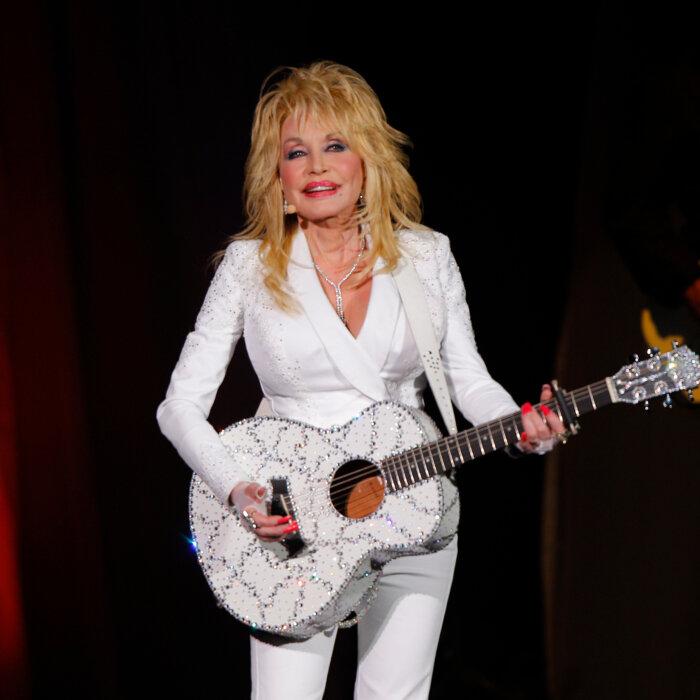
Dolly Parton is one of the most successful performers of the last 50 years. She has been a movie star, has had dozens of her songs go gold or platinum, and created a successful theme park. Her sound influenced hundreds of pop and country singers. Yet to many, she is a dumb blonde with an oversized bosom.
A new biography by Martha Ackmann, “Ain’t Nobody’s Fool: The Life and Times of Dolly Parton,” blows away that myth. It reveals her as a serious artist and a shrewd businesswoman. Moreover, it reveals her to be a remarkably decent person, authentic, grounded in reality, loyal to her friends, and faithful to her husband.
The author follows Parton’s life from her birth to the present. Parton was born in 1946 and named Dolly Rebecca Parton, which she kept as her stage name.
Her figure is as authentic as her name. There is no augmentation. She blossomed early. She grew up in poverty. Her father was illiterate; he was possibly dyslexic, making it hard for him to learn to read. This limited his earning potential, even in 1940s East Tennessee. Her family was the poorest kin among a poor clan.
Parton’s talent as a singer and songwriter emerged as a child. She was constantly singing and writing songs. Ackmann shows how Parton began performing on a local radio show at age 10 and recorded her first song at 13.
Despite making more money on a radio performance than her father made in a week, she kept her music career secondary to her education. Parton was unpopular in school, too poor and different to fit with the “in” crowd. But she persevered and graduated. Her declaration at graduation that she was going to Nashville to be a singer was met with silence and catcalls.

She went. Her classmates’ expectations that she would fail increased her determination to succeed. Initially she was miscast—due to her age and a belief that country music was dying—and did bubblegum pop music.
Producers would not let her sing her own songs, until one producer did. Her first charting singles were country music songs written by her. After that, her career included her own songs.
During these early years, she met her husband, Carl Dean, a paver, who soon ran his own asphalt and concrete paving company. He supported her singing career with only one condition: that he be allowed to stay out of it. Parton agreed. Dean remained out of the spotlight throughout a long and happy marriage of nearly 60 years, ending with his death in 2025.
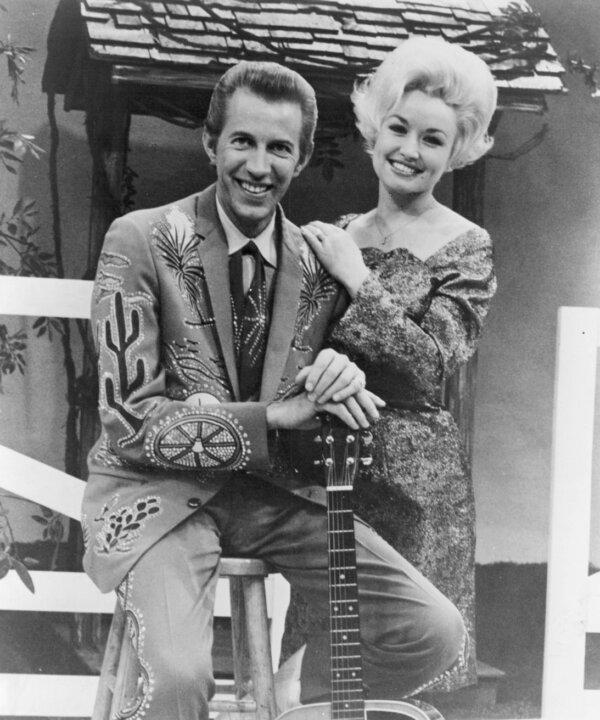
Her career soared when she was paired with Porter Wagoner in 1967 as his “girl singer.” She stayed teamed with Wagoner until 1974, when she went solo. Ackmann states Parton credits Porter with teaching her how to be a performer, not just a singer. She charted her first hit singles, including “Jolene,” while with Wagoner.
Multi-Talented
Yet the real meat of this book is not a recitation of Parton’s career. It lies in revealing the person behind the star. Parton emerges as a multi-talented artist who never lost track of her roots.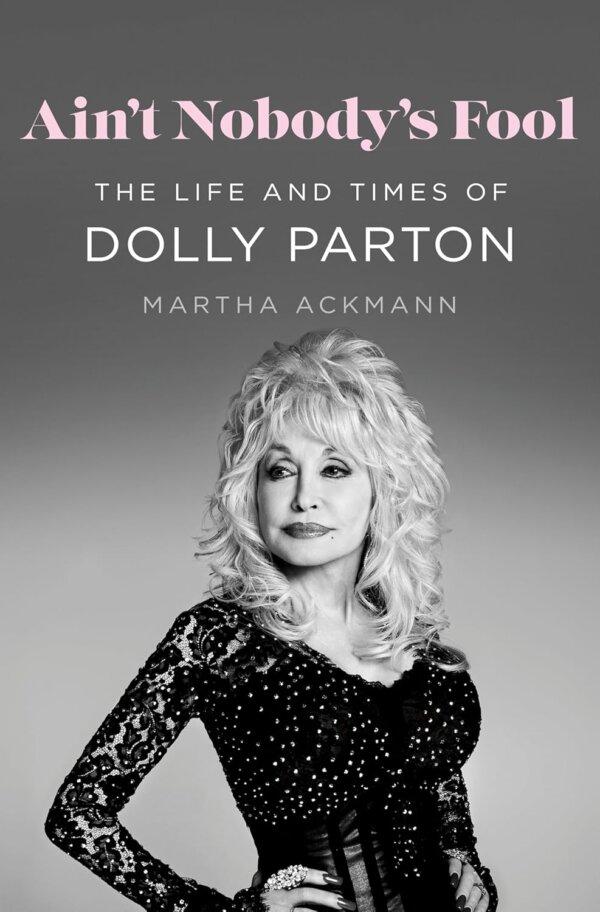
She wrote most of her songs, including her big hits, which is unappreciated by many of her fans. Ackmann shows Parton to be a compulsive songwriter throughout her career, drawing inspiration from her everyday experiences. She would often write on scraps of paper because she lacked writing paper when the muse hit her.
“Jolene” was inspired by a red-haired, green-eyed waitress flirting with her husband at a restaurant. “9 to 5” was written when Parton got bored off-stage and wrote a song about the movie she was then filming. (It became the movie’s theme song.)
Parton’s life is informed by her Christian upbringing. She and her husband had a faithful “one-man woman, one-woman man” marriage. Many of her songs have Christian threads in them (such as “Coat of Many Colors”).
Her Christian values inspire her philanthropy. Parton views her fortune as a way to help others, giving generously to foster education and women’s health.
Dollywood was less an attempt to promote herself than a way to give back to her hometown. She viewed it as a way to tell the story of life in Eastern Tennessee and provide local jobs near her hometown.
“Ain’t Nobody’s Fool” is an intimate and inspiring portrait of a remarkable woman. It reveals the surprising depths and talents of a woman who can too easily be dismissed due to her background and career. It demonstrates that sometimes beauty can be more than skin deep, and that true gold sometimes lies hidden under glitter.