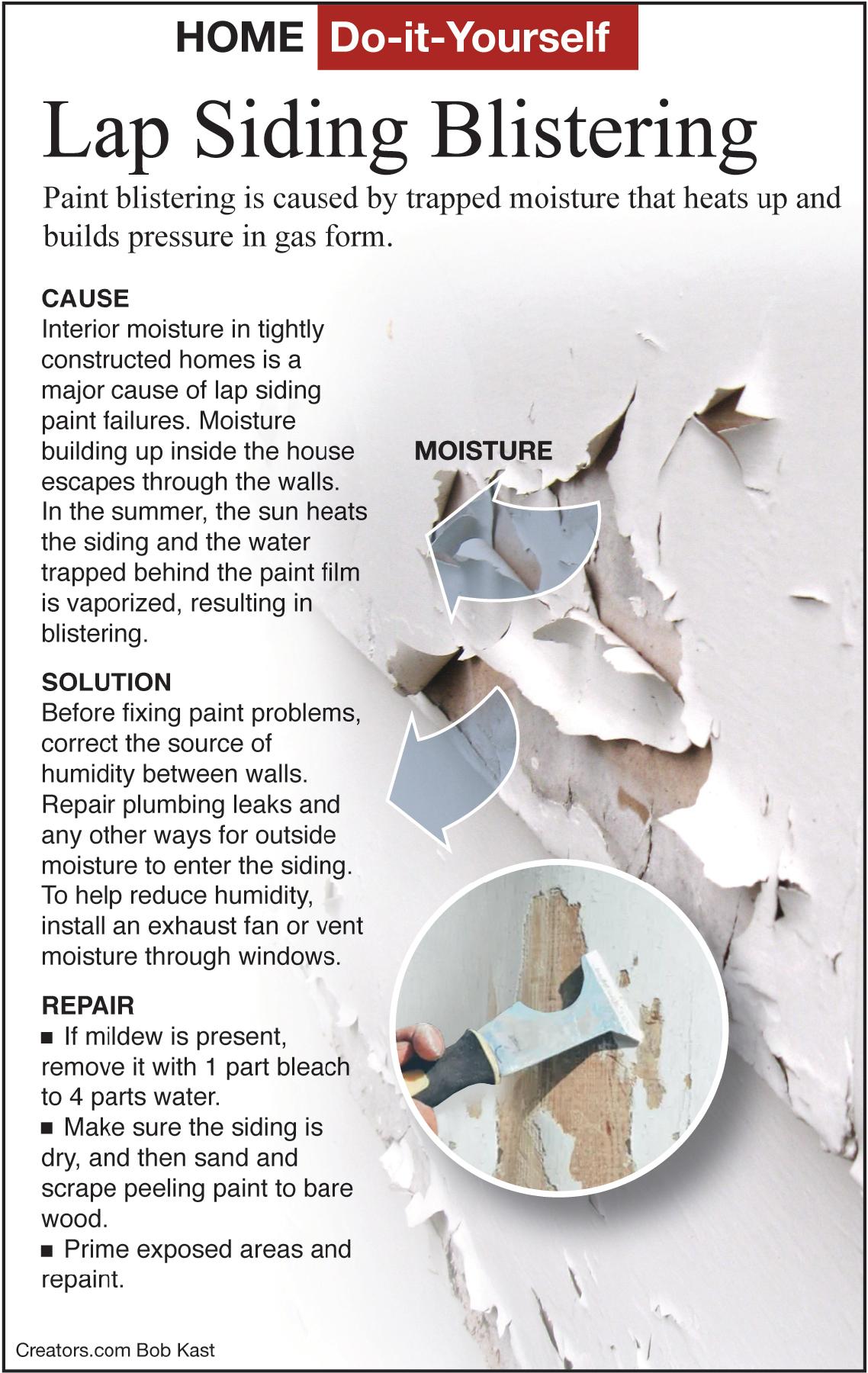
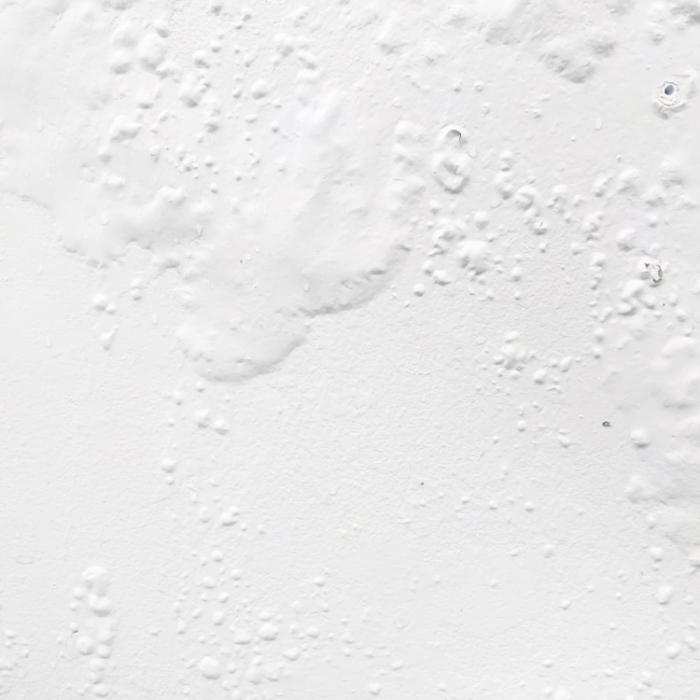
Blistering is often more prevalent around the kitchen and bathroom areas. Water vapor from cooking, dishwashing, laundry, bathing, and normal activities of a family of four contributes about 3 gallons of water per day to the humidity. So if you don’t have a vapor barrier, or if it was installed improperly, this could be the major factor causing the blistering. Water vapor gets into the walls during cold weather and condenses. Eventually, this water soaks into the siding and wets the paint, causing blistering and peeling.
The moisture could also be coming from leaky plumbing, overflowing sinks, bathtubs, shower spray, or improperly sealed walls. Also look for a leak in the gutters or eaves of your house. Leaky gutters also cause damage to the foundation and interior walls of houses.
After looking for leaks, you should install siding vents. These fans allow moisture from inside the house to evaporate before penetrating the wood. Getting rid of the water source is a very important step to fixing blistered paint.
After you have found and solved the source of the problem, you need to fix the existing paint job. Sand and peel off the old paint in the blistered area all the way down to the fresh wood. Scrape the unblistered paint out approximately 12 inches away from the blistered area. Prime the exposed areas with a good grade of undercoat paint. If there is a very large area of paint that has blistered, use a pressure washer or a heat gun to speed up the removal process.
Be sure you thoroughly wash the surfaces before painting. Some paint manufacturers recommend using powdered commercial cleansers; however, be careful using them. Some cleansers can be very harsh on your eyes and skin. Wash the areas with a sponge or brush and rinse thoroughly. Then let the area dry before you apply the primer and paint. It is very important to allow enough drying time before you apply the primer.
To prevent possible future problems, seal any cracks, holes, or seams with a caulking compound. Once the caulk and undercoat have dried thoroughly, apply a coat of outside house paint.
By now, your house should be looking good again, and you just might have saved yourself from future headaches over a damaged foundation or decayed wood.