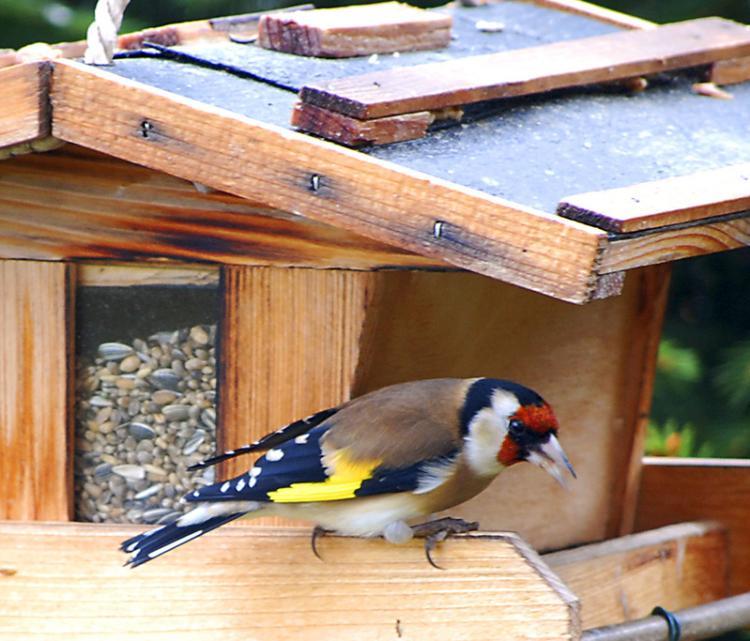
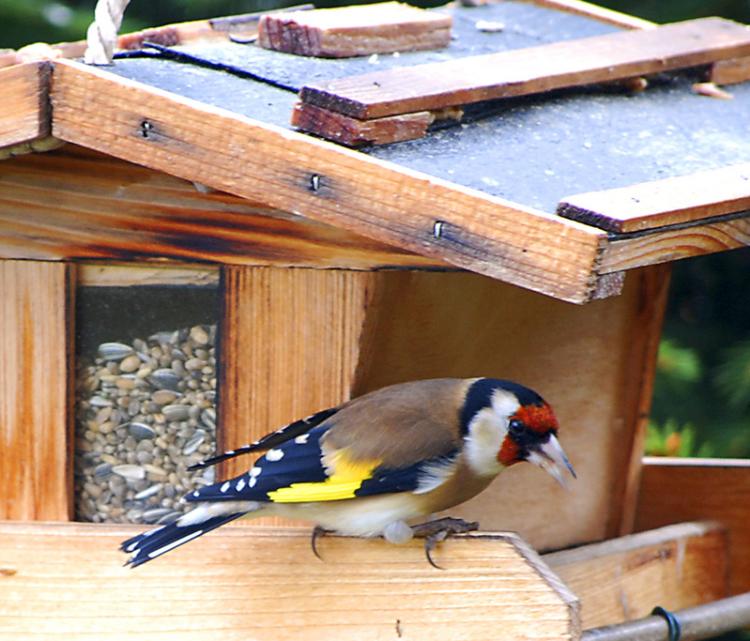
Many people, especially children, want to provide food for local songbirds during the winter months, and of course, it is always a delight to be able to observe the birds. The Hamburg Environmental Organization of Germany (NABU) offers tips on how to avoid mistakes when feeding the bird population.
Biologist Stephan Zirpel, CEO of the Hamburg NABU, stated, “We primarily recommend a feeding silo because it protects the food from moisture and inclement weather,” and added, “ in addition, the silo prevents food contamination with bird droppings.”
Special bird feed which can be purchased commercially will entice birds living in the wild—those garden birds preferring grains and seeds—to come to the feeder. They include chaffinches, bullfinches, and sparrows.
Blackbirds, robins, and hedge sparrows prefer softer foods such as pieces of fruit, raisins, or dried wild berries. A simple wooden grid can hold pieces of apple. Other like the Meisenknödel or Meisenringe (fatballs), are attracted to grids stuffed with peanuts.
Grain and seed mixtures imported from abroad can lead to the introduction of foreign plants. “One has to be particularly aware of the origin of any seeds,” said Zirpel. “Cheap food mixtures often contain allergy-causing common ragweed seeds or other undesirables.”
Feeding all year long is not recommended and only benefits the older birds. Even the young of the seed-grain-eating birds require insects and worms, crucial to their healthy development.
The Environment Requires More
“Those who believe feeding the birds is part of protecting the environment are mistaken,” said Zirpel. With the exception of the house sparrow, feeding is only for those birds that are seldom in danger, anyway. Feeding stations in towns and villages usually attract up to 15 kinds of birds, primarily titmice, finches, robins and blackbirds. Their numbers have been steady, and, for the most part, they are not endangered species.