Broadway’s Lancelot embodies a code of chivalry conceived hundreds of years ago, a model of virtue, honor, and right conduct that has long served as a staple of Western manhood. Chivalric ideals influenced the social behavior of America’s Founders and helped define the Victorian gentleman. Even today, the knight haunts our postmodern sensibilities, a ghost in our algorithmic age who still has the power to summon boys and men to his banner.
Mentors, Peers, and a Profession
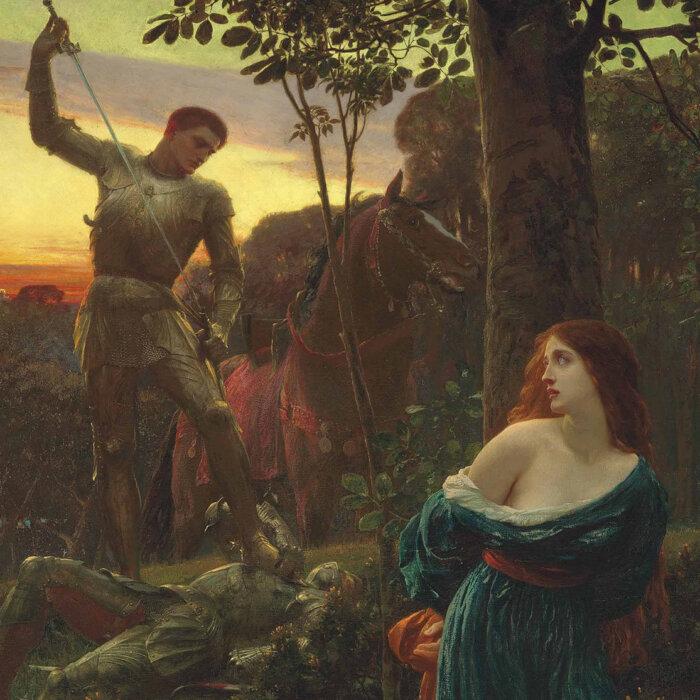
Because he was a younger son, William had no hope of inheriting from his father, a minor noble. After a rough-and-tumble childhood amid upheavals in England, he was sent in his early teens to Normandy and the household of a relative for training as a knight. There, he excelled in horsemanship and the arts of individual combat while being schooled in the manners and courtesies of his class.Knighted at about age 20, William spent years fighting in battles and skirmishes, as well as in tournaments. These contests had yet to become the ordered spectacles we see in movies, where two mounted knights engage each other with lances, but were brawls, wild clashes in which teams fought one another and broken limbs and teeth were common. Both in war and in tournaments, the victors won money by taking their opponents prisoner for ransom rather than killing them, and here William was a champion of champions. He made his first fortune and won considerable fame with his horse and lance.
Such prowess, strength, and courage were at the heart of the knight’s code. From his mentors, William learned a trade; from working alongside his peers, he became a professional. In both instances, he learned more about chivalric behavior and manhood.
With the exception of rugby players, today’s young men don’t participate in melees on a gaming field or spend their teenage years learning to fight with shield and lance, but the basics—to learn a skill, to acquire some backbone and grit—remain necessary for growth. Just as important is the selection of mentors and friends. They become a part of us, so we must learn to choose them wisely.
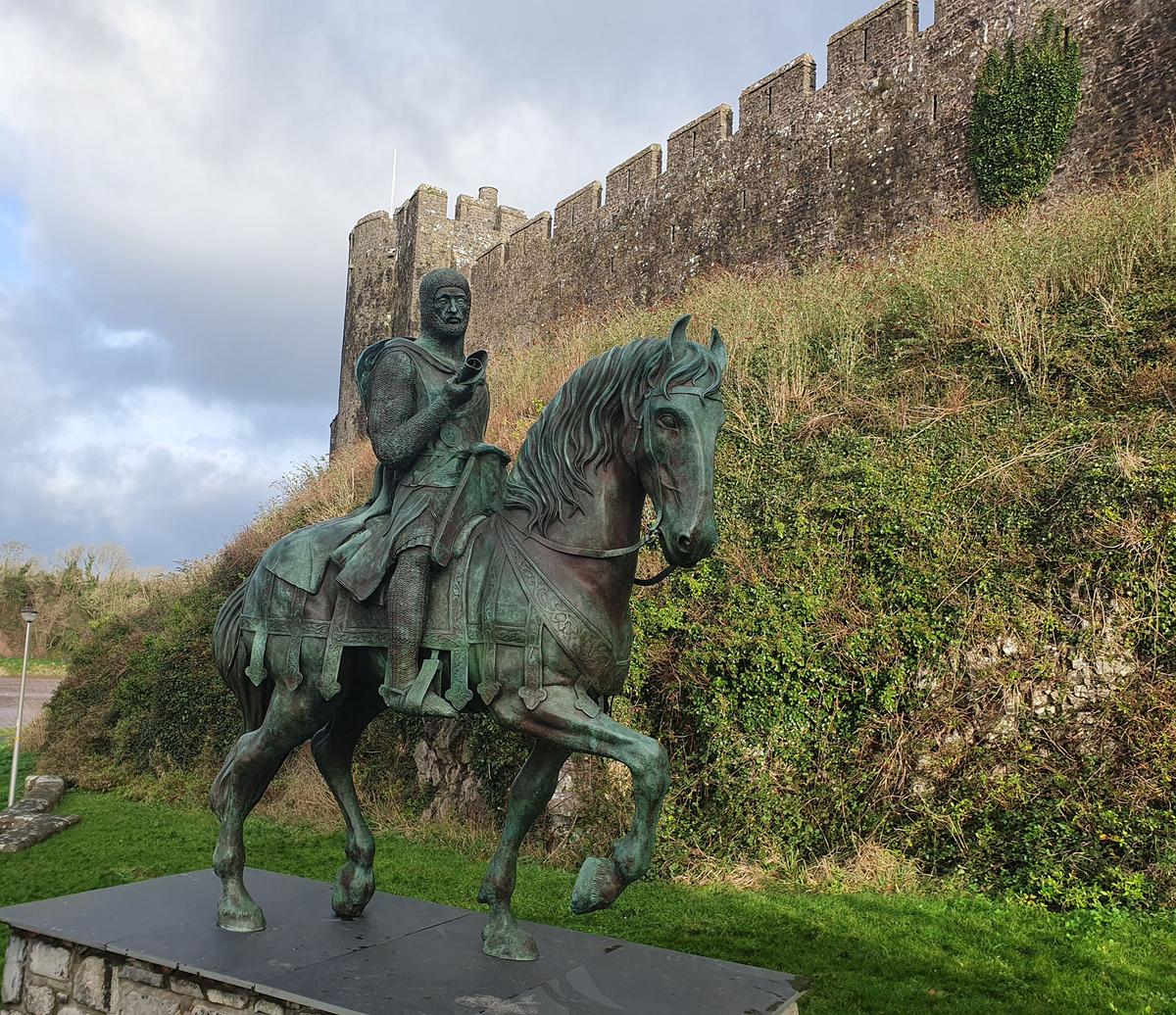
Knightly Piety
What some today call “toxic masculinity” would have seemed a joke to the rough men who plied the trade and tools of knighthood. Yet forces were at work that would soften their condition and expand the meaning of chivalry.With the exception of the Crusades, the Catholic Church often looked askance at the violence of war and tournaments. It encouraged kings, nobles, and knights to avoid violence or, failing that, to show mercy to their enemies and to protect women, children, the widowed, and the weak.
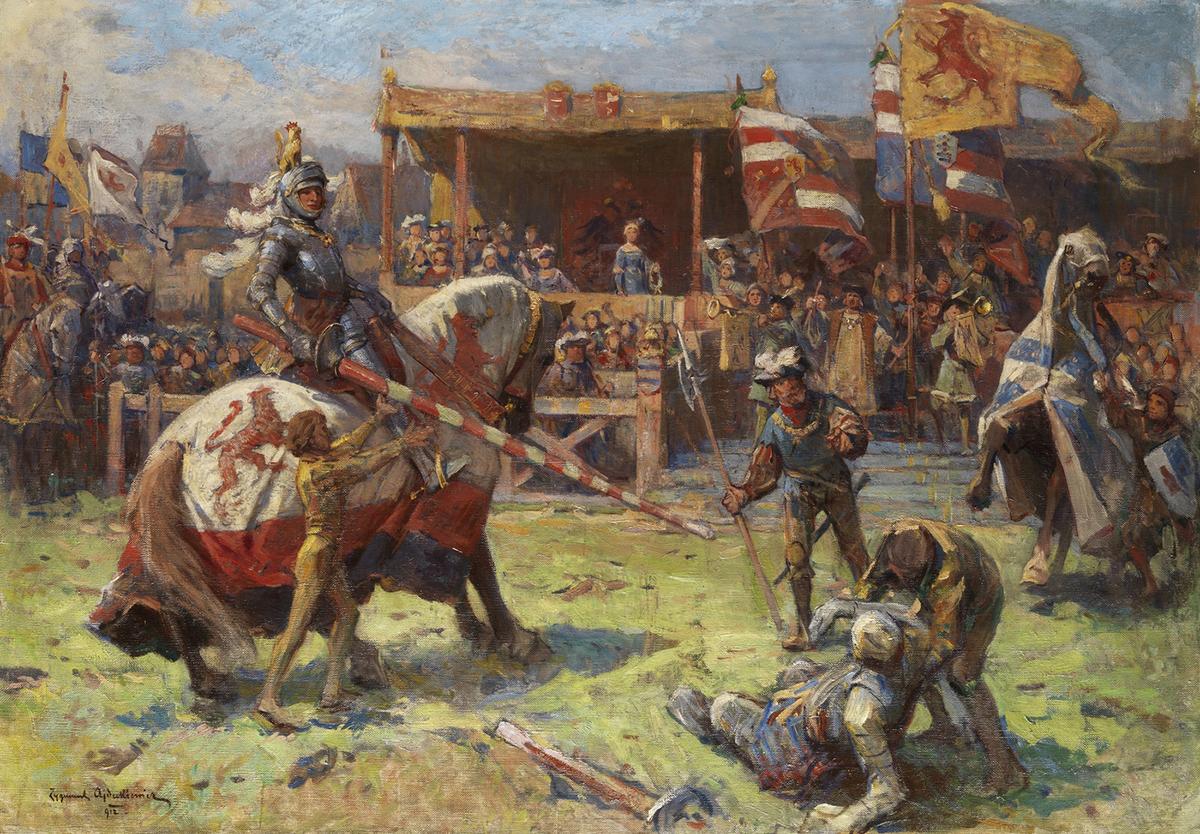
Church teaching also influenced William and countless other knights. In 1183, for instance, Henry the Young King, for whom William served as a reluctant adviser, fell ill with dysentery while rebelling against his father. Having intended to go on crusade to the Holy Land, and now feeling much in need of repentance, the Young King on his deathbed pleaded with William to make a pilgrimage in his stead. Within a few months, William set on this mission, and while in Jerusalem, he promised the Knights Templar that on his own deathbed, he would join their order—a vow he kept.
Literary historian and critic Léon Gautier’s 1883 work “La Chevalerie” listed “Ten Commandments of Chivalry,” two of which were to believe the Church’s teachings and defend it when necessary. Piety became part of the code and sanded the rough edges of the warriors on horseback.
The Feminine Touch
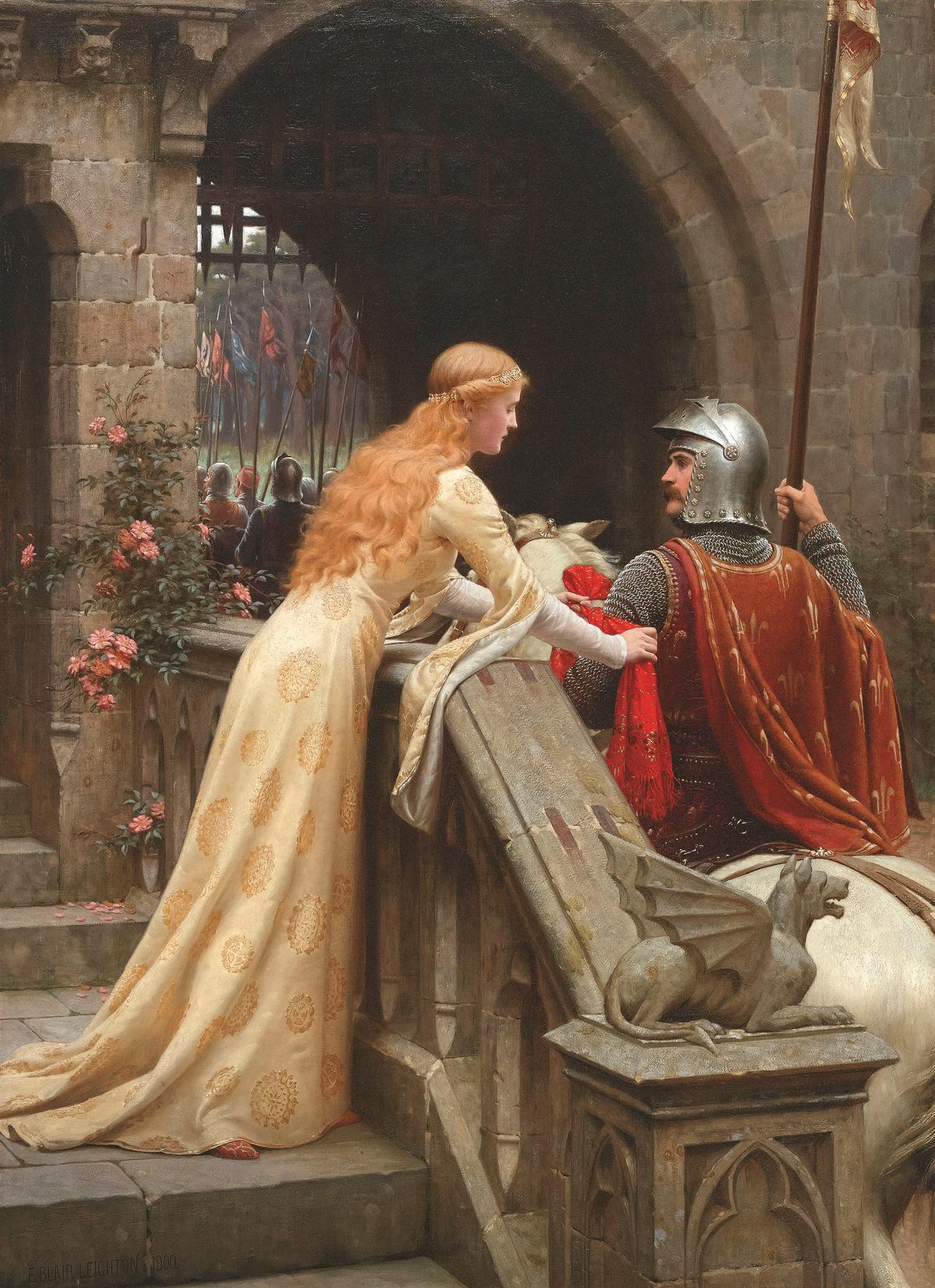
In 1168, Queen Eleanor of Aquitaine, wife of the Anglo-Norman king Henry II, was riding with her uncle and sons when a rebellious vassal and his men attacked her party. Her uncle was killed, but Eleanor escaped, in part because of the efforts of a young William Marshal. Wounded and captured, William so impressed Eleanor with his bravery and self-sacrifice that she paid his ransom and took him into her household for two years. There, he served in several capacities, including as a tutor in the chivalric arts to the aforementioned Henry.These were the peak years when Eleanor and her daughter Marie were promoting courtly love, which gave yet more refinements to the code of chivalry. Although the “court of love” attributed to Eleanor is likely fictitious, these two women were key in creating knightly chivalry as we think of it today. Patrons of art, poetry, and music, they welcomed troubadours and poets, who merged their ballads of love with songs of war, and so added romanticism to the warrior ethic. Marie, for instance, supported Chrétien de Troyes, author of various works that blended the ideas of courtly love with Arthurian legends.
Present during this promotion of women, courtly love, and manners, William could scarcely have avoided the poetry and ballads about knights and ladies. Like the church, the philosophy of courtly love—it might better be called courtly manners—softened a knight’s hard nature, raised the status of women, and birthed the idea of gentlemanly conduct.
These same troubadours, poets, and tellers of tales spread these ideals of chivalry all over Europe, songs and stories that often featured a knight living up to standards set by a courtly lady. As the anonymous author at the website “Chivalry” writes, “Basically, women were the intellectual custodians of the knightly virtues, and they were responsible for maintaining and promoting the code of chivalry.”
In sum, it was women who set the bar for the behavior of men.
Ideals to Aim For
Perhaps, however, there is a way out of this chaos.In the essay “The Mirror of Honour and Love,” Sophie Masson points out that both men and women might benefit by embracing chivalric ideals and manners. In discussing the works of Christine de Pizan, who lived a century after William and wrote as an advocate for women, Masson notes that chivalry practiced by both men and women was “a way of reaching one’s own fullest potential ... but always tied into the presence, the needs, and the worth of other people too.”
“Chivalry, both male and female, recognised that each of us is, indeed, our brother’s or sister’s keeper—but also courageously responsible for our own actions. It is an ideal which is of increasing and urgent relevance in the world we live in today,” Masson writes.
As for William, he died as valiantly as he had lived. Having fallen ill and having been told by his doctors that he would soon die, as regent of England, he made certain that he left the adolescent king, Henry III, in good hands. As his health faded, he said farewell to family and friends who visited him in his chambers.
Elizabeth Chadwick, author of a best-selling series of novels about William, recounted the touching scene between William and his wife, Isabel de Clare, which in many ways encapsulates the character of the man. The scene is first found in “L’Histoire de Guillaume le Maréchal,” a 19,000-line verse biography commissioned shortly after William’s death.
“He duly took the Templar oath, which meant that he could no longer accept the embrace of a woman. No longer could Isabelle comfort him with her touch. In the Histoire, there is an immensely moving parting scene between Isabelle and William where he tells her to kiss him one final time because she will never be able to do so again. ‘The earl, who was generous, gentle and kind towards his wife, the countess, said to her, ‘Fair lady, kiss me now, for you will never be able to do it again.’ She stepped forward and kissed him, and both of them wept.’”
Here was Geoffrey Chaucer’s “truly perfect, gentle knight.”
Here was, and is, a man worthy of emulation.