After Congress passed SECURE 2.0 in December of 2022, it changed how retirement plan catch-up contributions would work in the following years. While some of those changes are welcome, others may be more difficult to accept.
The New Rules for Catch-Up Contributions
Unless Congress or the Internal Revenue Service (IRS) makes some changes, retirement account balances may be lower than expected for people making more than $145,000 in 2022. The change, which could start in 2024, is that catch-up contributions made by people earning more than this will have to contribute the catch-up amount to a Roth account.The difference is that contributions to Roth accounts are always made after-tax. It means you will have to pay taxes on the catch-up contribution amounts. You will be paying more in taxes on contributions, but you will be able to withdraw the money tax-free.
Catch-Up Contribution Limits
Most years see a change in the size of contributions you can make to your retirement accounts. The limits for 2024 have not been revealed yet, but will likely be rather small.For 2023, the IRS says you can contribute up to $6,500 in a traditional IRA and an extra $1,000 if you are 50 and older—for a total of $7,500. All of it is tax-deductible.
If you contribute to a 401(k), you can contribute up to $22,500 in 2023. Catch-up contributions for people 50 or older allow adding another $7,500 to their accounts for an annual total of $30,000—all tax-deductible.
New Tax Amounts on Contributions
Taxes on Roth contributions depend on how much you earn, says NerdWallet, since you will pay for them at your income bracket level. It means that you will pay more taxes than you did before 2024.People that earn $150,000 after adjustments are in the 22 percent income tax bracket. If you contribute the catch-up maximum of $7,500 to your Roth 401(k), you will pay an additional $1,650 in taxes. Couples filing jointly will pay $3,300 in taxes for a combined contribution total of $15,000.
Married couples filing jointly that earn an adjusted $475,000 are in the 35 percent tax bracket. Their catch-up contribution to a Roth IRA account of $7,500 per person, or $15,000 for both, will cost them $3,375 in taxes for one or $6,750 when both make contributions of the maximum allowable amount.
Income Limits on Retirement Accounts
The IRS does not allow anyone to contribute to some retirement accounts. Although there are no income limits to participate in a Roth 401(k), in 2023, single people with a modified adjusted gross income (AGI) of $153,000, or married people with a modified AGI of $228,000, cannot put money into a Roth IRA.Required Withdrawals From Roth Accounts
Employers adding matching funds to a Roth account always contributed them on a pretax basis. Fidelity says that when you withdraw the matching funds from a Roth retirement plan, you will pay taxes on that amount. If you are required to make required minimum distributions (RMDs) because of your age, you must take them out of your employer-sponsored Roth 401(k) accounts.Possible Advantage of New Contribution Requirement
Although this new method of requiring taxes on catch-up contributions will be more costly and offers no present deduction, there is one nice advantage: You are most likely paying the taxes when you are earning more money. When you need the money in retirement and will probably earn less, you can enjoy not having to pay taxes on withdrawals.
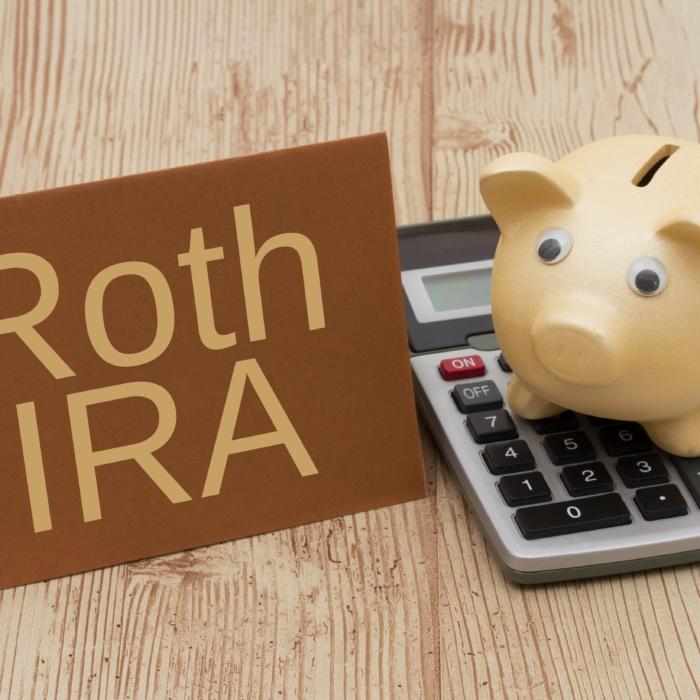
This situation allows you to pay nothing in taxes when you withdraw the money from a Roth account. If you do not need the money in retirement, there are no required minimum distributions on Roth IRA accounts, allowing it to continue to earn more.
Future Increases in Catch-Up Contributions
After you reach 60–63, you can increase the amount of your catch-up contribution even more. Starting in 2025, according to AndersCPA, you can add catch-up contributions of up to $10,000.Some Employers May Not Offer Roth 401(K) Options
Not every employer currently offers Roth 401(k)s. It may make it difficult for many employees to follow this policy through a work program. Also, keep in mind that the minimum of $145,000 is flexible and that it is indexed according to inflation.Action Being Taken Against This New Policy
Since SECURE 2.0 was enacted by Congress, a lot of questions have risen about this change for high earners. They are of such a nature that the change may not occur at all. CNBC says that about 200 organizations wrote Congress asking for more time—up to two years—to create the required changes.USAToday mentions several possible obstacles to the actual implementation of this law. Those issues range from the ease with which it can be applied by employers, to various legislative issues, and to the question of the legality of Congress being able to tell employees how to put money into a retirement plan.
The Benefits of a Roth Account
There are some benefits with a new required account, whether you open a new Roth 401(k) or a Roth IRA. Although contributions are made after-tax, there are no required minimum distributions on a Roth IRA. It means you can continue to allow the money to grow for as long as you want. Besides that, all withdrawals are tax-free, enabling you to plan ahead and know how much money is available at any time.With only a few months left until 2024 rolls around, it is difficult to determine whether the new deadline will remain in effect. Talk to your employer, a financial planner, or an estate-planning attorney to know how to prepare for the new year if you plan on making catch-up contributions.
The Epoch Times Copyright © 2023 The views and opinions expressed are those of the authors. They are meant for general informational purposes only and should not be construed or interpreted as a recommendation or solicitation. The Epoch Times does not provide investment, tax, legal, financial planning, estate planning, or any other personal finance advice. The Epoch Times holds no liability for the accuracy or timeliness of the information provided.