Have you been in the path of any storms lately? It seems like there have been a lot of storms in the past few weeks. The local sirens turned on a few days ago, so I headed to the basement. I quickly turned my phone to the Max Velocity YouTube channel to see if Max Schuster was doing a livestream about my storm. Not only was he talking about the storm, but within a few minutes of my tuning in, he mentioned that radar was indicating cloud rotation above my small town. I quickly sent a text to my local family group telling them all to take shelter. During the next half hour or so, there were five local tornados, hurricane-level straight-line winds, and rain that caused flood alerts.
Max is a young, enthusiastic meteorologist who provides accurate weather information in a friendly manner. He is fun to watch while he covers severe weather during a livestream. It is kind of like watching a train wreck in progress while sitting in the train station with a glass of wine—that is, as long as the bad weather is not in your neighborhood. If it is, then take his mantra of “go to the lowest level, away from windows” seriously.
Thankfully, there were no deaths or injuries that I know of, but there was some wind damage. There were power poles snapped in half and many trees and tree branches blown down. During the cleanup phase of the storm, I received a call from a friend. His fully loaded peach tree had blown over, and he was wondering if he could save it.
I said I thought he could save it, and here is my advice to him, so that you will know what to do if you are in a similar situation.
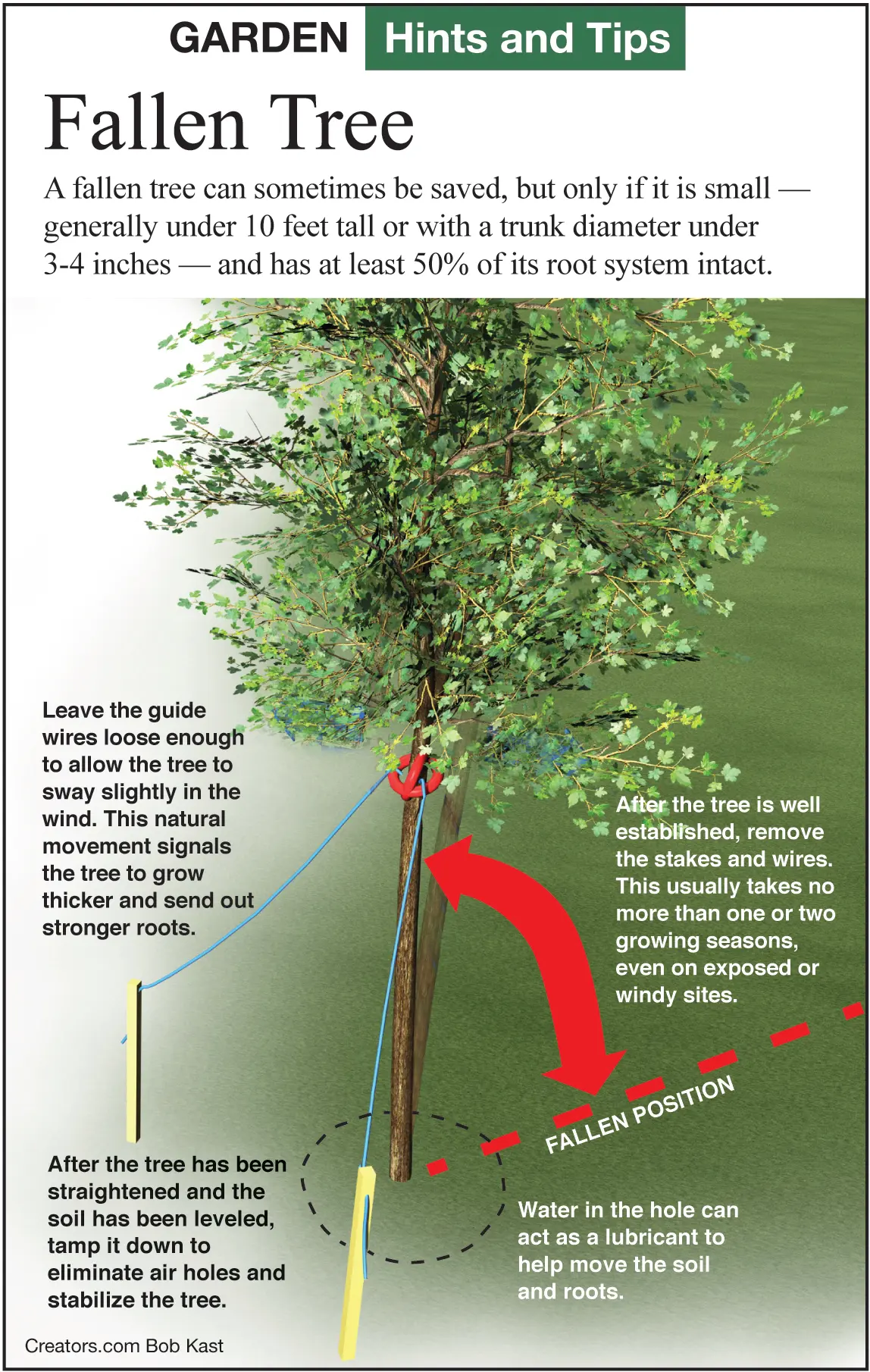
His tree has a 4-inch diameter trunk, so it wasn’t too big of a tree. Only about half of the roots had come out of the ground. The tree was planted in a lawn area. When it fell, it didn’t land on any other trees or shrubs. It didn’t even break any branches.
The first thing that needs to be done is to cover the exposed roots with wet towels or burlap. Do not let them dry out. It may take a day or two before the tree can be lifted back into place, depending on what other cleanup jobs are pending due to the storm.
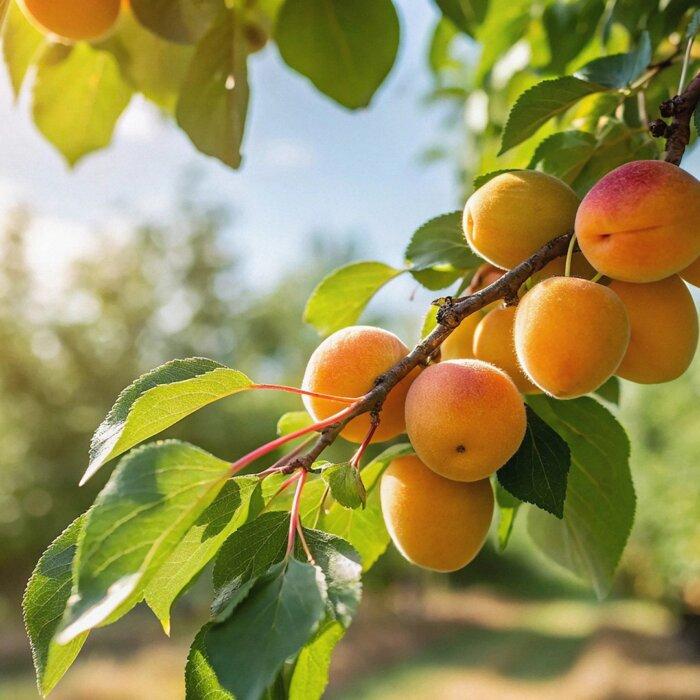
The next step depends on if the tree has fruit. In my friend’s case, he needed to remove as many fruit as possible. The peaches were still green and probably wouldn’t ripen, but he will try with some of them. Depending on the type of fruit and how close they are to harvest, it may be possible to salvage some of the fruit. At this point, we are trying to rescue a tree, not harvest fruit. If the fruit remains on the tree, they will take nutrients and carbohydrates away from the tree that is also trying to replace the root system. Without fruit, the tree can focus on growing new roots.
Lifting the tree back into place may or may not be easy, but it is important to try not to break any branches while standing it up. It may want to twist and turn as it is moved. Once it is up, it may need to be shifted around a little bit to get the roots back in place.
Prior to lifting it into place, stakes and rope need to be on standby. If the tree was at the center of a clock and it fell toward the 9, the stakes would go at the 2 and 4 positions. Short stakes that pull the tree into position can be too tight. Tall stakes about 4 feet tall are better. The rope can be tied to a stake, gently wrapped around the tree trunk with some padding, and then tied to the other stake. The tree needs to be securely supported, but also free enough to move around a few inches. Tying it too tight doesn’t let it grow roots and trunk tissue that can support the tree when the rope and stakes are removed.
It can take a year for each inch of trunk diameter for roots to grow back to their original size when a tree is transplanted. This tree is only being half-transplanted, so it will recover faster.
Now, consider that the tree was fully loaded with fruit. That may have been enough to topple the tree in the high winds, but we also need to consider what may have been a root problem, such as growing near a sidewalk or driveway where the conditions were not suitable for healthy roots.
When a tree has too many fruit, it doesn’t have any leftover nutrients to grow flower buds for next year. Next year, it won’t be growing very many fruit, but it will be able to produce an abundance of flower buds. The third year will again have too many fruit and not enough flower buds. This alternate-year bearing can be stopped by removing some of the fruit while they are small, so the tree produces a moderate amount of fruit every year.