




The Family Legacy Begins
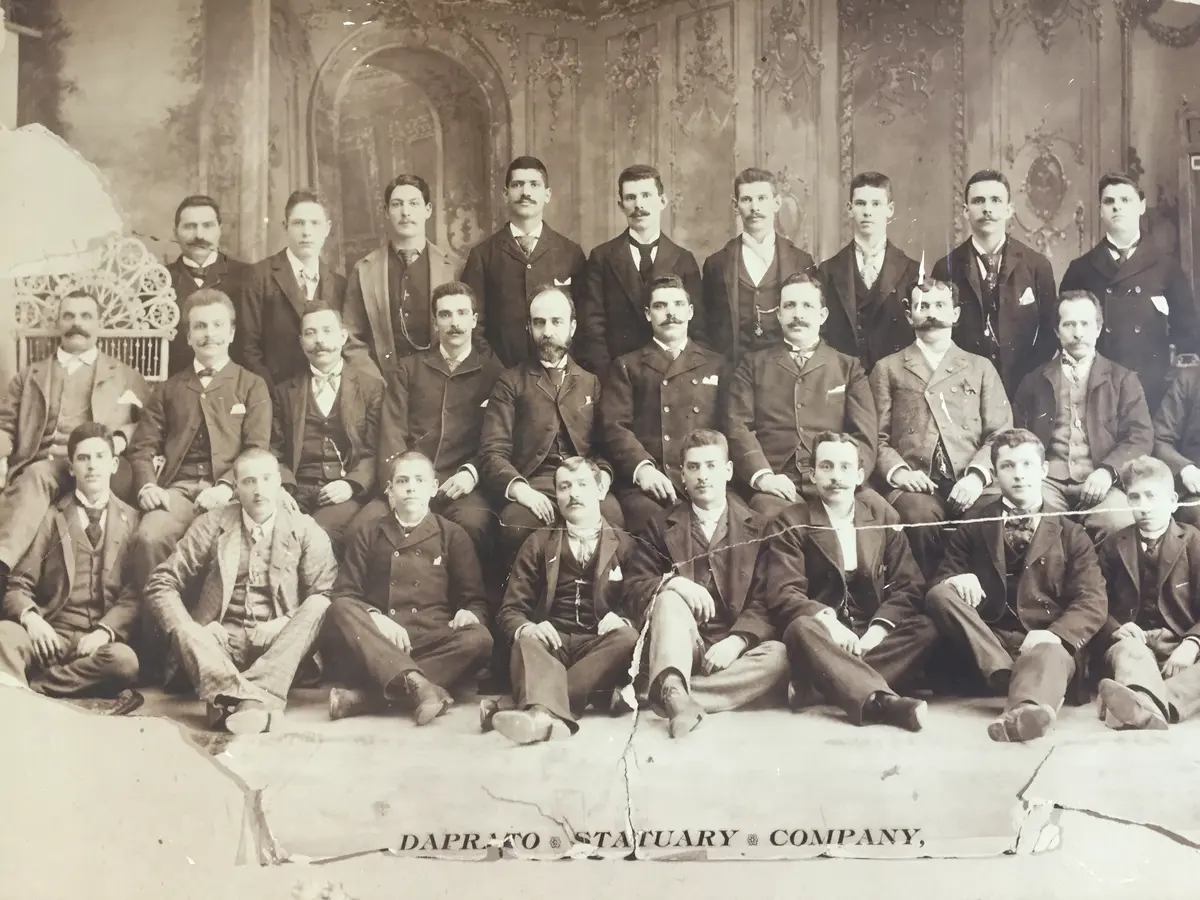
Upon arriving in Chicago, Rigali apprenticed with the Daprato brothers at the Daprato Statuary Company. A younger cousin of the four Daprato brothers, Rigali became a partner only three years later and the company’s president in 1890.
Daprato Statuary Company was awarded the prestigious title of Pontifical Institute of Christian Art by Pope Saint Pius X in 1909, an honor given to no other design studio. The pontiff whose mission was the spiritual restoration of all things, saw fit to recognize Americans who focused on the beautification of church buildings specifically.
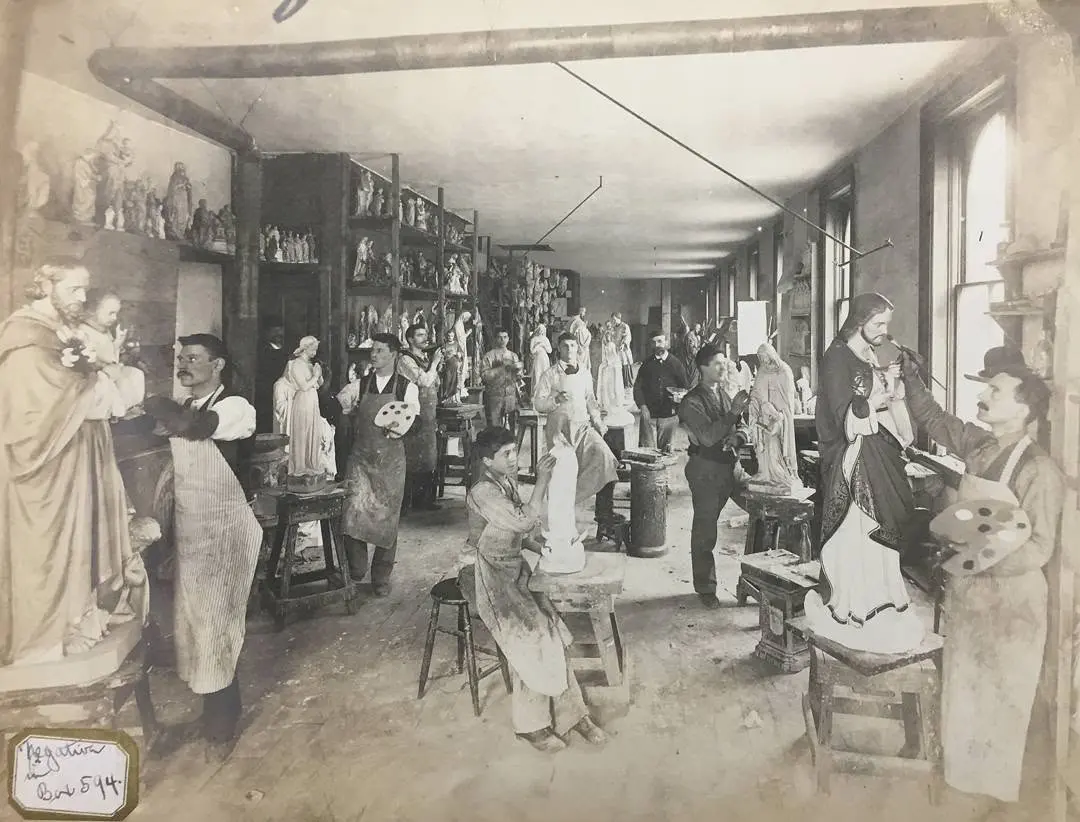
By the 1920s, the Daprato Statuary Company had opened offices in Montreal, New York, and Pietrasanta, Italy. The company continued thriving for decades, but by the 1960s, modernist movements such as abstract expressionism found their way into church design.
As marble altars and multicolored stained glass windows depicting biblical scenes gave way to plain wooden tables and earth-toned glass depicting nothing in particular, the company’s additional offices closed. A business that had once staffed over 200 employees was now pared down to three: Robert Rigali (grandson of John E. Rigali), his wife Therese, and a noted stone mason, Lucherino Lucherini.
“Those were tough times for our Church and for our family business,” said Mike Rigali, the son of Robert, who changed the company name to Daprato Rigali Studios in 1960. Although only a small child in the 1960s, Mike later heard stories of how employees were released to form their own specialty businesses. Sculptors, glaziers, carpenters, and bronze workers were contracted only when Daprato Rigali secured a rare commission requiring their specific services.
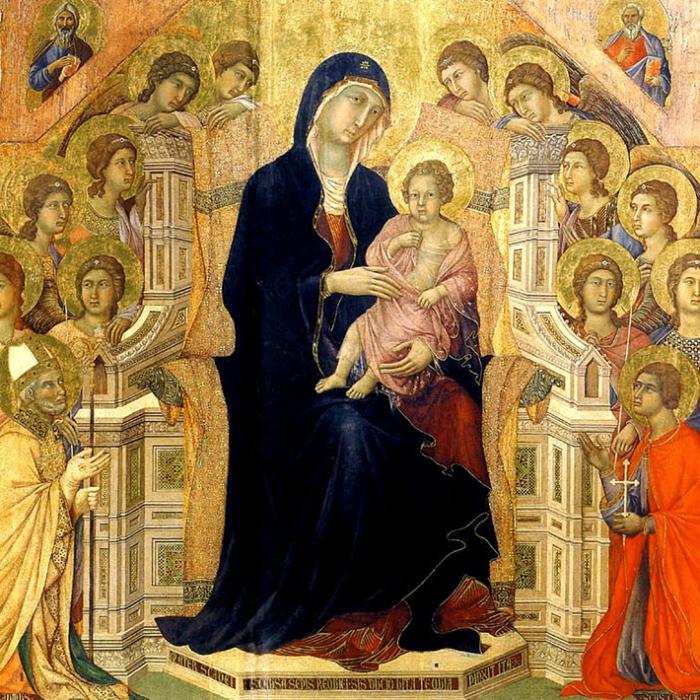
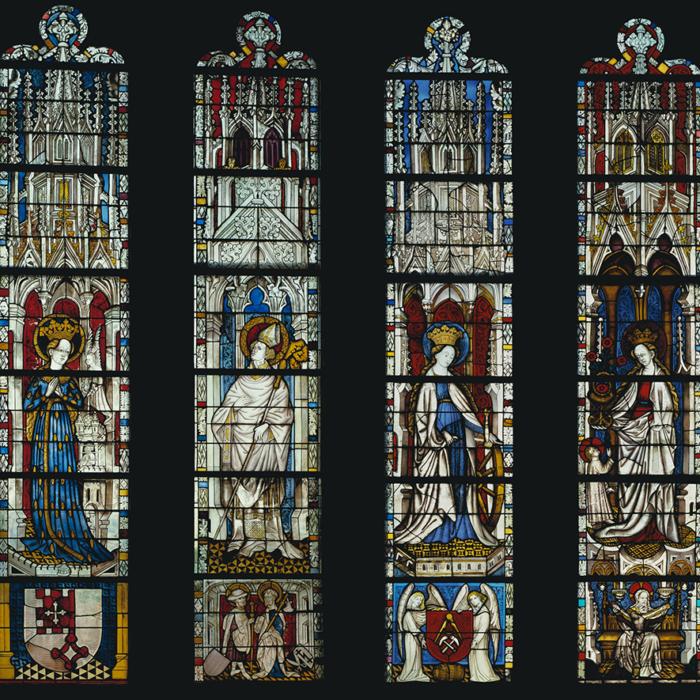
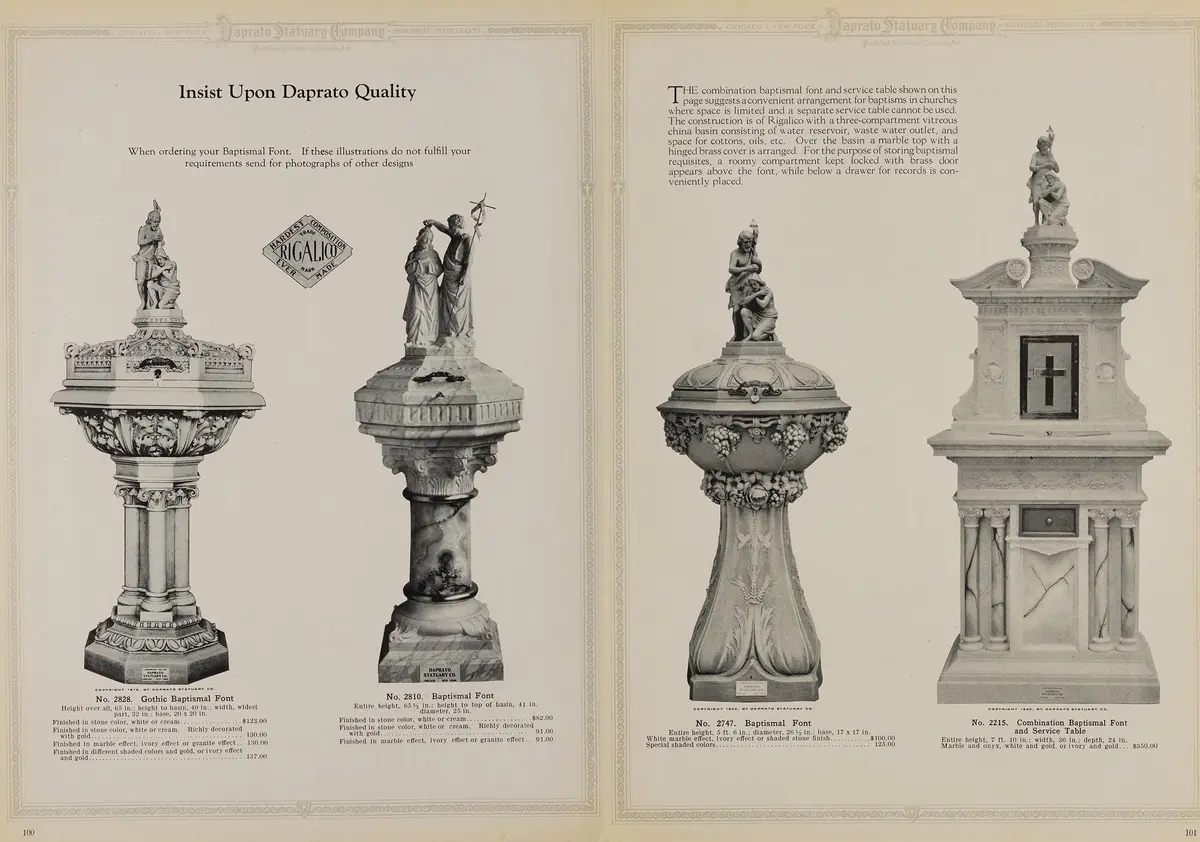
In the 1970s, Daprato Rigali witnessed a small upsurge in sacred art projects. Churches once again sought the “old-world” craftsmanship that Daprato Rigali provided. The company’s reputation for quality and beauty allowed it to endure when competitors failed. This facilitated steady growth that accelerated throughout the following decades. “It went from two employees in the ’60s, to five in the ’70s, to 10 in the ’80s,” Mike said. It was a slow but sure revival of a once-dying family business.
Mike graduated from the University of Notre Dame in 1983 with a degree in American studies. “The degree had an emphasis on American architecture, so I basically studied architecture without officially becoming an architect,” he explained. After graduating, he officially joined the growing family business.
By the early 1990s, Daprato Rigali Studios was operated by the Rigali family’s fourth generation. Mike, his two older brothers John and Bob, and his younger sister Lisa were running the company as their father transitioned into retirement. This core family team was poised to usher in a new renaissance in sacred art.
A Thriving Sacred Renaissance
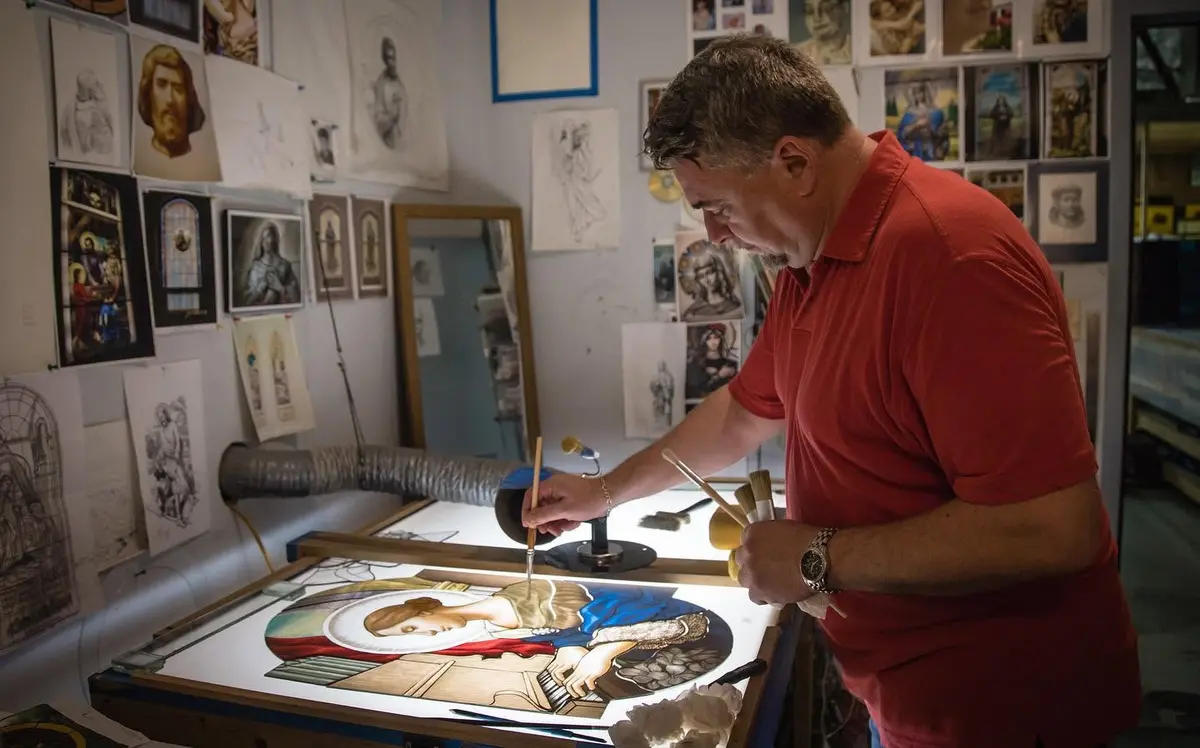
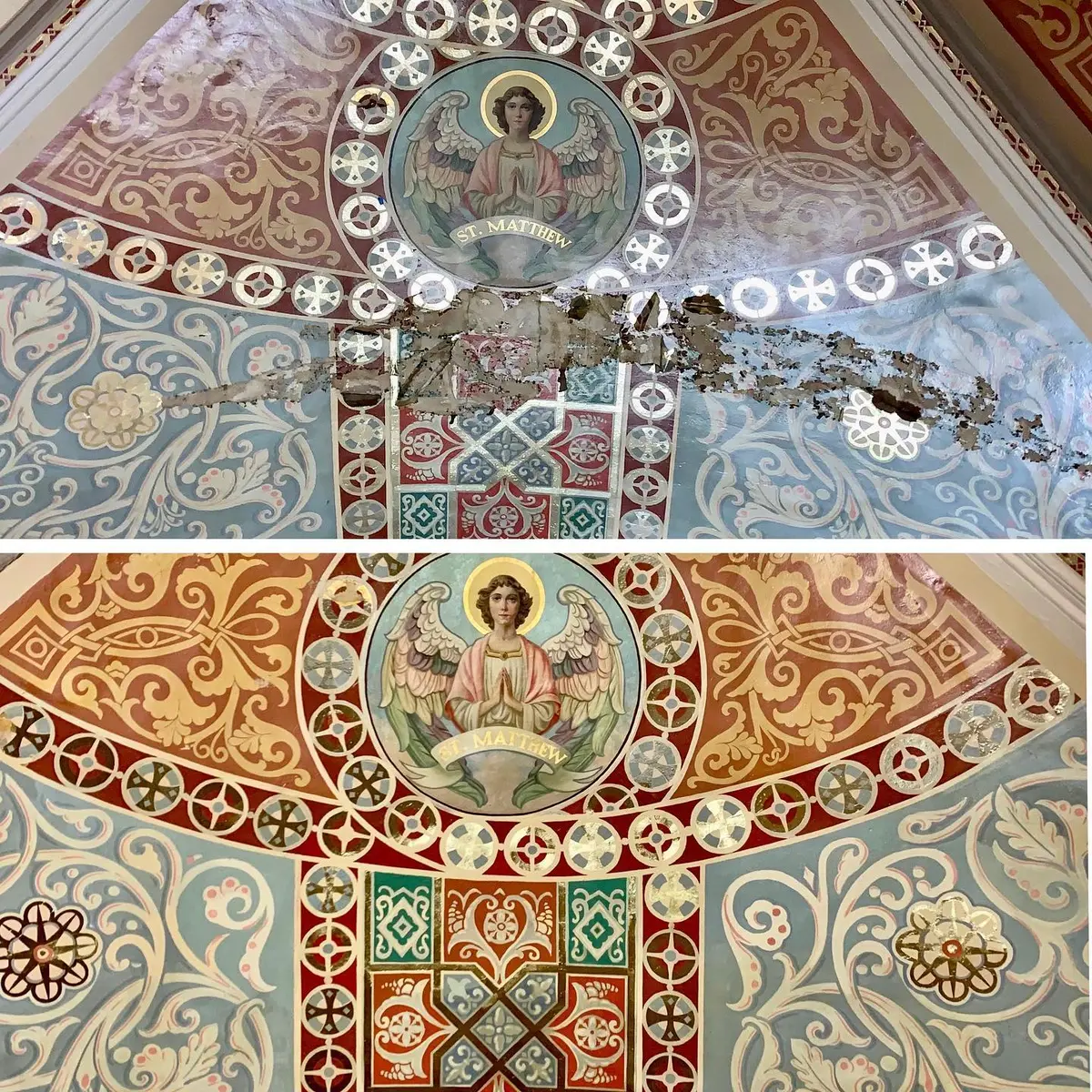
In recent years, Daprato Rigali—thanks to its nearly 40 employees—has compiled one of the most impressive portfolios of church renovations in the country. Among their notable projects in Chicago are Saint Hedwig Catholic Church, done in the ornate “Polish cathedral style,” and Saint Alphonsus Church, whose celestial ceilings have gained attention from both sacred and secular sources. Beyond Chicago, projects include the Cathedral of St. Mary of the Immaculate Conception in Peoria, Illinois; the Cathedral of Christ the King in Atlanta; the Cathedral of the Incarnation in Nashville, and St. Boniface Catholic Church in San Francisco.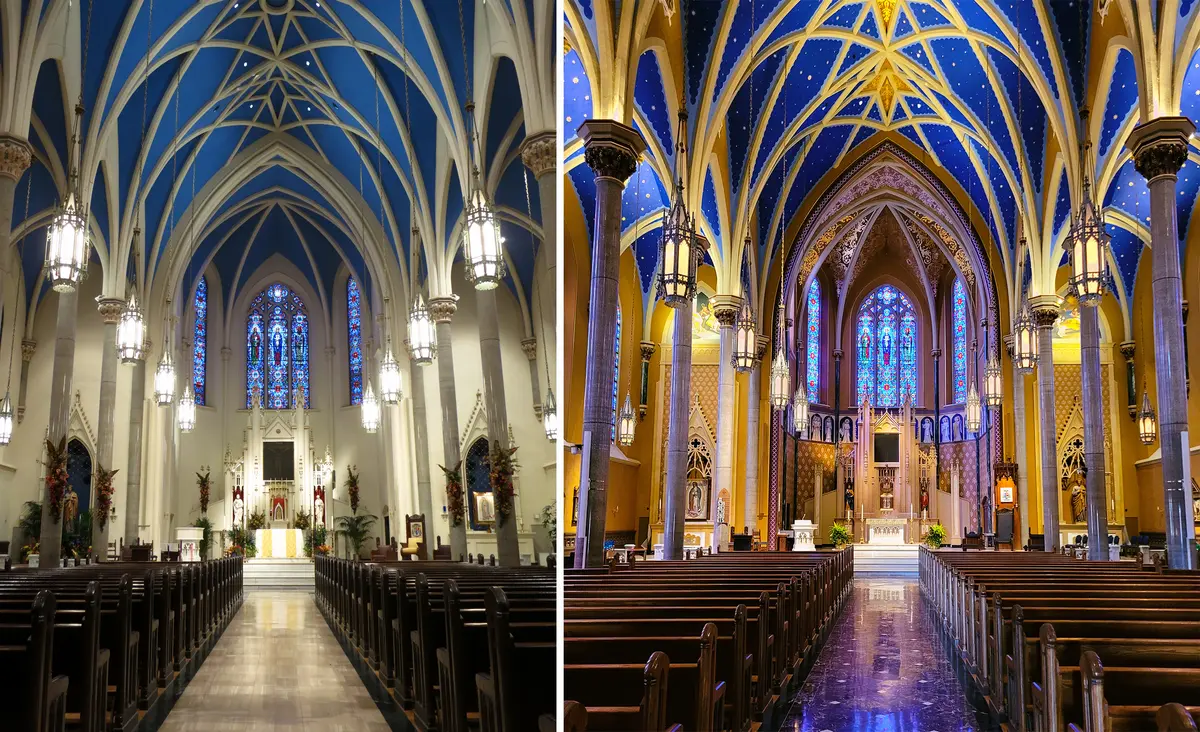
A key component of all these projects is awareness and respect for the church building. Mike said that “our artists know that they are working in, not just a shell structure, but a sacred place that people come to for prayer, so we try to keep it as serene as possible. That includes daily cleanups that ‘minimize our dust’ and keep the projects moving forward.”
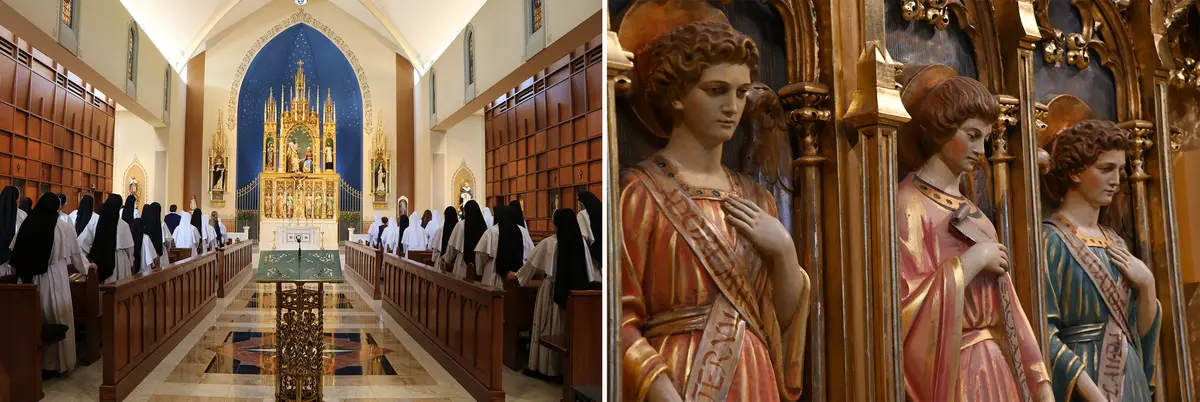
An example of this is the restoration of the Motherhouse Chapel of the Dominican Sisters of Mary, Mother of the Eucharist, in Ann Arbor, Michigan. The sisters needed trustworthy hands to reassemble and repair a reredos (large wall artwork directly behind an altar) from Spain that was over 100 years old. Mother Assumpta summed up the experience: “Not only did they treat every piece of the reredos with reverence, they seemed to enjoy the elegance of this amazing work of worship and of art—and we enjoyed their careful work as well!”
“My dad always emphasized quality, quality, quality in church decoration and restoration,” Mike remembered. “That meant doing the big things well, but also the little things.” He recalled how his father, Robert, would ensure even a hidden plank of wood inside a small door near the pipe organ was painted to match the rest of the color scheme—because, after all, it was part of the church’s interior.
The Next Generation of Rigalis
Because the fourth generation wants to beautify churches indefinitely, they are pleased to have the fifth generation stepping up. Dan Rigali, 39, the oldest of Mike’s four sons, is the first of his age group to take an active leadership role as a project manager. “I had worked with my family intermittently in high school, and, after graduating with a construction management degree from the University of Denver, I worked elsewhere for a few years. I’ve been back for about 11 years now, and I’m completely dedicated to keeping the family business growing,” Dan said.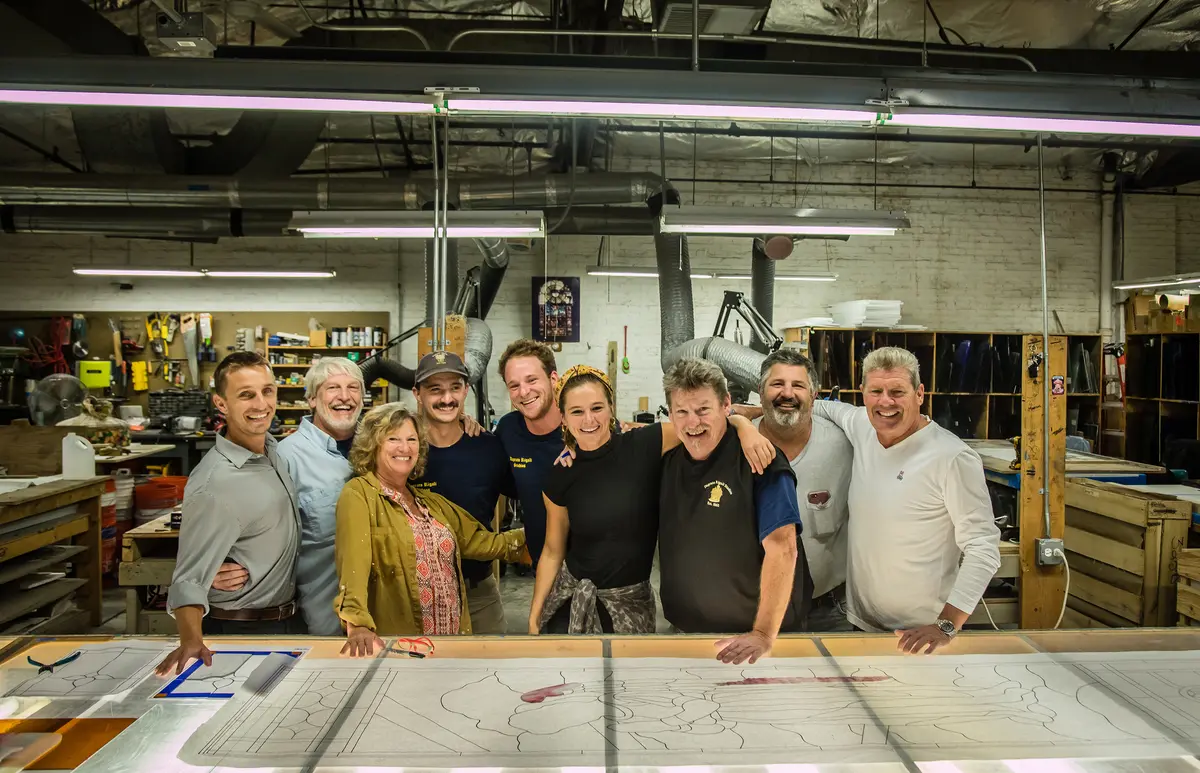
Dan’s brother Jack and cousins Audrey Galvin, Tommy Galvin, Ellie Galvin, Taylor Rigali, and Joey Dealba have also joined the family business. Not many people can say they work for a company that has endured for 145 years, with family at its heart. This longevity is reflected in strong worker retention, with a decorative painter who has been with them for 45 years and another for 42 years.
The company’s commitment to continuing excellence was recognized by Loyola University in Chicago with the 2019 Illinois Small Family Business of the Year Award. Dan said he loves being part of this sacred family tradition and hopes to expand their artistic efforts even further, keeping in mind the intimate relationship among the transcendental realities of beauty, truth, and goodness identified by classical philosophy.
He explained that all congregants should be able to enter their parish churches and—due to the objectively harmonious order before them—exclaim, like Jacob in Genesis 28, “How awesome is this place! This is none other than the house of God; this is the gate of Heaven.” Indeed, the Rigalis believe that the ultimate goal of sacred art is to inspire viewers into continual prayer, empowering a life worthy of admittance to eternal beatitude.
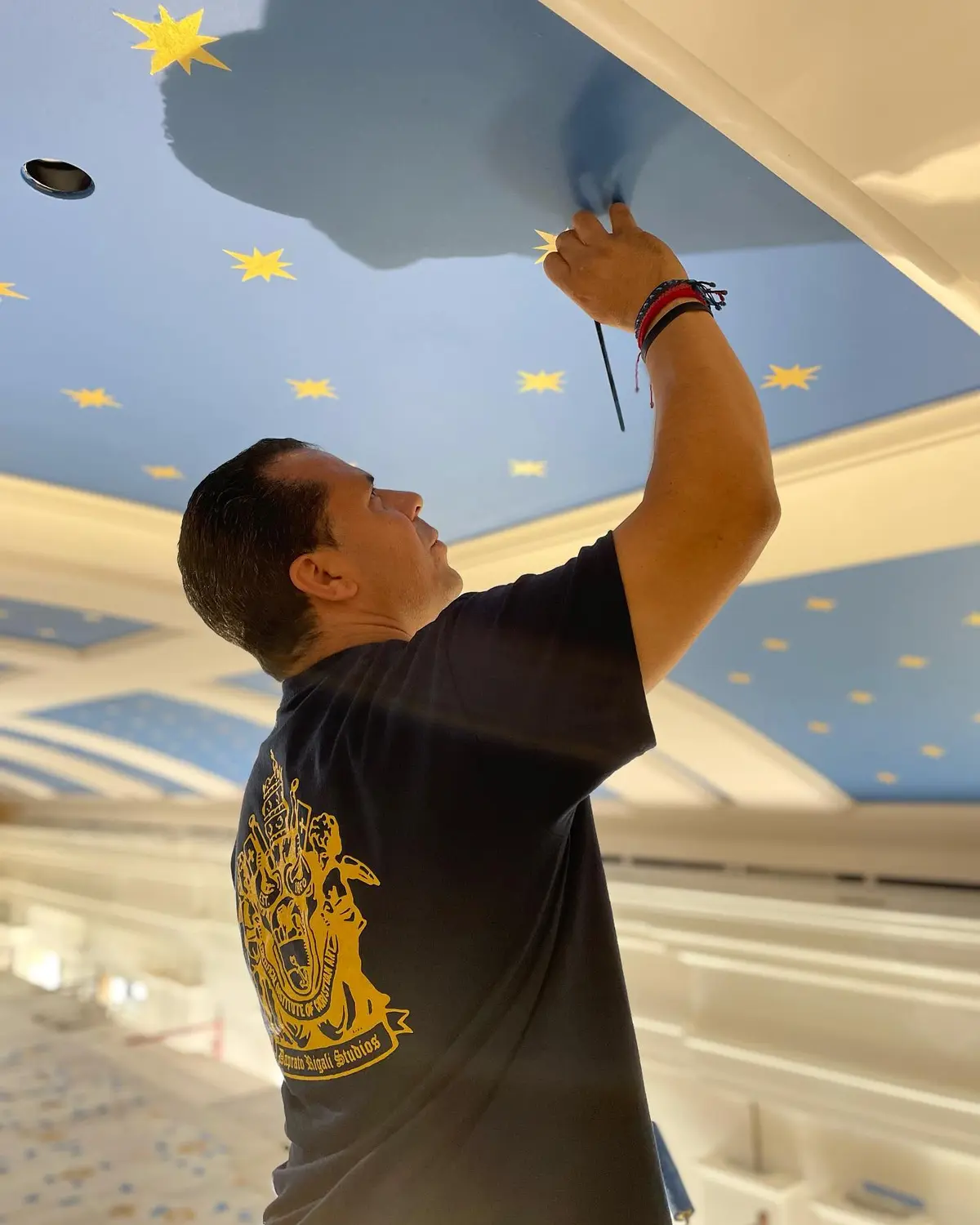
Although Robert Rigali died in December 2020 at the age of 88, his noble work of carrying on his father’s and grandfather’s artistic legacy has been passed down to his own children and grandchildren. The Rigalis have made it their goal to restore all things sacred—a timeless ideal.


_-_nave.jpg)
