“Conflicts, no doubt, will be carried on in the future in the air, on the surface of the earth and water, and under the earth and water,” a young captain wrote while stationed in Leavenworth, Kansas. The year was 1906, a mere three years after the Wright brothers’ first successful flight in Kitty Hawk, North Carolina. Still, the captain’s belief in the future of military aviation was resolute.
The Making of an Aviator
Mitchell joined the Army Signal Corps as an enthusiastic 18-year-old inspired by the Spanish-American War. There, he became familiar with balloons and dirigibles—the latest lighter-than-air technology. The Signal Corps didn’t purchase its first heavier-than-air aircraft until a decade later, in 1909, and Mitchell had little knowledge of it even when he was given a new appointment to the General Staff of the U.S. Army in Washington in 1912.Once there, it wasn’t long before he had his heart set on the cockpit. But the Army wouldn’t let him fly—at 38, he was deemed too old. Instead, Mitchell, now a major, paid for private lessons at the Glenn Curtiss Aviation School in 1916.
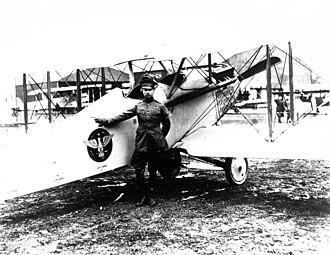
He set his boots on the ground in France in March 1917, but he wasn’t there to fight. Instead, he’d been tasked with studying military aircraft production. Less than a month later, the United States declared war on Germany.
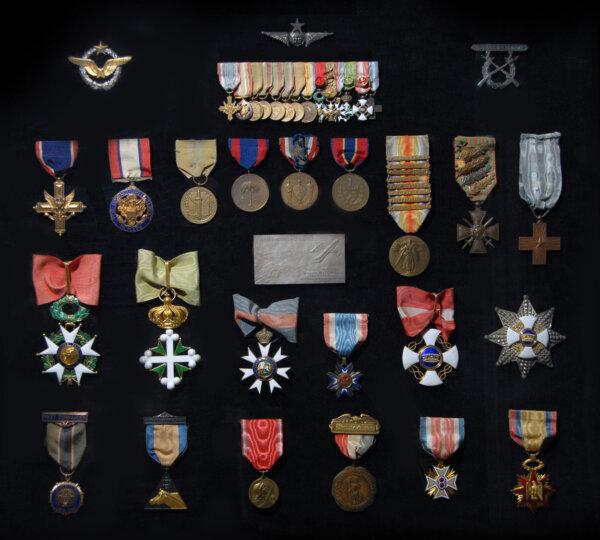
Launched from an observatory role into active leadership, Mitchell was promoted to the wartime rank of brigadier general and given command of all the American aerial combat units in France. He put his pilot training to good use, becoming the first American Army aviator to cross enemy lines. For his wartime service, Mitchell was awarded the Distinguished Service Cross for valor and France’s Legion of Honor.
Proving the Airplane’s Potential, Fulfilling the Prophecy
After WWI ended, Mitchell’s voice became a familiar sound in the White House and military circles as he adamantly advocated for the creation of an independent air force. The Navy was no longer sufficient for national defense. Plus, aircraft were useful not only for wartime missions, but also for peacetime missions such as border patrols, forest fire patrols, and aerial mapping.
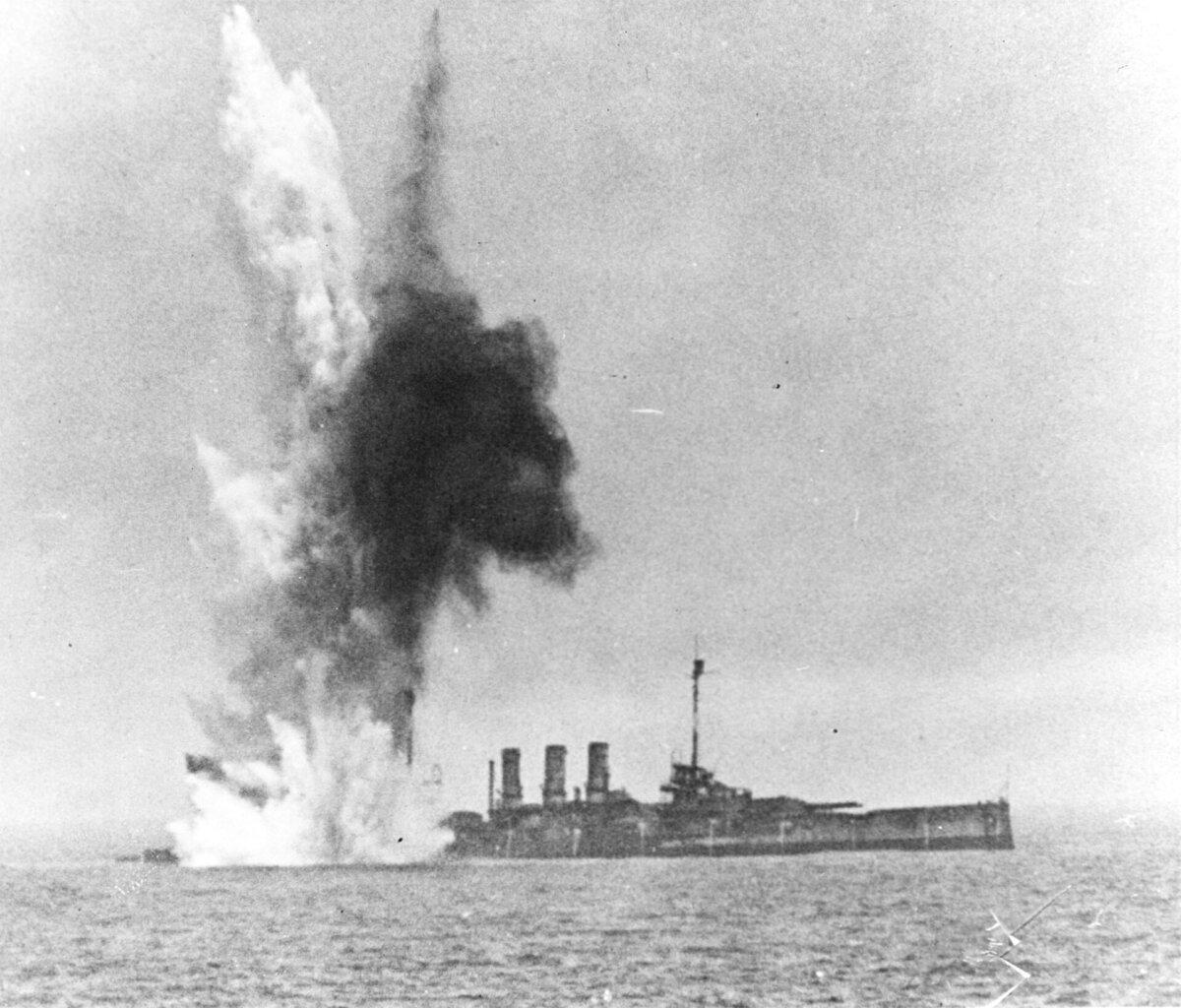
In 1921, the Navy called for a series of tests to evaluate the effects of aerial bombs on ships. Finally, Mitchell had his chance to prove the offensive potential of military aviation. He and his unit dropped six 2,000-pound bombs on the captured battleship Ostfriesland, sinking it within 20 minutes. It was the first time a modern battleship was sunk as a direct result of aerial bombing. The event “deeply impressed itself on the public’s mind,” Alfred Hurley remarked in the Smithsonian. “Mitchell had sunk a battleship, as he claimed he could.”
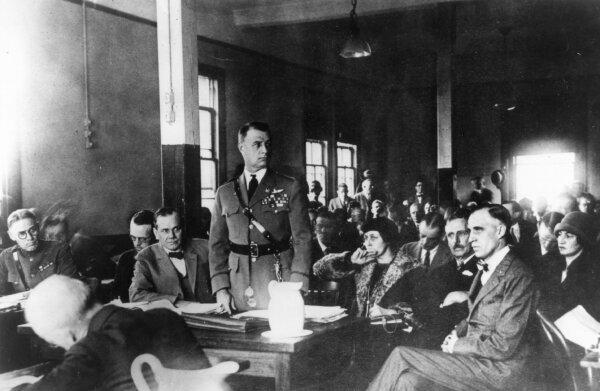
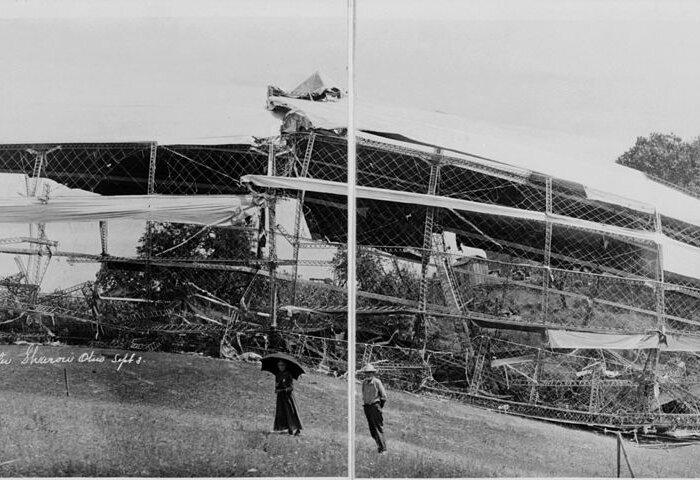
The Navy was less impressed: His unit had sunk an anchored and unmanned ship. He found his dismissal of naval power insulting. Not one to be deterred, Mitchell became increasingly outspoken after the Ostfriesland test bolstered his popularity. When he publicly accused Navy leadership of incompetence and criminal negligence for a dirigible accident, Mitchell’s superiors had had enough. Court-martialed and convicted of insubordination, Mitchell resigned in 1926.
Billy Mitchell’s military career was over, but his campaign for an independent air service continued. Following an inspection tour of the Pacific in 1924, he’d predicted that a coordinated Japanese surprise attack would one day start a Pacific War with the United States.
“Attack will be launched as follows,” he wrote in an official report. “Bombardment, attack to be made on Ford Island (in Pearl Harbor) at 7:30 a.m. … Attack to be made on Clark Field (Philippines) at 10:40 a.m.”
Mitchell did not live to see his predictions play out. He died from heart problems and influenza in 1936. However, as political tensions rose in Europe and Asia later that decade, the military could no longer overlook the realities of modern aviation. Beginning in 1939, the War Department established new bases and air organizations, both overseas and domestically, and began accruing more personnel. The rapid growth necessitated structural changes. In June 1941, the Air Corps became the United States Army Air Force (AAF), a more autonomous service. Even so, it remained part of the U.S. Army and answered to the Army chief of staff.
The aviation division was growing stronger, but it was still unprepared for the exact situation that Mitchell had predicted 17 years earlier.
At 7:55 a.m. on Dec. 7, 1941, Japanese aircraft attacked Pearl Harbor, swiftly damaging or sinking several dozen U.S. warships, including eight battleships. Hours later, they bombed the American military base at Clark Field.
The devastating, coordinated strikes reflected Mitchell’s 1924 warning precisely, targeting the same locations he had mapped out. This attack validated Mitchell’s warnings about the growing power of air warfare.
Mitchell’s Pacific War had begun.
The U.S. Air Force Takes to the Sky
After the United States entered the war, the AAF’s size exploded. In 1939, it numbered 2,200 aircraft and 26,500 members. By 1945, it had swelled to 63,715 aircraft and 2,253,000 members.The AAF played an essential role during the war, engaging in round-the-clock strategic bombing operations, long-range fighter escorts, and logistical support. Its pilots provided crucial air support for Allied ground troops and courageously forayed into hostile enemy airspace.
In many instances, their participation proved decisive. In August 1945, AAF pilots dropped the atomic bombs on Nagasaki and Hiroshima—effectively ending the war in the Pacific. With the world entering a tense new era, the nation’s military strategy had to evolve rapidly. In March 1947, President Harry S. Truman delivered a landmark speech to Congress, committing the United States to containing the global spread of communism. The Truman Doctrine, as it was called, officially marked the beginning of the Cold War.
It was 41 years after he wrote his 1906 paper that Mitchell’s ultimate dream became real. In recognition of the AAF’s monumental contributions to World War II and partly to face the looming Soviet threat, Congress passed the National Security Act of 1947. The act created a fully independent U.S. Air Force, equal to the Army and Navy.
Following the war, Mitchell was posthumously promoted to major general and awarded a Congressional Medal of Honor for his “outstanding pioneer service and foresight” in American military aviation. The pioneer was gone, but the United States Air Force was finally ready to take flight.