“Emet” begins as an epistolary confessional of sorts, penned by Benjamin Golub, an 86-year-old rabbi living in Nashville, Tennessee. He worries about the repercussions of his actions in the last few years—both legally and spiritually.
Originally from Chicago, Benjamin admits he was never a truly devout student of Judaism and essentially fell into the rabbinical line of work by accident. His faith wavers frequently. But he hides that fact from his congregants, whom he knows to be very good people.
Maya, his devoted wife, is a physical therapist, and they currently live with their 11-year-old grandson Max, a budding genius who’s also turning out to be a bit of a troublemaker in school—but in a good way.
One of Benjamin’s favorite haunts is a local coffee shop called The Orphanage, run by a middlingly unsuccessful sculptor, Ed Ristic. Benjamin has also befriended Tamara Klein, a young publicist who recently moved from New York.
Tamara suffers a terrible tragedy early in the story, the kind from which most people might never recover. Ed immediately comes to her aid. Benjamin recognizes that something has shifted in his relationship with Tamara, and they are now destined to be together.

Whirlwind
In early October 2023, a convergence of two tornadoes seriously threatens the synagogue. In the end, the temple was unharmed, but the grounds were swamped by a torrent of mud washed from the surrounding hills.Benjamin laughs along with them, but after a restless night of sleep, he impulsively does just as his grandson suggested. Not surprisingly, nothing happens—at least not right away.
Simon Says
“Emet” author, Roger L. Simon, is an American novelist, screenwriter, and director whose career has spanned publishing, film, and media commentary. His “Moses Wine” detective novels are his most successful works of fiction, which won the John Creasey Award from the Crime Writers of Great Britain.When it comes to screenwriting, Simon’s no slouch. His 1989 film “Enemies, a Love Story” garnered several Academy Award nominations, including one for Best Adapted Screenplay. He has also worked as a director, taught at film and writing institutions, and served in leadership roles in the Writers Guild of America.
Initially, the tone of “Emet” suggests that this will be a very serious book, as if you’re reading a clandestine, top-secret file from Mossad itself. That tone is especially strong when the tragedy hits Tamara. Simon’s writing style works very well here, giving the impression of something momentous and world-changing.
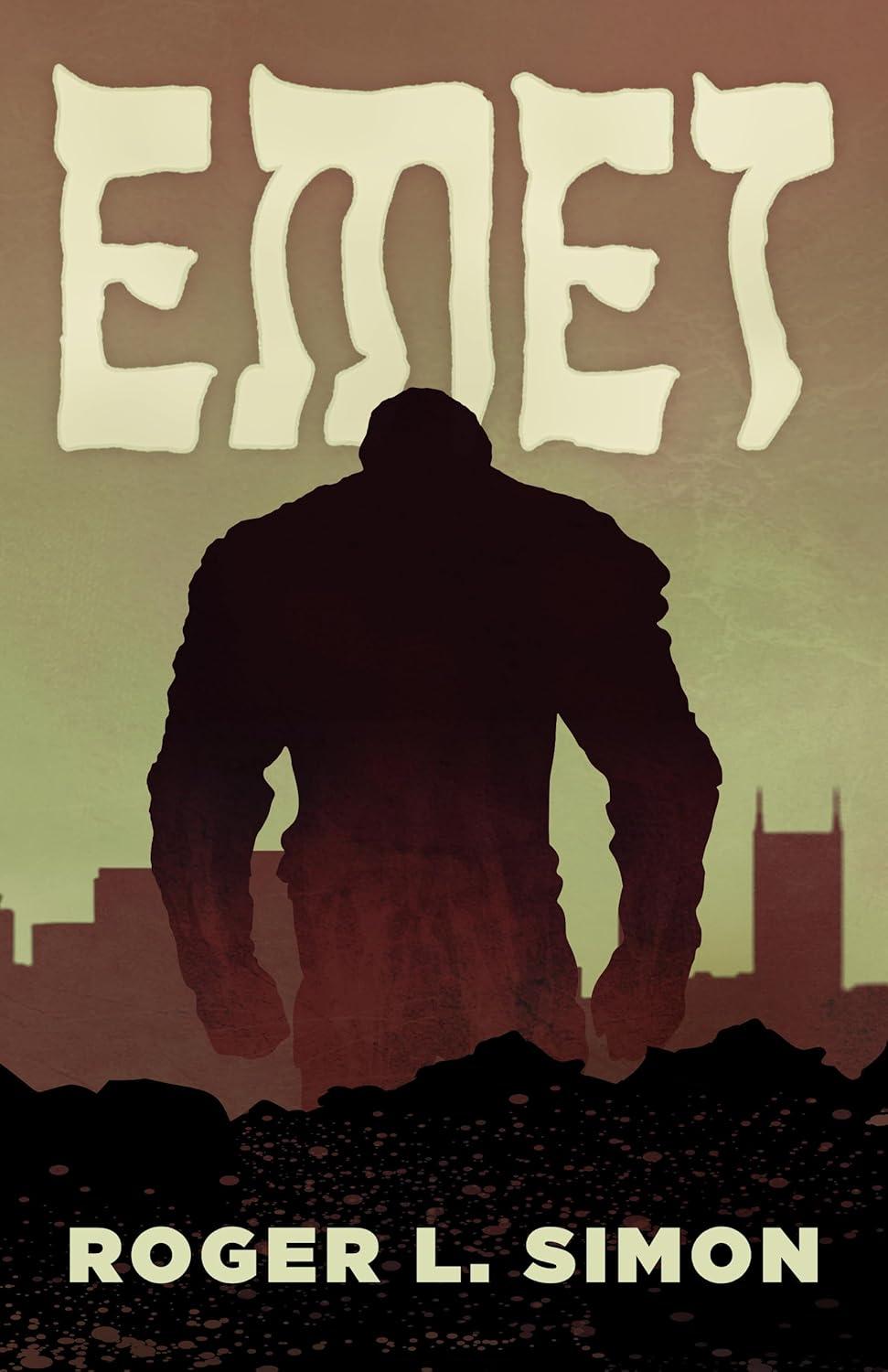
However, he throws a curveball at readers soon after the Golem appears by including several light, humorous moments. At one point, Benjamin sends the Golem on a scolding revenge mission. In a hilarious way, the creature embarrasses a female political figure who regularly spouts hatred against Jews.
Art Mirroring Life
Benjamin and the other heroes of “Emet” are struggling to come to terms with the sudden resurgence of attacks on Jews in Israel and around the world. At the same time, they’re troubled by the political strife and attacks on traditional values at home. Frequently, the two intermingle.Simon’s exploration of these issues takes many forms, some of them as simple as the discussions Benjamin has with Ed about religion, as the rabbi helps him convert to Judaism. Ed’s motivations are partly due to his relationship with Tamara, but also for his own reasons. Through their talks, Benjamin is also digging deeper into his own shaky faith with hopes of finding a closer connection to G-d (as religious Jews often refer to God).
When Benjamin activates the immensely powerful Golem in an attempt to make life safer and better for his community, the moral angle is at the forefront of his mind. “I’m just some shlepper in Nashville,” he laments, “who ended up with a job because they couldn’t find somebody better. … I’m not even a good Jew.”
Beyond the highly entertaining fantastical aspects of “Emet,” Simon’s story is about traveling the path of faith, and how someone responds to G-d’s call. In both cases, Simon’s considerable talents are put to excellent effect.