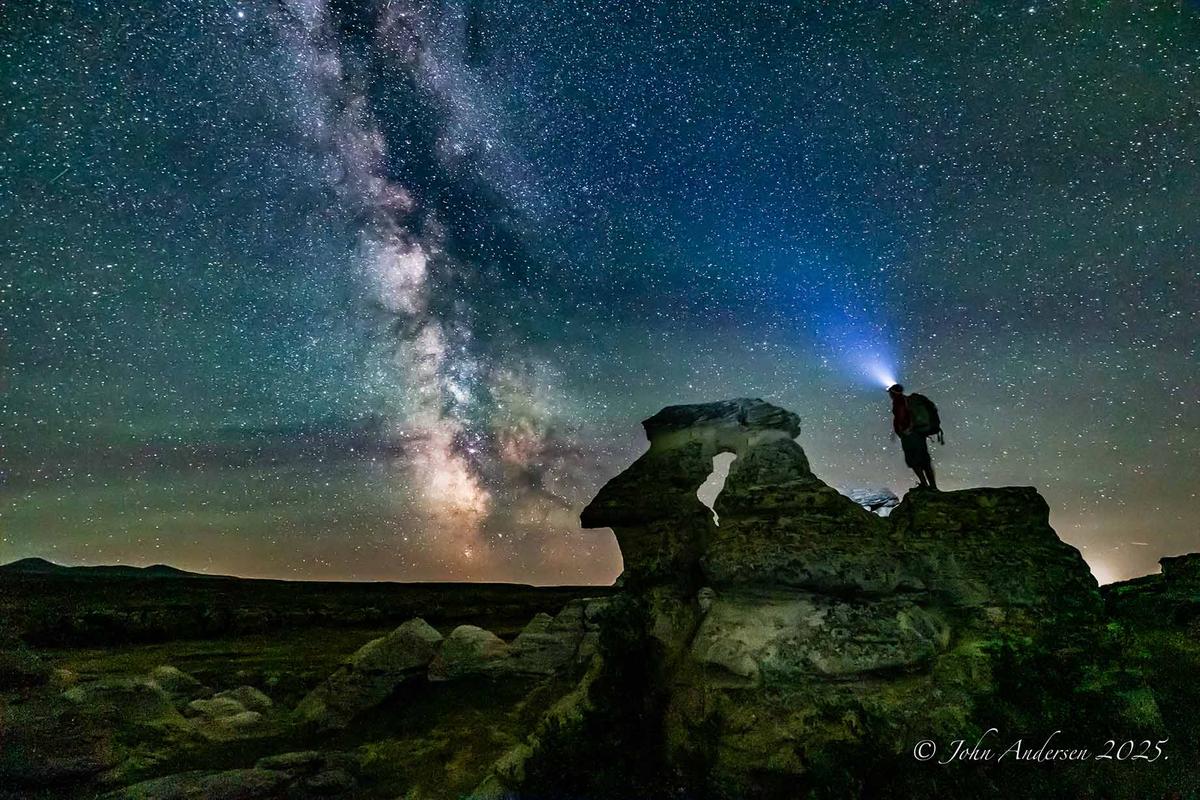
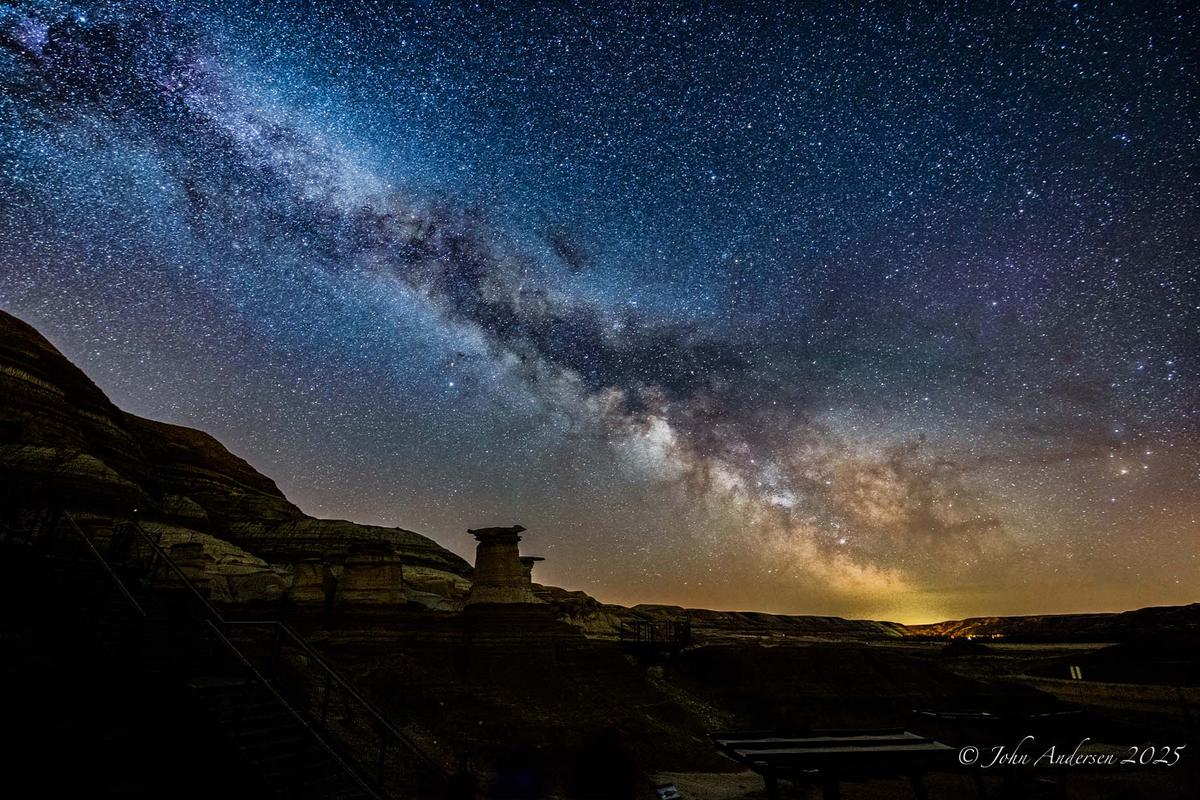
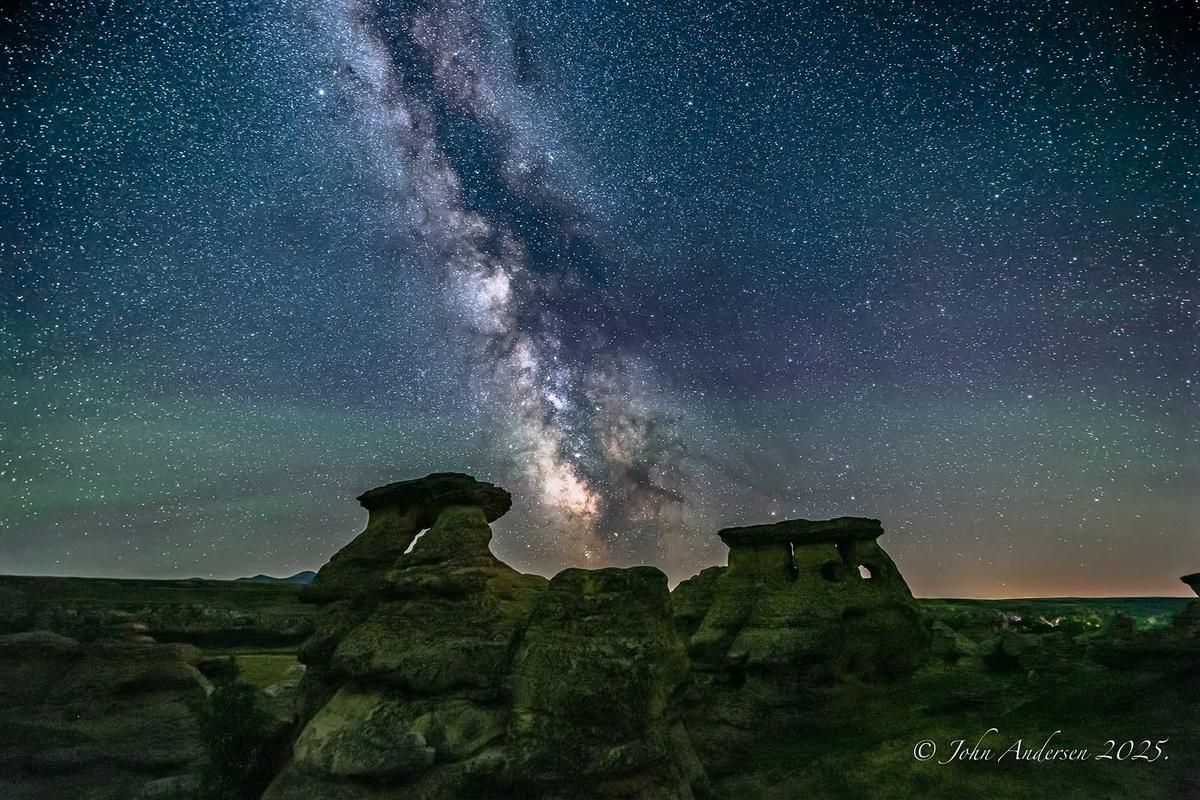
The sun was setting when John Andersen grabbed his camera, jumped in his car, and drove west of city limits in search of his finicky nighttime subject matter. For astrophotographers like Andersen, shooting the Milky Way galaxy has traditionally been a nighttime gig—one that thrives in perfect darkness with zero sodium city lights in sight.
Andersen, from Calgary, tells The Epoch Times he’s willing go to great lengths to capture the central core of our galaxy, which, scientists believe, swirls around an invisible black hole some 4 million times as massive as the sun. It appears brightest in the fall, he says. The photographer braves a hazardous stretch of road into the secluded and rugged mountains where wildlife frequent the highways at night and big cats stalk wary visitors.
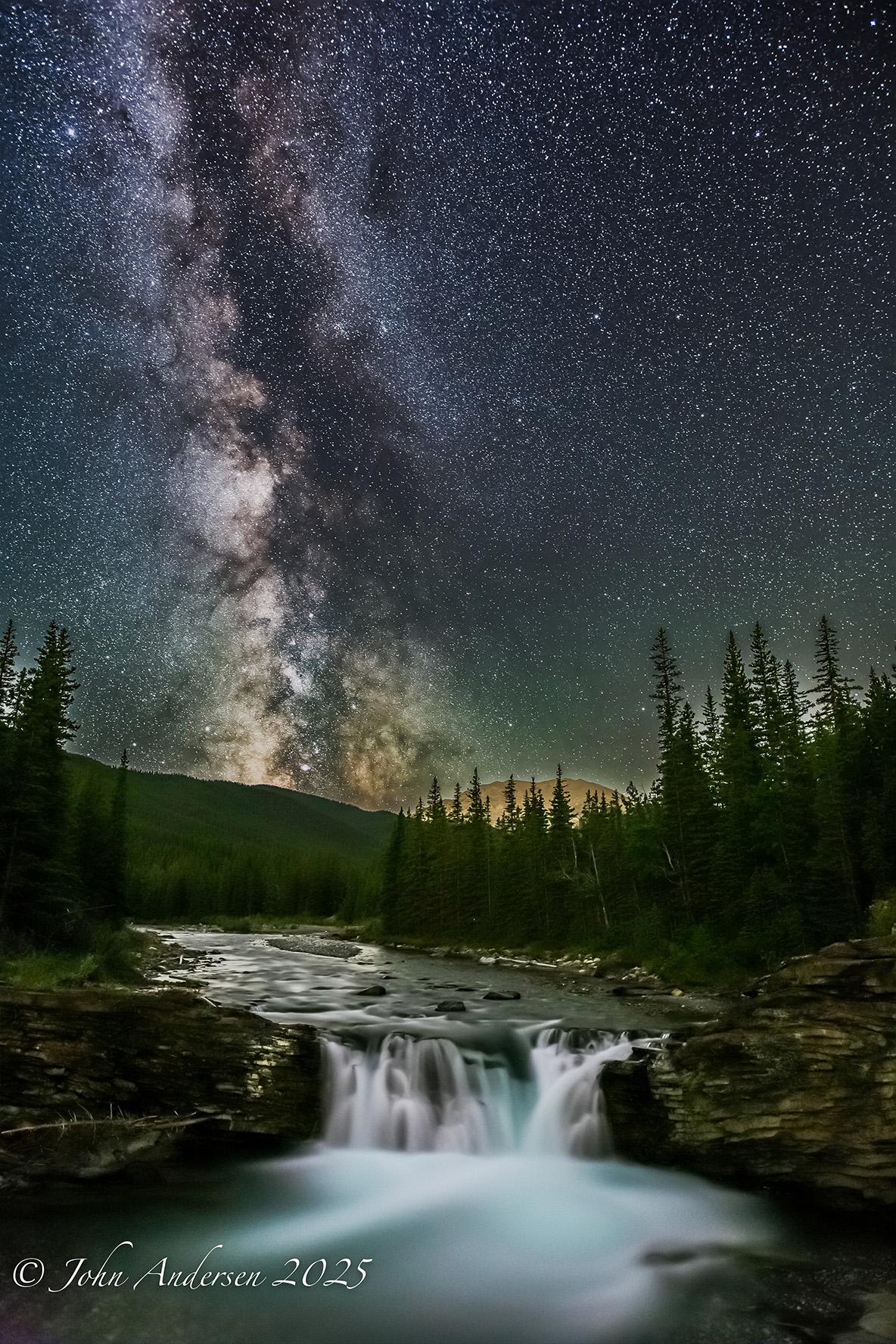
Nervously eyeing the herds of deer and cows roaming by the roadside, while driving through swarms of bugs that pound like rain against his car, Andersen arrives intact at Sheep River Falls in Kananaskis, Alberta, as twilight sets in. The sky is clear. He should have no problems using his manual DSLR to hone in on our galaxy’s super massive central star cluster.
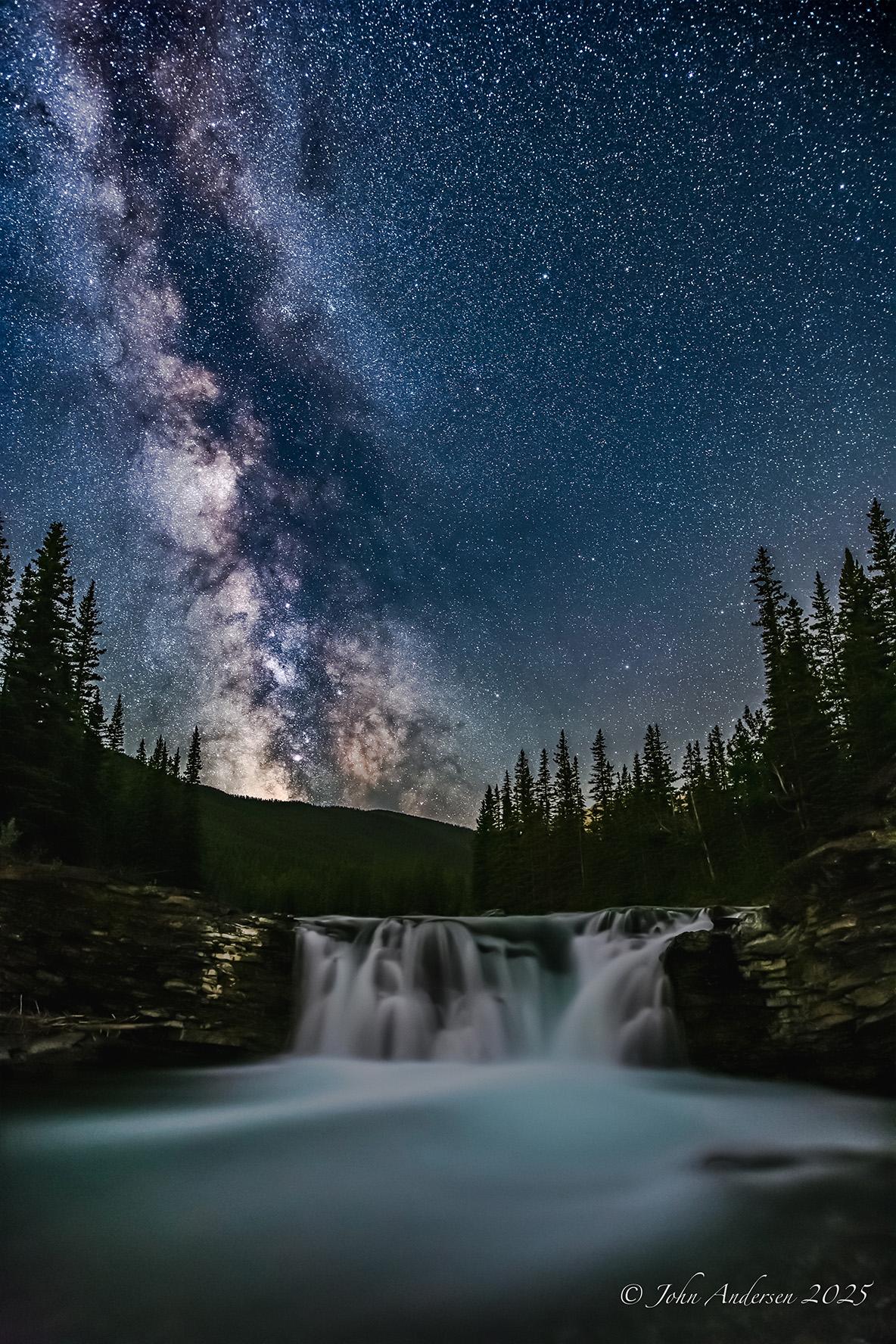
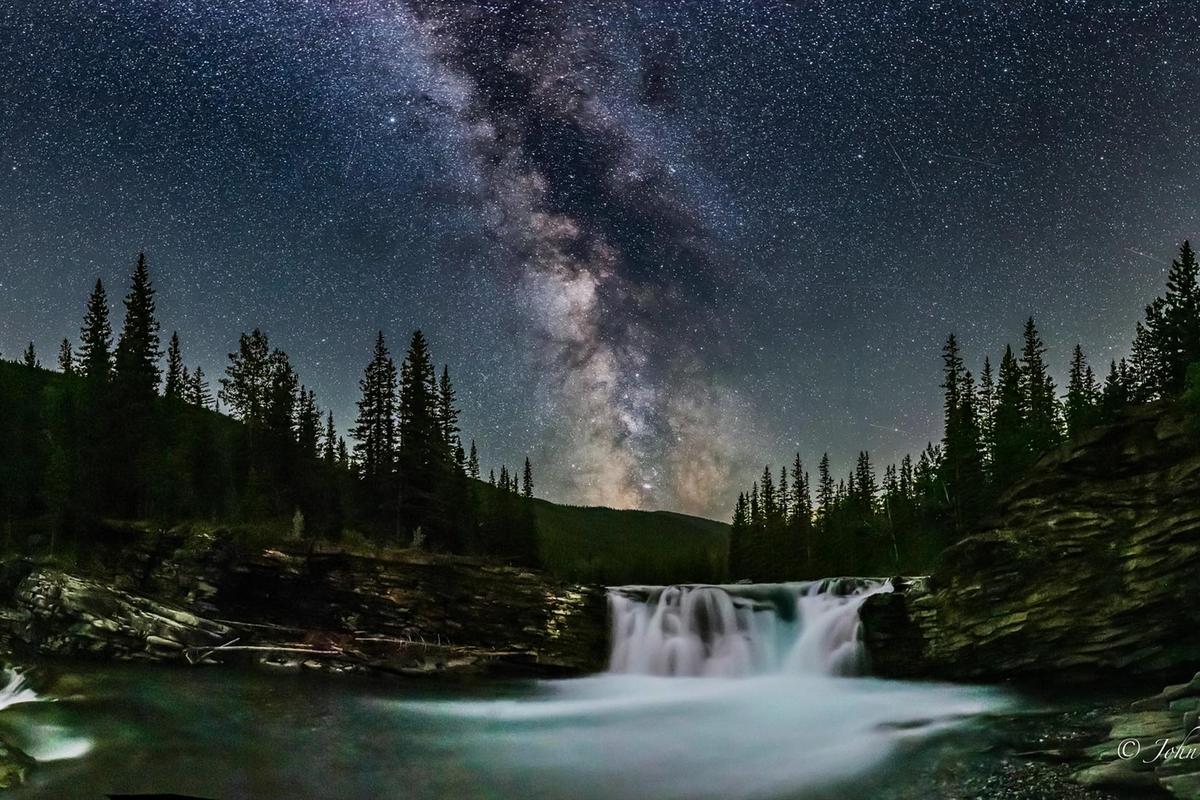
Setting up his tripod in the darkness, Andersen navigated the steep and dangerous slopes around the falls with extreme care. In certain locations, he would also have to contend with another “hazard” that regularly plagues his work: crowds of other photographers. But on this night, only two other guys were there, checking out the falls, to whom Andersen gladly showcased his setup and regaled them with details about the gorgeous skies they were witnessing.
This is a Bortle Class 3 dark sky, he told them, with no light pollution shining in the direction of the Milky Way, meaning you can see its detailed structure and even more distant galaxies. Cloudy space nebulae also appear while globular star clusters are visible to the naked eye.
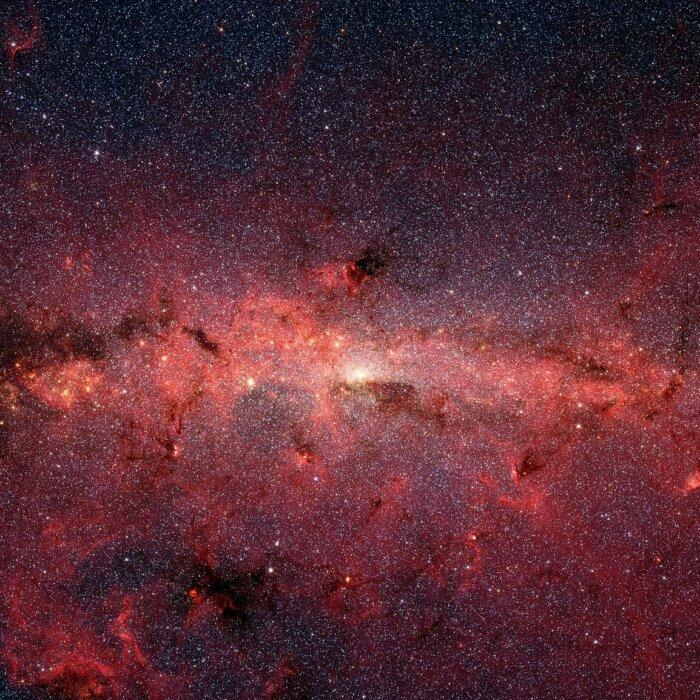

Yet with all the environmental factors lining up in his favour—the darkness, the new moon, the weather, no crowds—Andersen still couldn’t escape the ultimate cosmic photobomber: Elon Musk.
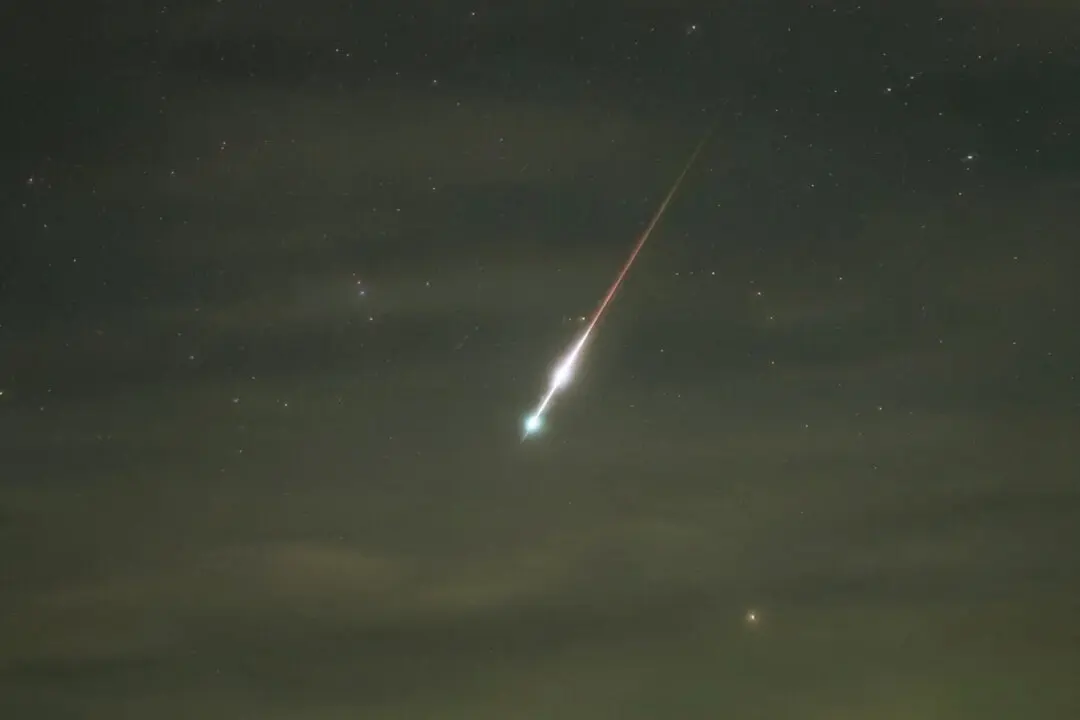
“Since I started going out in the last 10 years, Starlink has become a thing,” he says, speaking of SpaceX’s global satellite communications program. “Elon’s sending up Starlink trains left, right, and centre.”
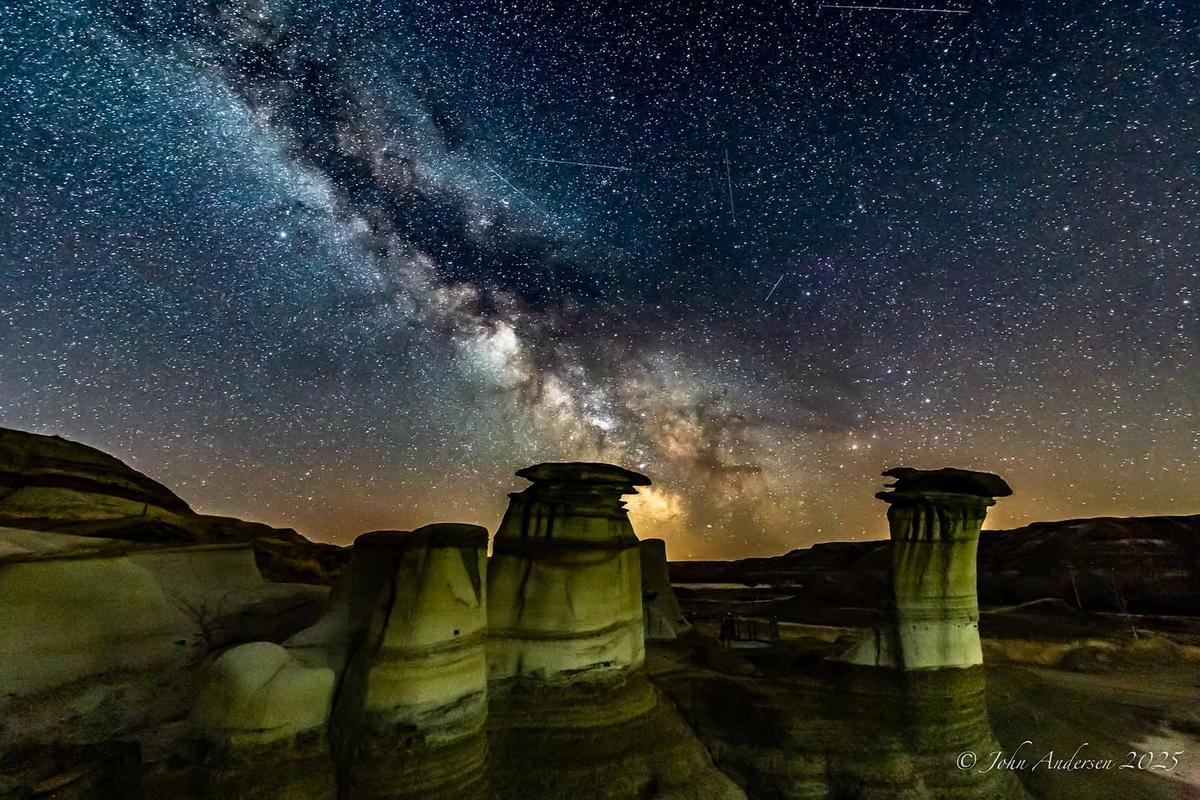
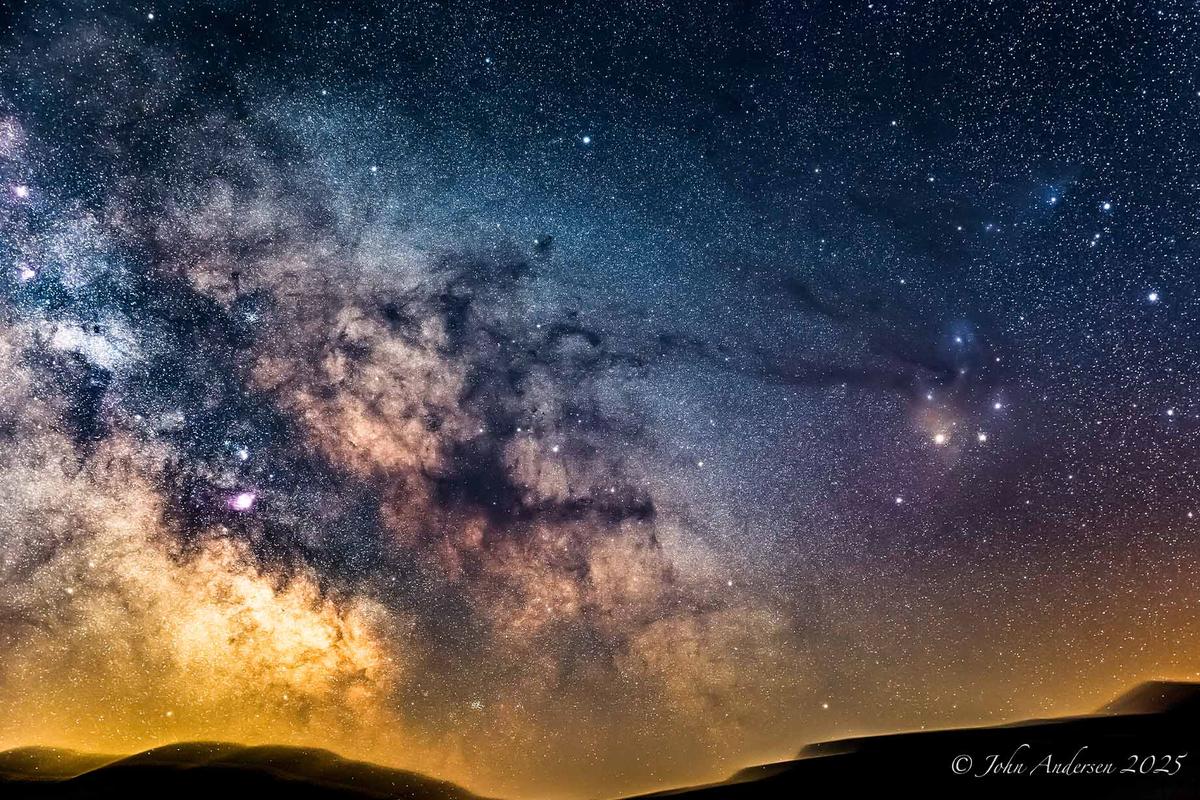

Andersen, who began his amateur photography career five decades ago, was among the very first nighttime photographers to emerge with the advent of digital cameras, which could capture what no film camera could. At the time, he and his local photography club began scouring the countryside for dark sky locations to photograph comets, aurora borealis, and, of course, the Milky Way.
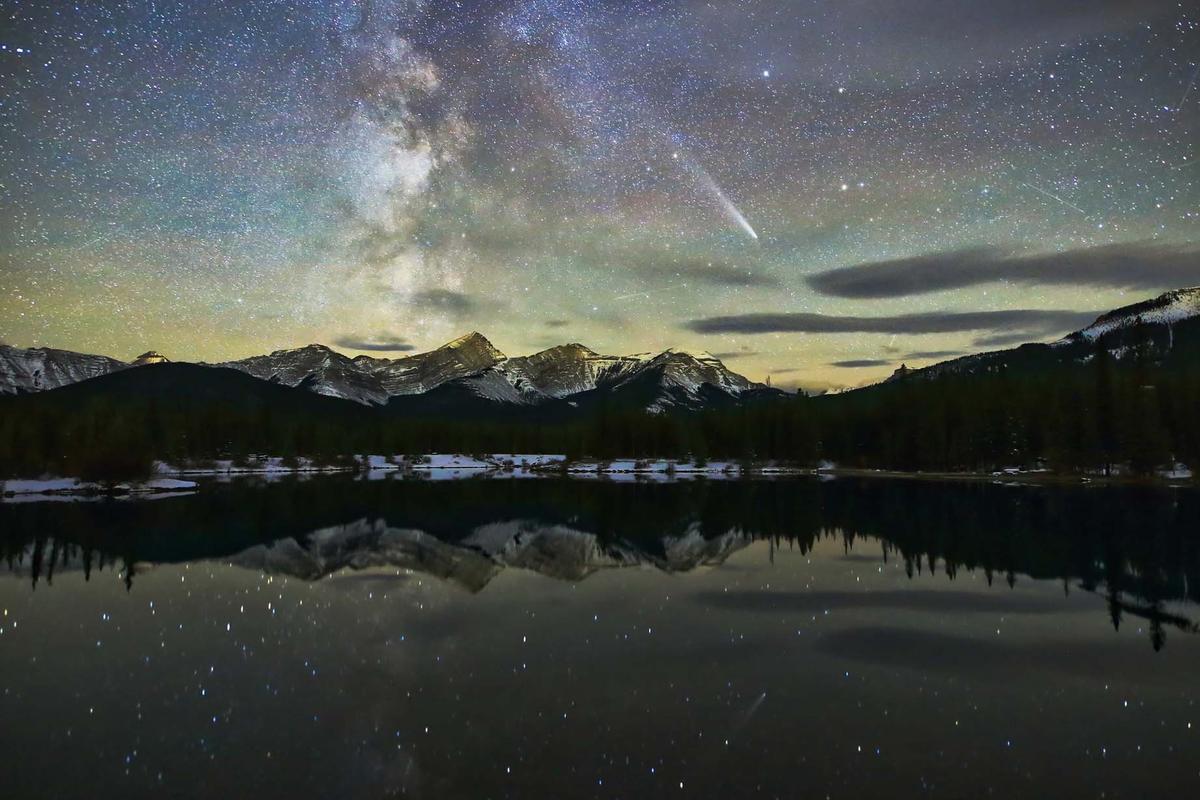
He prefers to include water features with reflections of the stars in his pictures, so he sought out rural ponds and bodies of water—like Forgetmenot Pond, also in Kananaskis, north of Sheep River Falls. The road leading there is also hazardous. “There’s wild horses out there,” he says, “often at night.”
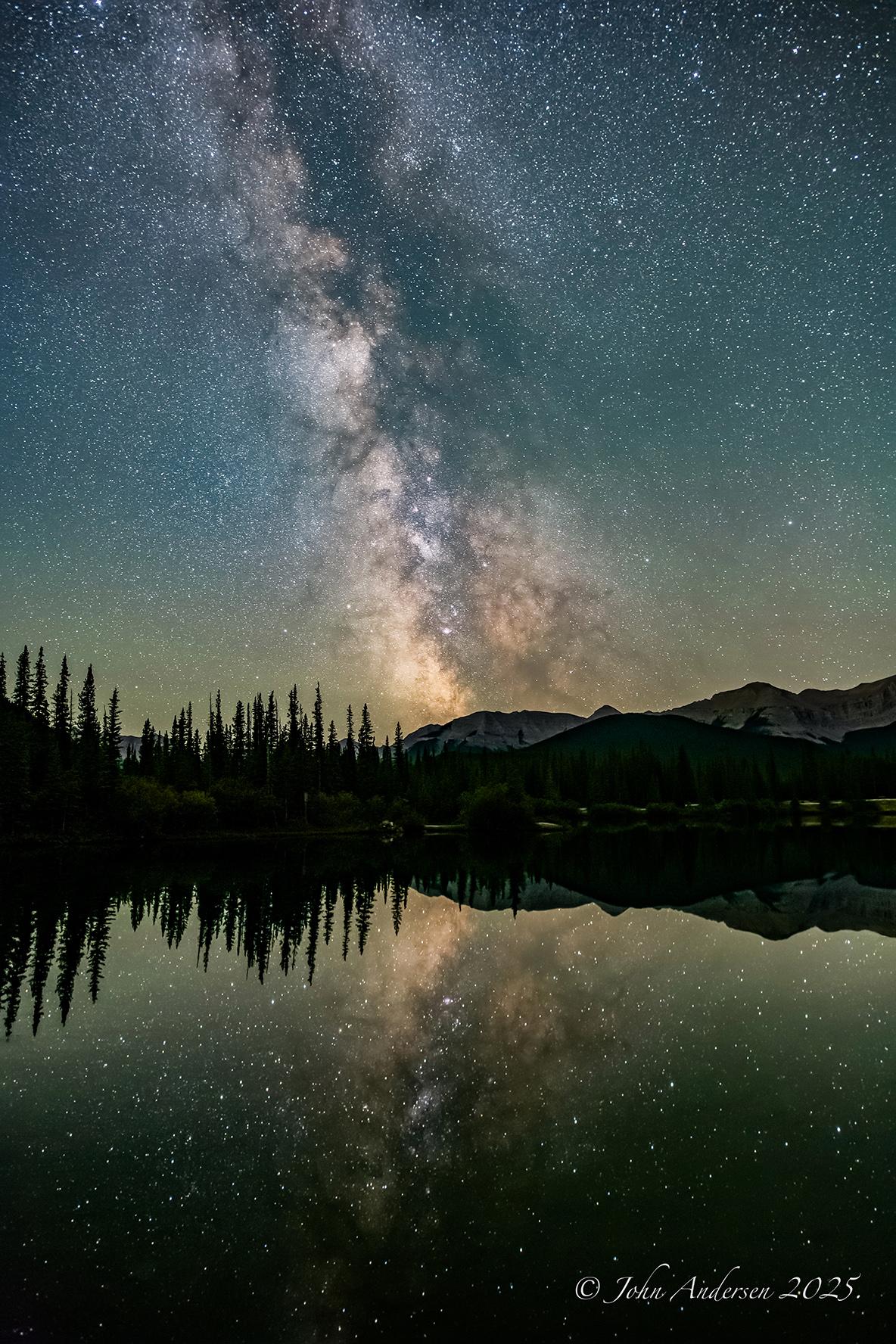
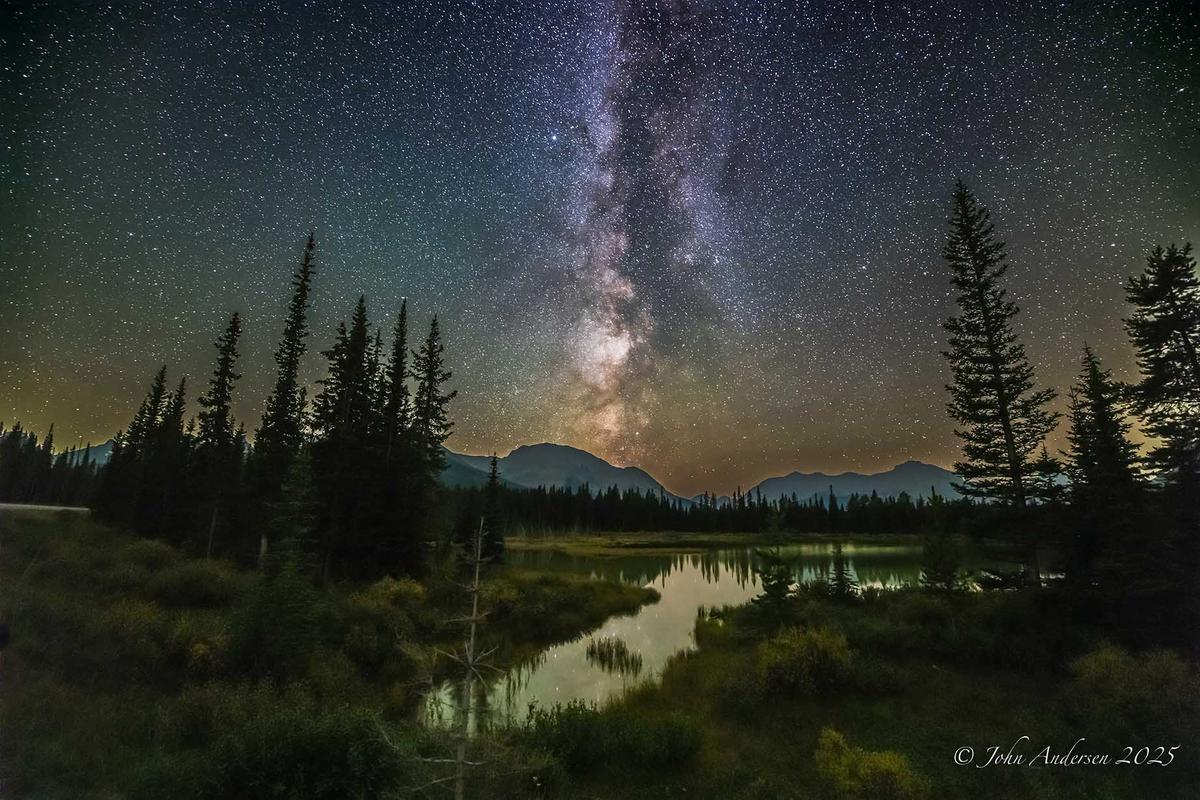
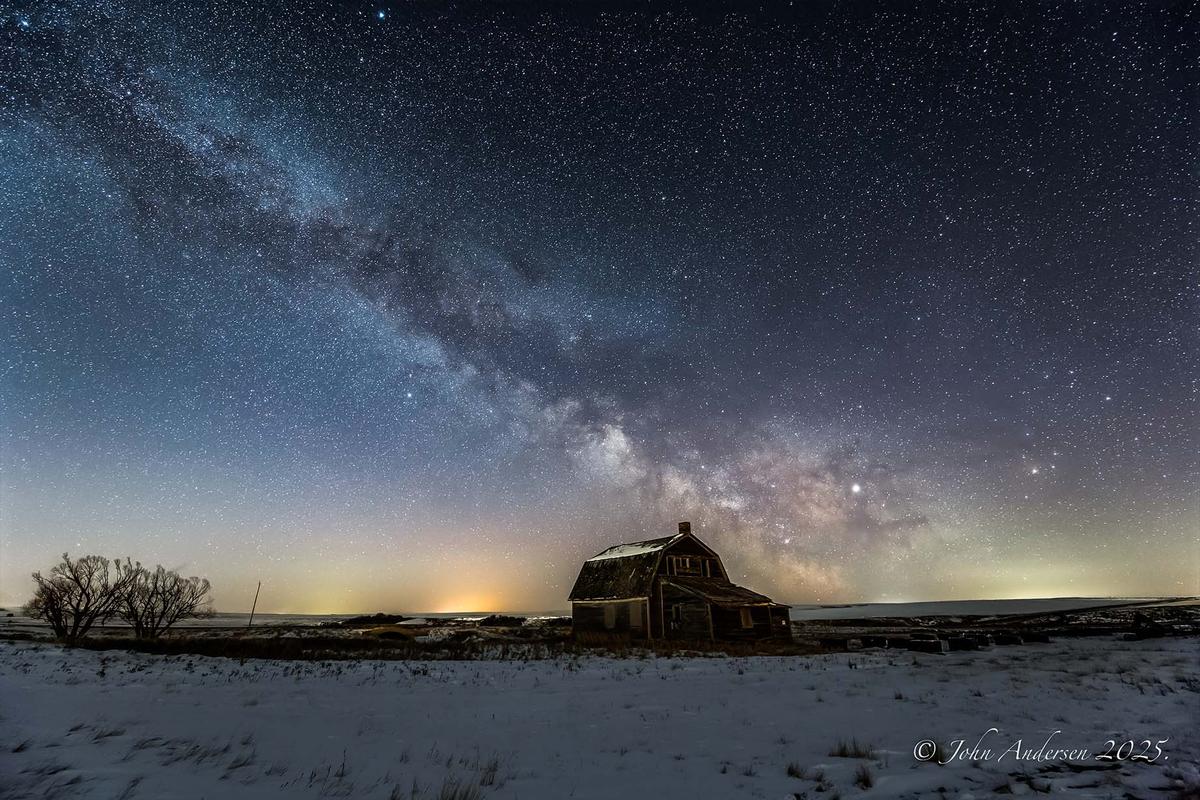
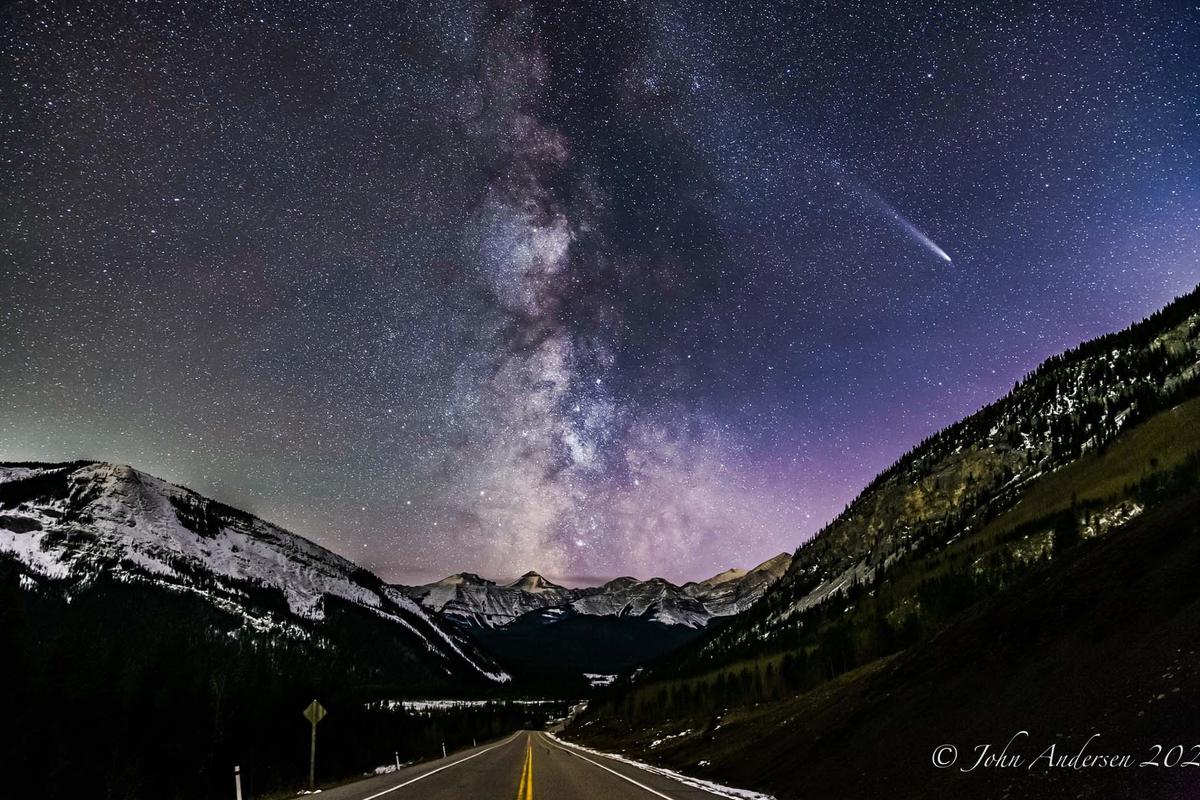
While contending with cougar sightings and bighorn sheep on his journeys, Andersen often chooses to rendezvous with a photography buddy or two and also prefers to travel light. It’s safer that way, he says. Gear can get downright crushing in the wild—especially when lugging equipment such as star trackers, which were the standard back in the days of film astrophotography.
While the more portable and powerful AI smartphone cameras are all the rage today, though, Andersen still sticks to the fundamentals of photography, preferring manual settings to automation. His method creates images of the Milky Way by stacking photographs, which helps cut out noise, removes unwanted satellites as much as possible, and sharpens the details.
More Photos of the Milky Way by John Andersen