American-Made: The New Gentlemen and the Republic

From powdered wigs in Parliament to the American Revolution, the meaning of a gentleman underwent a transformation that’s still relevant to men today.
American-Made: The New Gentlemen and the Republic
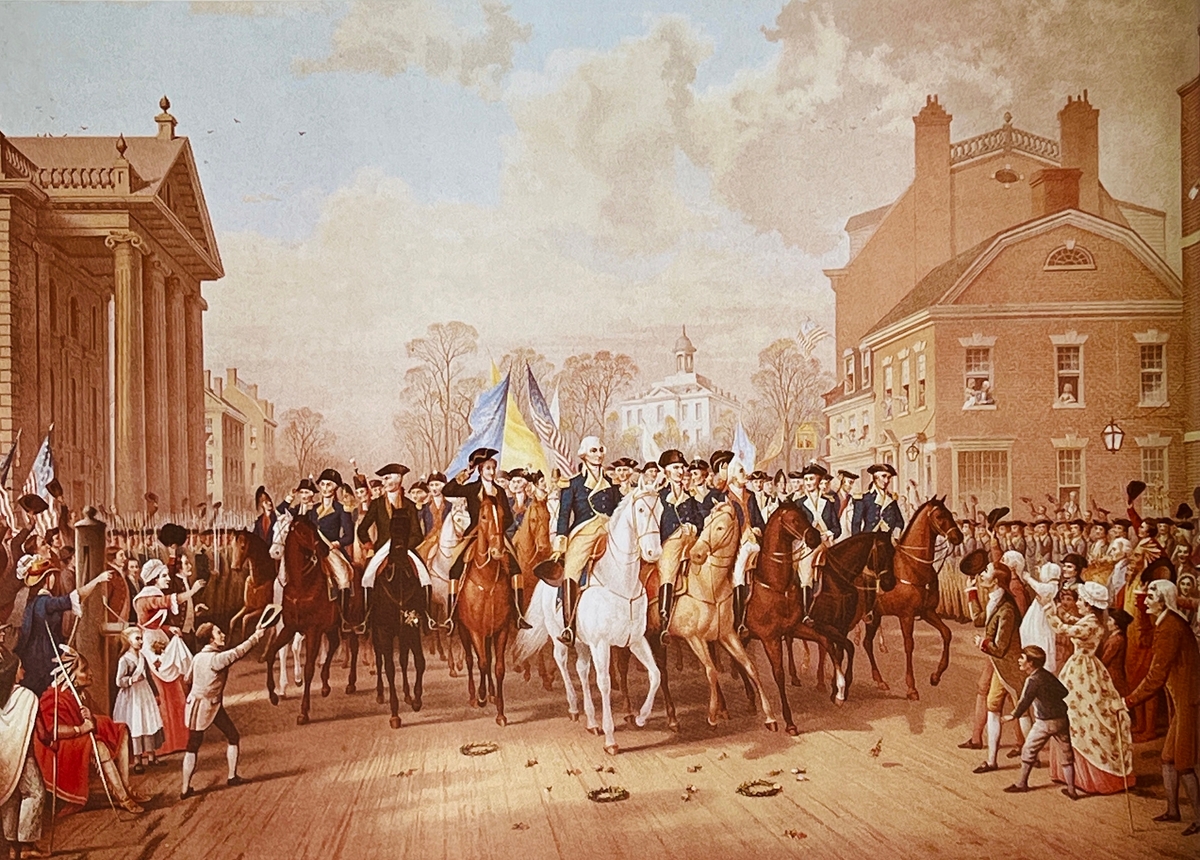
A 19th-century illustration of Washington entering New York on Nov. 25, 1783. clu/Getty Images
|Updated:
0:00

During the 18th century and well into the 19th, class governed Britain.

In the House of Lords sat the Lords Temporal and the Lords Spiritual. The former consisted of hereditary nobility such as dukes and barons; the latter, of bishops and archbishops. Membership in the House of Commons was more diverse: lawyers, military officers, a few wealthy merchants, and most importantly, the landed gentry, which consisted of knights of the shire, men with large estates and an eminent lineage, and country gentlemen, who were one tier down but “of high birth or rank, good social standing, and of wealth, especially the inherited kind.”

Jeff Minick
Jeff Minick
Author
Jeff Minick has four children and a growing platoon of grandchildren. For 20 years, he taught history, literature, and Latin to seminars of homeschooling students in Asheville, N.C. He is the author of two novels, “Amanda Bell” and “Dust on Their Wings,” and two works of nonfiction, “Learning as I Go” and “Movies Make the Man.” Today, he lives and writes in Front Royal, Va.