When the passenger ship Lusitania was hit by a torpedo, followed by a second explosion, chaos ensued. Hundreds of passengers rushed toward lifeboats. Some didn’t.
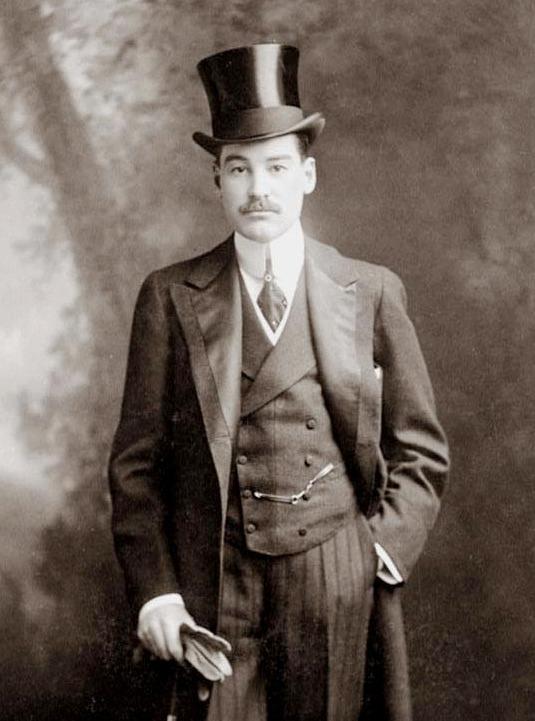
Millionaire and sportsman Alfred Vanderbilt (1877–1915) used the final moments before the ship sank not to save himself, but to rescue women and children.
Vanderbilt’s father made millions in the shipping and railroad business. The young man became a millionaire after his father died and left him the majority of the estate. In September 1907, Vanderbilt was on his yacht when he was intrigued at the sight of the giant luxury liner Lusitania completing its maiden voyage to New York City. Vanderbilt enjoyed transatlantic voyages.
Warning
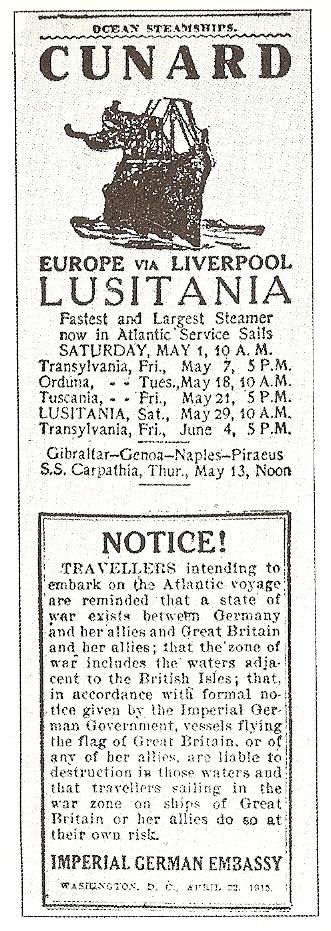
But during the spring of 1915, Vanderbilt booked a trip on the Lusitania to travel to London for an International Horse Breeders Association meeting. He decided to leave his family at home and take only his valet on the trip with him.Just days before the passenger ship was set to sail, the United States received a major warning from Germany, which was engulfed in war with Britain. On April 22, 1915, the German Embassy published newspaper ads in 50 American newspapers warning Americans not to travel to England.
The warning stated that any ships that belonged to Britain (or any of its allies) were subject to attack if spotted in the waters around Great Britain. Ironically, the warning even appeared right next to an advertisement for the Lusitania in some newspapers.

Most laughed off the warning. Many saw it as propaganda and a way for Germany to threaten Britain. After all, the Lusitania was just a passenger ship and its top speed was much higher than the German U-boats (submarines), so it could easily outrun them.
The night before the ship was scheduled to leave, Vanderbilt enjoyed a show with his wife. That next morning, the morning of his voyage, he also received a personal warning. He received a telegram that, according to the Lusitania Resource website, stated: “THE LUSITANIA IS DOOMED. DO NOT SAIL ON HER.” The message was signed only by “MORTE“ (French for ”death"). Vanderbilt and his wife laughed off the warning as they thought it was just a prank.
The ship took longer than usual to load because the Lusitania was bound for Liverpool, England, and carried a record 1,960 crew members, passengers, and stowaways. The ship left about two hours later than planned on May 1, 1915, with Vanderbilt riding in first class.
For the first several days, the ship sailed without incident until it reached the dangerous waters surrounding England and Ireland. The sea was calm.
Torpedo
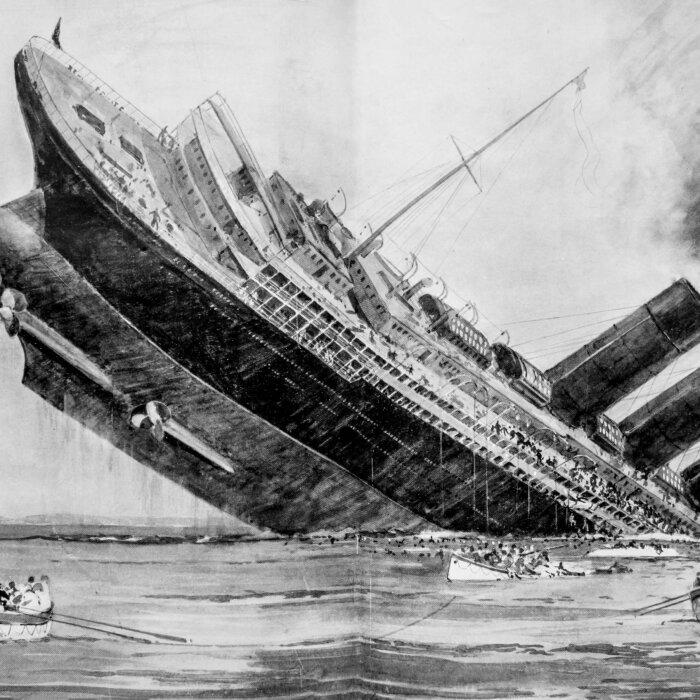
At around 2:10 p.m., the Lusitania was struck by a torpedo on its starboard side. Shortly after, another explosion blasted inside the ship and tilted it onto its side. It’s not known what caused the second explosion. The ship sunk just 18 minutes later.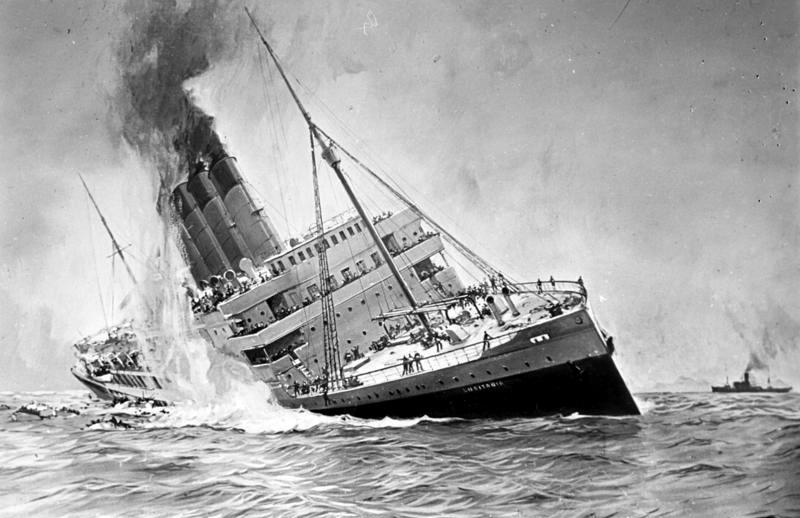
When the ship was hit, witnesses noted that Vanderbilt stayed calm. Instead of rushing to a lifeboat, he started helping women and children to lifeboats. He was seen multiple times running with two children in his arms and placing them in lifeboats.
He continued to help women and children make it to the boats and put on life jackets as the ship sank. In the ship’s final moments, he frantically searched for a life jacket to save a woman carrying an infant. After he couldn’t find one, he put his own life jacket on the woman while her arms clutched her small child.
Vanderbilt’s actions were seen as extra-heroic in helping others since he didn’t know how to swim. Vanderbilt went down with the ship and his body was never found. In the tragedy’s aftermath, only 763 out of the ship’s nearly 1,960 passengers survived, about 39 percent. The casualties included the deaths of 128 American citizens.
The world was outraged that the Germans attacked a civilian ship. However, the sinking of the Lusitania wasn’t enough to motivate the Americans to join the war immediately. The United States kept its neutral stance until it officially joined World War I on April 6, 1917. The Lusitania tragedy was given as one of the main reasons the United States eventually chose to join the war efforts.