A Bear roaming the woods in search of berries happened on a fallen tree in which a swarm of Bees had stored their honey.
The Bear began to nose around the log very carefully to find out if the Bees were at home. Just then one of the swarm came home from the clover field with a load of sweets. Guessing what the Bear was after, the Bee flew at him, stung him sharply and then disappeared into the hollow log.
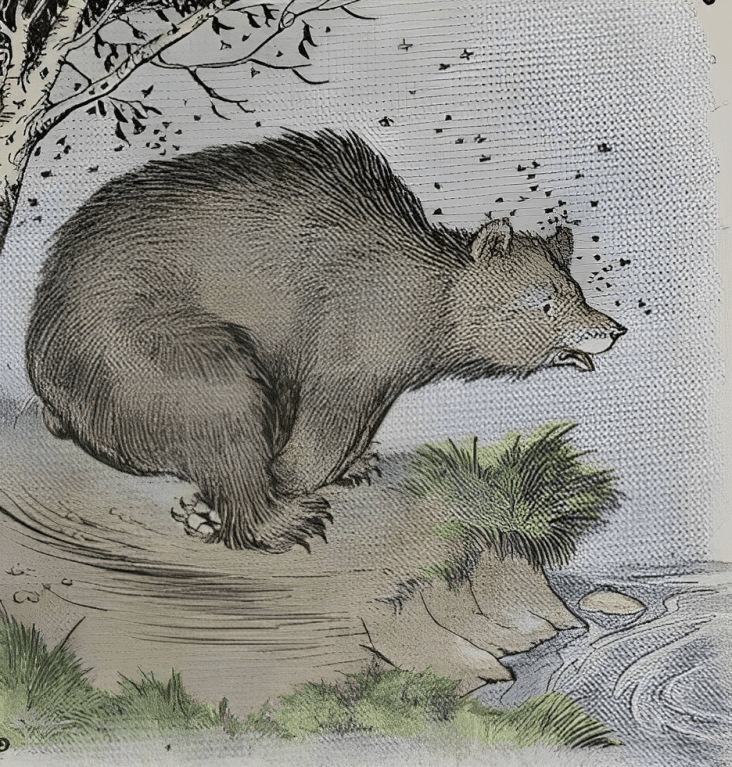
“The Bear and the Bees,” illustrated by Milo Winter, from “The Aesop for Children,” 1919. PD-US
The Bear lost his temper in an instant, and sprang upon the log tooth and claw, to destroy the nest. But this only brought out the whole swarm.
The poor Bear had to take to his heels, and he was able to save himself only by diving into a pool of water.
It is wiser to bear a single injury in silence than to provoke a thousand by flying into a rage.
This fable is reproduced from “The Aesop for Children” (1919).

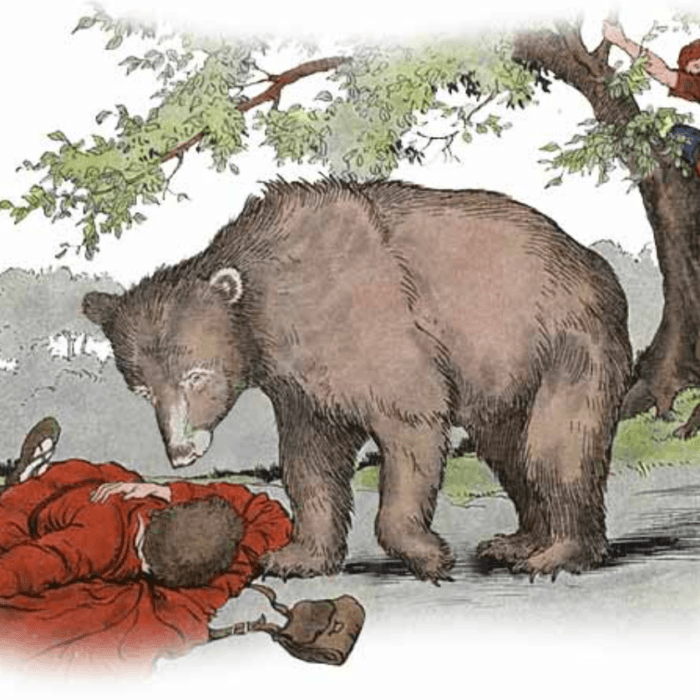
Aesop (c. 620–564 B.C.) was a Greek storyteller credited with a number of fables now collectively known as “Aesop’s Fables.” His tales, with their moral value, have long influenced our culture and civilization, contributing not only to the education and moral character building of children, but also, with their universal appeal, to the self-reflection of adults alike who have chosen to embrace the virtues or heed the warnings within.
Share your stories with us at [email protected], and continue to get your daily dose of inspiration by signing up for the Inspired newsletter at TheEpochTimes.com/newsletter