Building a Friendship
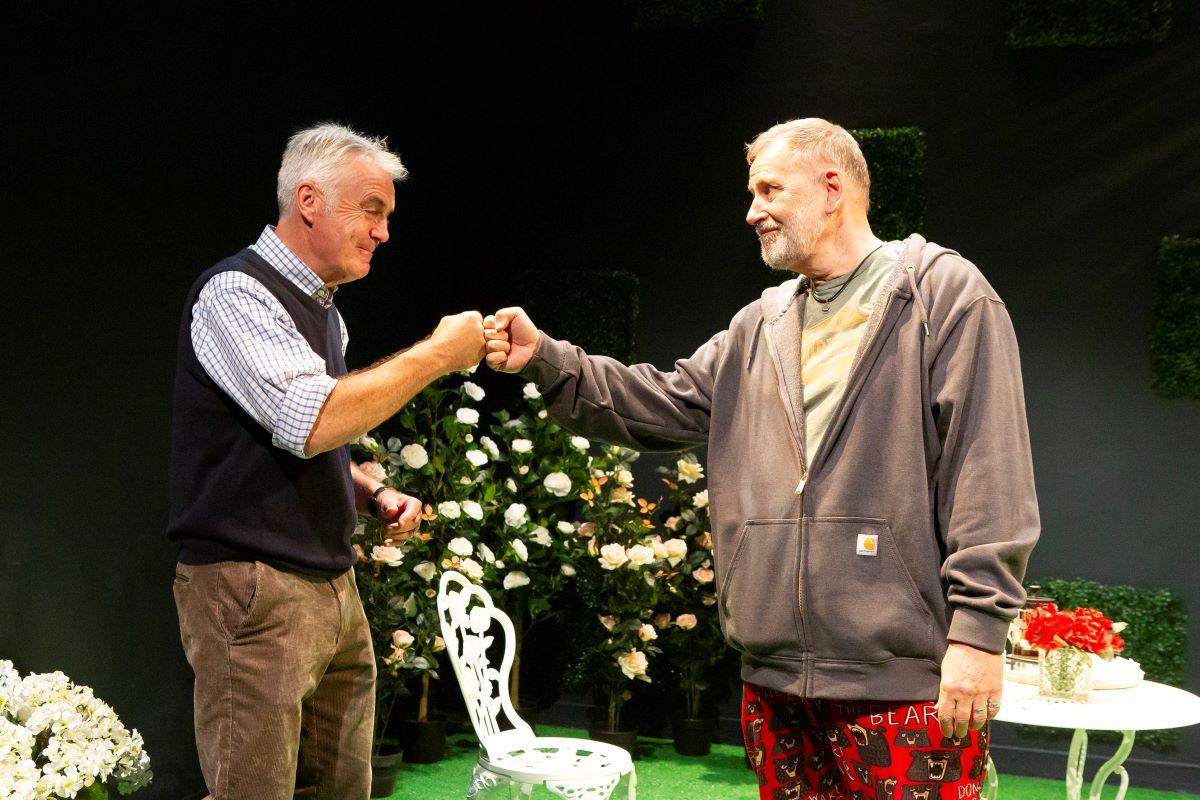
In a secluded garden behind a home in the English countryside, Montgomery “Monty” Toft (Tim Marriott) and Pete Esposito (Brian Dykstra) have been left to themselves by their respective wives and families to set up a tent for the upcoming wedding reception of Monty’s daughter and Pete’s son. Monty, a retired officer in the British Army, whose home this is, is rather reserved and a full believer in the “stiff upper lip” tradition. Pete, a former plumber from New Jersey, is the quintessential “ugly American”: loud, boisterous, and a hugger, all things Monty is not.The show quickly lives up to its billing of “a transatlantic comedy.” Monty and Pete’s attempt to have a simple conversation is impeded by the different terminologies used in America and England—water closet, cupboard, private school and gazebo among them. It soon becoming a struggle for each to understand what the other is saying.
Their differences also come through as they start to work on the tent. Monty carefully lays out the individual pieces side by side and makes sure they are all face same direction, while Pete happily grabs different size poles and attempts to put them together with no regard for the instructions, which clearly state which pieces should be put together first.
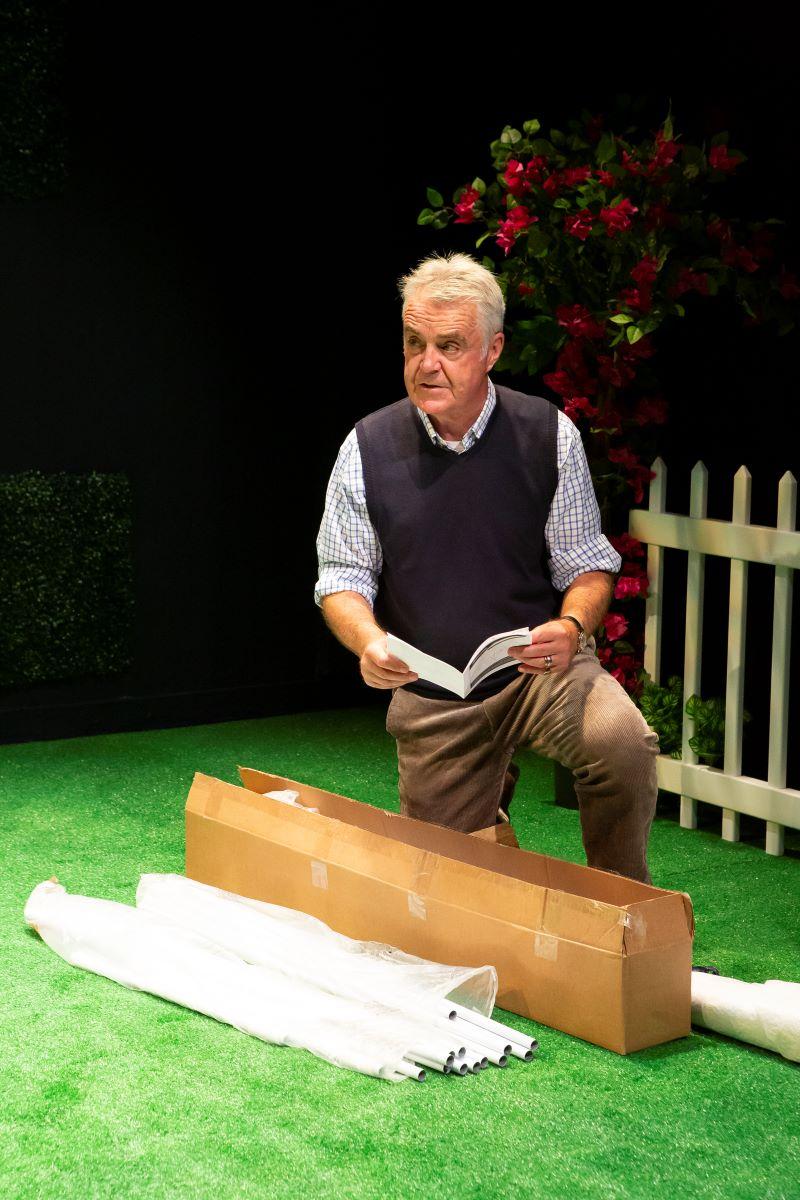
The play’s initial comic tone slowly switches to something more somber. Monty starts to show signs of anxiety about the wedding that he has insisted on paying for himself as father of the bride. Pete, who is more than willing to pay for half of the nuptials, recognizes that this outward stress indicates something deeper—an issue he has faced himself.
Soon, each man is actively listening to the other as it becomes clear that certain familial, social, and psychological issues—post-traumatic stress disorder—can spring from literally any environment. Hand in hand with this is the important message that there is no shame in asking others for help, though the person who needs it must be the one ready to do the asking.
The Performance
Dykstra is very good as Pete, who has learned the importance of letting go of a painful past. The character also comes off as totally approachable and is great at telling stories, among them how he met his wife and grew his business.
He’s also not afraid to call someone out when necessary, such as when he asks for a dowry from Monty to show him that just because something is a tradition—like the bride’s father completely paying for a wedding—doesn’t mean it has to stay that way.
Marriott fits the part of Monty like a glove. He’s a man whose practice of suppressing his feelings have pushed him toward the edge, both mentally and physically; only now is he able to articulate how his life experiences have taken their toll. The actor also imbues Monty with a quiet sense of dignity that he struggles to hold on to, initially believing it is all he has left. He also gets to say something completely out of character toward the end of the play, with it seeming a genuine relief for him when he does so.
Crisply directed by Margarett Perry, the show covers a lot of ground in its relatively short running time. Yet the audience never feels overwhelmed by too much exposition, even as these two very different souls start to bond over shared experiences.
The set of the garden fits perfectly with the story. It conveys a quiet pastoral scene that belies the turmoil threatening to bubble to the surface and destroy its tranquility.
“A Special Relationship” shows how despite cultural differences and first appearances that can be deceiving, certain issues are the same for all of us—if we take the time to look and listen. Also, the play makes the point that we are never truly alone if we are willing to reach out to an extended helping hand.