As back-to-school season gets underway, more and more families are choosing not to go back to school at all. Each year, especially since the lockdowns of 2020, many families are opting to homeschool instead.
While homeschooling can offer many benefits like increased freedom, individualized learning strategies, and a family-centric lifestyle, new homeschooling parents can find themselves inhibiting their success by approaching their new adventure with a school mindset. It can be challenging to shake the deeply ingrained notions and ideas that the standard school model has hammered into us for so long.
Duplicating School
If you think homeschooling is about duplicating the school environment at home, you’re missing the point entirely. Sometimes new homeschoolers go out of their way to create a classroom in their home, mimicking the trappings and details of the classroom and school model they’re most familiar with. Despite realizing that traditional school is not the best option for their children, they attempt to replicate that experience at their home.Homeschooling is wonderful, in part, because it allows for long, deep dives into subjects of interest; offers each individual child a customized pace for learning; focuses on family traditions and connections and the individuality of each child; and affords the utmost freedom, where the world is your classroom and the sky’s the limit.
School is the opposite—subjects are confined to periods and interrupted by bells, curriculum is mass-produced, academics cater to the average, and everything is standardized. School is focused on the collective, inhibits freedom, and caps potential.
Ignoring Individuality
It is common for homeschooling parents to assume that because one strategy or method worked for one child, it will work for all. It doesn’t take long to learn that is not always (or even frequently) the case.
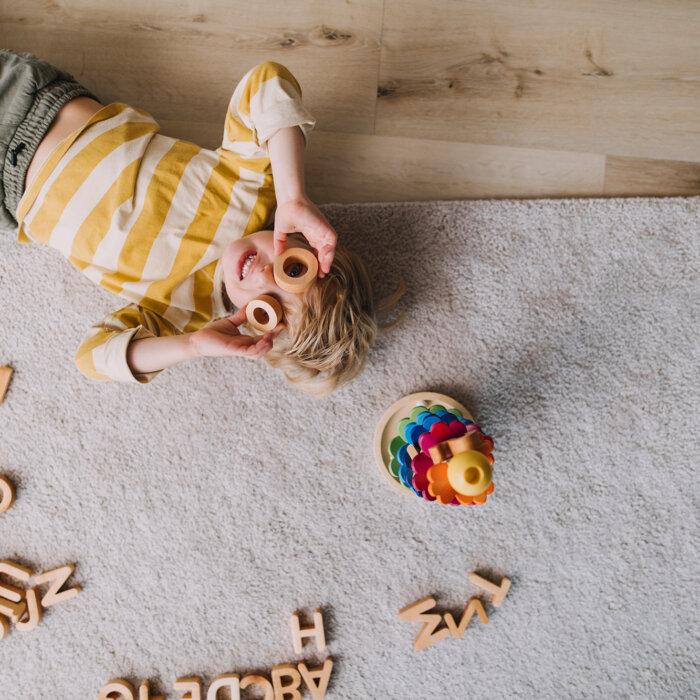
One of the greatest benefits of homeschooling is that you have the capacity to provide each child with an individualized education. Your job is to understand each child’s natural gifts, talents, strengths, motivations, weaknesses, and interests. While you’ll often share lessons as a family, you can cater the nuances of each lesson to the needs of each child.
When you see inherent strengths, double down on those and allow that child to develop their strengths as much as possible. If your child gets lost in worthwhile activities, further supply the tools and environment necessary for more of that to occur. If you have a child who struggles with math, slow things down and work side by side with them to crack the code. If you have a child who doesn’t like to sit still, get them outside to run and play before requiring them to focus their attention for an extended period of time.
Lacking Discipline and Consistency
While some parents are on one side of the spectrum trying to duplicate school at home, other parents can be found at the other end holding fast to the idea that discipline is stifling and consistency is contradictory to freedom.The middle, as is often the case, is likely where the best solution lies. There is value in establishing habits of discipline and consistency in your homeschool, and in fact such habits can allow even greater freedom in life as children grow.
Underestimating Students
In school, students are limited to the expectations of their grade level and any labels the school might have placed upon them. In homeschool, that can be tossed aside, and each individual student can be given the opportunity to truly reach their fullest potential.Each child will have his or her own unique set of talents, strengths, capacities, interests, and aptitudes. If a second grader needs more time to learn to read with competence, they can get the attention they need in homeschool. If a fifth grader is ready for Algebra 2, they need not be held at bay because they’re not in the typical grade that studies math at that level.
Starting High School Late
Many homeschooling parents of older children don’t realize that they can start working on fulfilling their high school requirements before the traditional high school age. Many homeschool children excel academically in one or more areas. If your 11-year-old is ready for high school math, don’t hold them back because they’re not high school aged.Not Enough Fun
School notoriously makes learning a chore. It forces children to remain inside, inactive, and mostly uninspired. Children need to move, to play, to explore, to create, and to stick with a project or book or topic for as long as their interest holds rather than be interrupted by a ringing bell.Dive deep into the joy of learning and exploring and connecting the dots and running in the sunshine. Choosing homeschool is choosing to maintain childhood’s delight and wonder. Your job is to provide kindling for the fire and rich soil within which to grow. Have fun! Enjoy the process yourself. This is the adventure of a lifetime.