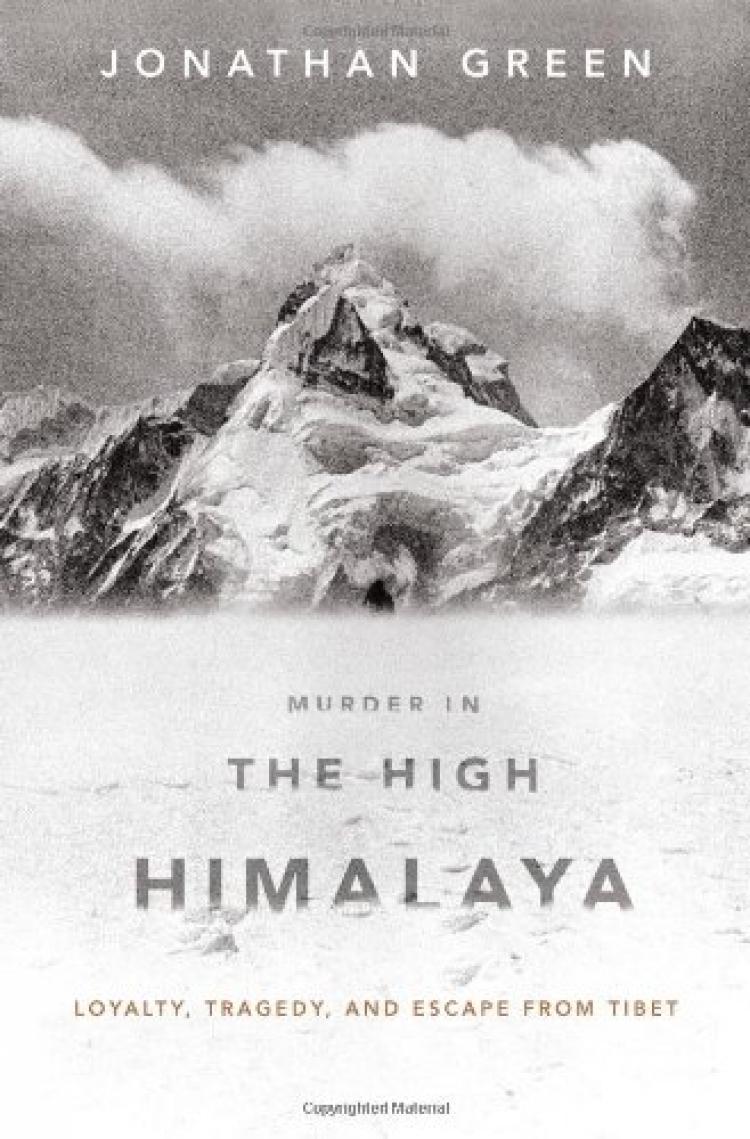
This fascinating account which made news around the world soon after it occurred, is told from the personal testimony of a number of the people involved in this atrocity. Two of the main characters who witnessed the event were Dolma Palkyi, a teenage girl who made the escape attempt with Kelsang, and Luis Benitez, an American climber who led adventurers to climb the high mountains between Tibet and Nepal.
The story takes place in the Cho Oyu Mountains of Tibet, which lie 19 miles east of Mount Everest. Each year, the area is frequented by hundreds of climbers and adventurers who are eager to reach the summit of the sixth highest mountain in the world.
For the local Tibetans who are eager to escape the prison of Chinese communist rule and religious persecution, Cho Oyu is a gateway to freedom. By hiking through a secret glacial path called the Nangpa La they could reach the safety of India.
The murder of fleeing Tibetans by Chinese guards is not an unusual event—these awful acts have been going on for over 50 years. But what is unusual about this story is that Kelsang’s murder by the Chinese border guards on September 30, 2006 was witnessed and filmed by Westerners— the climbers on the Cho Oyu Mountains.
When Green decided to write a detailed account of the details surrounding this event, he chose to talk with the people who were deeply involved—most of whom were there when it occurred. Green spent the last three years traveling the remote parts of the Himalaya researching the amazing story.
In the telling of the story, Green introduces us to a wide variety of people – including adventurers, climbers, local guides, Tibetans fleeing due to religious persecution, and others who were at the “rooftop of the world” on that fateful day. We also get to “meet” the Dalai Lama through Dolma and several other people’s account of being able to meet with him after the event happened.
The story begins with the fascinating account of what life had been like for Kelsang and Dolma as they grew up in a small village in the mountains of Tibet. As a person living in pretty much unlimited religious freedom in the United States, it’s hard to imagine being in a place where even having a picture of the Dalai Lama could land you in jail or subject you to torture or death. We see how their family homes are invaded frequently by Chinese guards searching for any indication of their devotion to their exiled leader, the Dalai Lama.
To much of the world, the Dalai Lama is the spiritual head of one of the world’s oldest religions and a winner of a Nobel Peace Prize. But to the Tibetans, the 14th Dalai Lama is a god in human form. And to the Chinese communist party, he is a public enemy.
Green paints a picture for us of life in Tibet—where even without the oppression of the Chinese government, life is hard. The people have very little, but are dedicated to their families and their religion. About 15 percent of the population live as Buddhist monks and nuns— devoting their lives to meditation, retreat, and Buddha.
The author also gives a historical account of Tibetan history, especially the recent history from 1959 when China invaded Tibet killing thousands of people and starting their relentless quest to turn the Tibetans into Chinese “citizens.” He also details the Dalai Lama’s escape during that year from his home at Potala Palace to India.
Green outlines many details and events from Tibetan life that have probably not been seen or heard before. It is an interesting account of a life and a people that the outside world still does not know very well.
However, the main story here is the account of what happened during the escape attempt by Kelsang, Dolma, and a number of other people.
Continued on the next page…