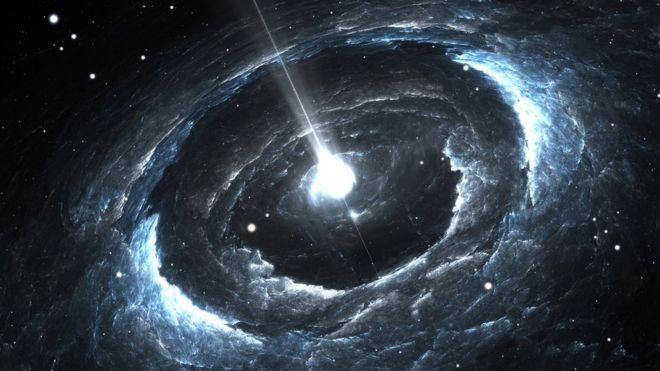
The ASASSN-15lh may be the brightest supernova explosion ever recorded.

When certain massive stars use up all of their fuel and collapse onto their cores, explosions 10 to 100 times brighter than the average supernova occur.
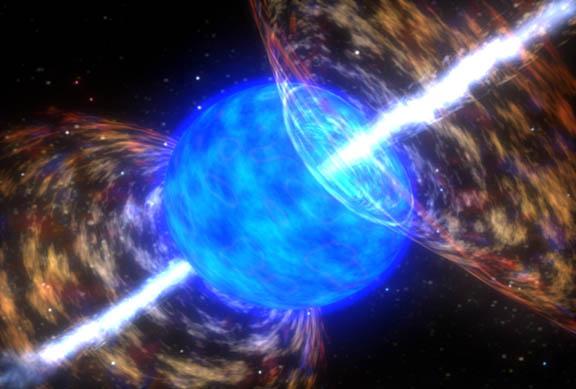
New data from a distant galaxy suggests a puzzling stellar phenomenon may not be what astronomers have long believed.

Giant stars die violent deaths. After a life of several million years, they collapse into themselves and then explode in what is known as a supernova.

In examining a layer of seafloor sediment, researchers learned that regular supernovae may not have had much to do with delivering key heavy metals to Earth.
The brightest pulsar ever recorded has been discovered by astronomers using NASA’s Nuclear Spectroscopic Telescope Array, or NuSTAR. Pulsars are also called dead stars because they are what’s left after a supernova explosion, and belong to a class called neutron stars.
At the Vulcan laser facility in the UK, scientists recreated a supernova in an attempt to find out more about the origin of magnetic fields.

In 1934, two physicists came up with a theory that described how to create matter from pure light. But they dismissed the idea of ever observing such a phenomenon in the lab...

Magnetars are stars that are incredibly dense, rapidly spinning, amazingly hot and the most magnetic objects known in the universe.

It’s a beautiful universe ... take the tour.

The ASASSN-15lh may be the brightest supernova explosion ever recorded.
When certain massive stars use up all of their fuel and collapse onto their cores, explosions 10 to 100 times brighter than the average supernova occur.
New data from a distant galaxy suggests a puzzling stellar phenomenon may not be what astronomers have long believed.
Giant stars die violent deaths. After a life of several million years, they collapse into themselves and then explode in what is known as a supernova.
In examining a layer of seafloor sediment, researchers learned that regular supernovae may not have had much to do with delivering key heavy metals to Earth.
The brightest pulsar ever recorded has been discovered by astronomers using NASA’s Nuclear Spectroscopic Telescope Array, or NuSTAR. Pulsars are also called dead stars because they are what’s left after a supernova explosion, and belong to a class called neutron stars.
At the Vulcan laser facility in the UK, scientists recreated a supernova in an attempt to find out more about the origin of magnetic fields.
In 1934, two physicists came up with a theory that described how to create matter from pure light. But they dismissed the idea of ever observing such a phenomenon in the lab...
Magnetars are stars that are incredibly dense, rapidly spinning, amazingly hot and the most magnetic objects known in the universe.
It’s a beautiful universe ... take the tour.