In modern physics, certain quantum processes are deemed fundamentally random. But are they for sure?

“Many of the outcomes from today’s experiments are requiring weirder and weirder explanations,” says Dr. William Tiller.

The existence of parallel universes may seem like something cooked up by science fiction writers, with little relevance to modern theoretical physics.

Stephen Hawking said something! And again the international media is all a'buzz.

A mechanical use of a quantum mechanical phenomenon could soon be used for soundproofing.

A lot of people are vaguely aware of what quantum physics is all about. Let’s get a clearer picture.
Scientists have used a “Quantum Entanglement Camera” to demonstrate a phenomenon Einstein called “spooky action at a distance.”

Dr. Alan Ross Hugenot has spent decades contemplating the conundrums of physics, along with the enigma of human consciousness.

Many have suggested that scientists must face the enigma and challenges of understanding consciousness for science to make it’s next big leap.

Scientists and philosophers have long debated what level of consciousness, if any, animals and plants have. Some philosophers have even questioned the existence of all but their own minds, being unable to say with absolute certainty that other human beings have consciousness. These questions all relate to beings we label as “living” or “organic.”

Princeton Engineering Anomalies Research Lab (PEAR) at Princeton University is famous for experiments it conducted showing our minds may actually affect the operations of electronic devices.

Researchers have found that the act of measuring some particles can either stop or speed up the particles’ decay. Measuring more frequently inhibits the decay. It’s like the proverbial watched pot that never boils.

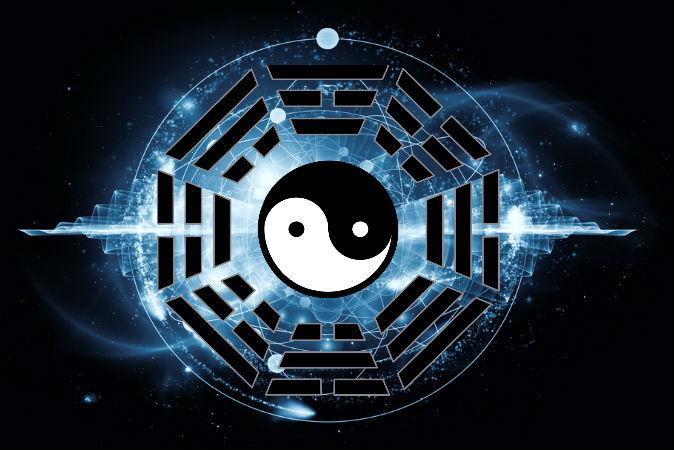
Neils Bohr, a pioneer of quantum mechanics, chose the Taoist yin-yang symbol for his coat of arms. He isn’t the only great modern physicist to find inspiration in ancient Chinese science.
From Albert Einstein to Carl Sagan to Niels Bohr, many great physicists also had a way with words. The fields of philosophy and science are linked by curiosity. Read these quotes that will make you reflect on the nature of science and the universe.
A physics professor has invented a new way to make a clock using cesium atoms based on quantum mechanics and the wave-particle duality of matter.
Trying to explain quantum “spooky action at a distance” using any kind of signal puts Einstein’s relativity against our concept of a smooth spacetime.

Researchers at NASA’s Johnson Space Center (JSC) are carrying out lab-scale experiments to create tiny space-time warps with an aim to eventually achieving “Star-Trek”-style interstellar space travel.

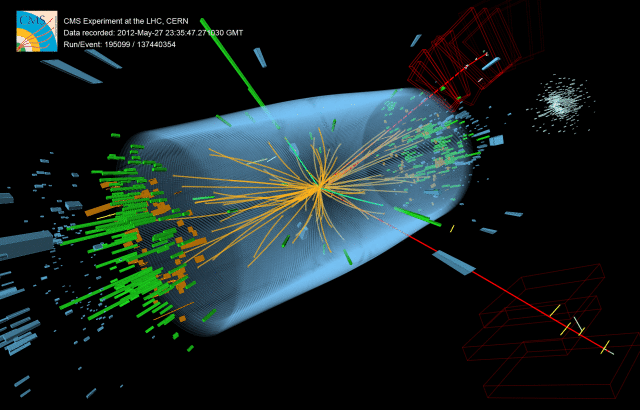
The European Organization for Nuclear Research (CERN) has shown a particle with a mass which matches that of the hypothesized Higgs boson or so-called god particle.
The strange properties of the moon’s soil could be due to meteorites creating and smashing glass bubbles containing ultrafine particles on the lunar surface.