Traces of methane have been discovered in Martian meteorites, causing researchers to speculate if that methane could feed microbe-like creatures on the Red Planet.

A flash of light and loud boom heard in the Montreal and Ottawa areas on Tuesday night was just the universe doing its thing, says Chris Hadfield.

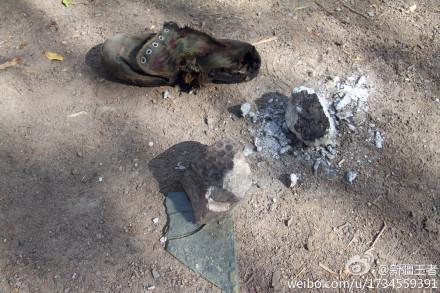
A meteorite crashing into a Xinjiang Province village on Thursday has netizens commenting over the incident as a possible “heavenly warning sign.”
Meteors have survived their passage through the Earth’s atmosphere numerous times throughout history. The recent meteorite that blasted over the populated town of Chelyabinsk in Russia—injuring 1,500 people, mostly from shattered windows caused by the shock waves—is not the first meteorite to strike a populated area on Earth.

A rare shower of red rain fell for about 15 minutes in the city of Kannur, Kerala, early on June 28. Local residents were perturbed, but this is not the first time the state has experienced colored rain.

Complex hydrocarbons inside several meteorites from Mars did not originate from biological processes but instead from cooling lava, according to a new international study to be published in Science on May 25.

Although our early solar system was a cold cloud of interstellar gas, the molten components at the heart of meteorites could still form.

Traces of methane have been discovered in Martian meteorites, causing researchers to speculate if that methane could feed microbe-like creatures on the Red Planet.
A flash of light and loud boom heard in the Montreal and Ottawa areas on Tuesday night was just the universe doing its thing, says Chris Hadfield.
A meteorite crashing into a Xinjiang Province village on Thursday has netizens commenting over the incident as a possible “heavenly warning sign.”
Meteors have survived their passage through the Earth’s atmosphere numerous times throughout history. The recent meteorite that blasted over the populated town of Chelyabinsk in Russia—injuring 1,500 people, mostly from shattered windows caused by the shock waves—is not the first meteorite to strike a populated area on Earth.
A rare shower of red rain fell for about 15 minutes in the city of Kannur, Kerala, early on June 28. Local residents were perturbed, but this is not the first time the state has experienced colored rain.
Complex hydrocarbons inside several meteorites from Mars did not originate from biological processes but instead from cooling lava, according to a new international study to be published in Science on May 25.
Although our early solar system was a cold cloud of interstellar gas, the molten components at the heart of meteorites could still form.