Few structures in nature are more durable than teeth or seashells.

Every time you stroll outside you emit energy into the universe. Heat from the top of your head radiates into space as infrared light.

Metallic glasses are very strong and elastic materials that appear with the naked eye to be identical to stainless steel.

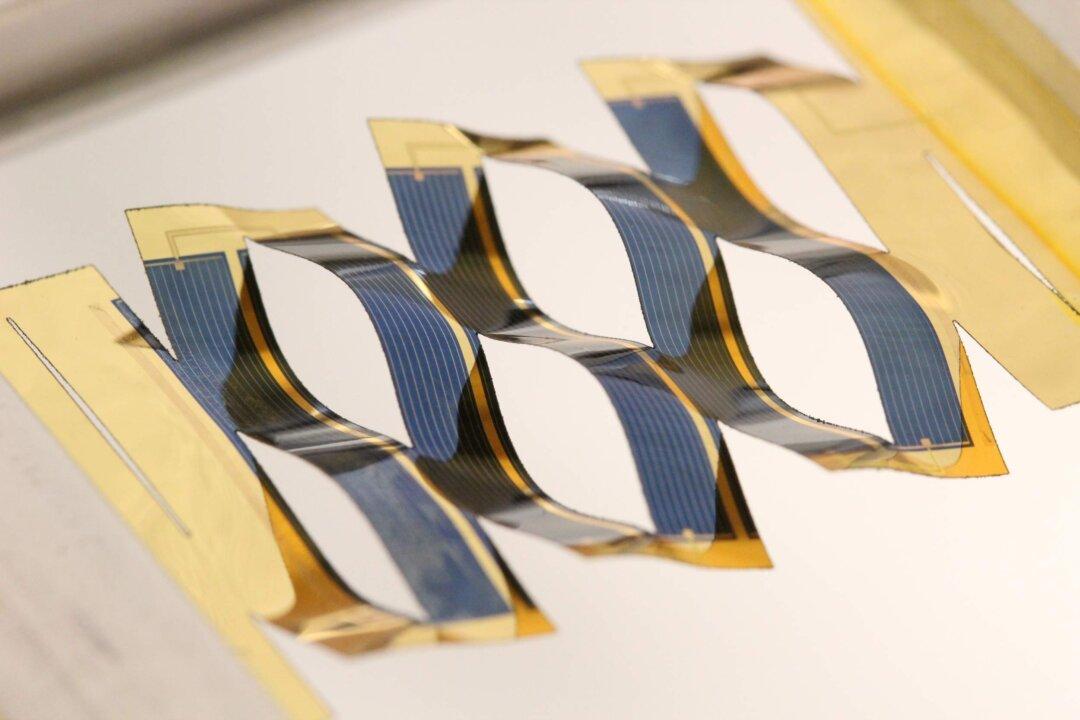
Solar cells capture up to 40 percent more energy when they can track the sun across the sky, but conventional, motorized trackers are too heavy and bulky for pitched rooftops and vehicle surfaces.
Researchers have uncovered a new twist in magnetism at the nanoscale.

We’ve all seen dew droplets form on spider webs. But what if they flung themselves off the strands instead?

Scientists have created a new way of capturing the 3D structures of nanocrystals, which researchers believe could potentially fight cancer, collect renewable energy, and mitigate pollution.

Nanowires made of zinc oxide are highly anelastic—meaning they return to shape slowly after being bent, rather that snapping right back.

Titanium and gold aren’t magnetic—unless you combine them just so.

Scientists have discovered concrete-like rock in a dormant volcano in Italy, and say it may explain why the Romans were able to invent the legendary compound used to construct the Pantheon and the Coliseum.
Engineers have developed a new material that stays liquid more than 200 degrees Fahrenheit below its expected freezing point, but a light touch can cause it to form yellow crystals that glow under ultraviolet light.

Few structures in nature are more durable than teeth or seashells.
Every time you stroll outside you emit energy into the universe. Heat from the top of your head radiates into space as infrared light.
Metallic glasses are very strong and elastic materials that appear with the naked eye to be identical to stainless steel.
Solar cells capture up to 40 percent more energy when they can track the sun across the sky, but conventional, motorized trackers are too heavy and bulky for pitched rooftops and vehicle surfaces.
Researchers have uncovered a new twist in magnetism at the nanoscale.
We’ve all seen dew droplets form on spider webs. But what if they flung themselves off the strands instead?
Scientists have created a new way of capturing the 3D structures of nanocrystals, which researchers believe could potentially fight cancer, collect renewable energy, and mitigate pollution.
Nanowires made of zinc oxide are highly anelastic—meaning they return to shape slowly after being bent, rather that snapping right back.
Titanium and gold aren’t magnetic—unless you combine them just so.
Scientists have discovered concrete-like rock in a dormant volcano in Italy, and say it may explain why the Romans were able to invent the legendary compound used to construct the Pantheon and the Coliseum.
Engineers have developed a new material that stays liquid more than 200 degrees Fahrenheit below its expected freezing point, but a light touch can cause it to form yellow crystals that glow under ultraviolet light.