Astronomers Adam Frank and Woodruff Sullivan, at the University of Rochester and the University of Washington respectively, published a paper in the May issue of the journal Astrobiology exploring what they call the “cosmic archaeological question.”

The universe is expanding 9 percent more quickly than expected, telling us there’s something we’re missing. Could it be a new type of particle?

For nearly 40 years, the phrase “a long time ago in a galaxy far, far away” has resonated in popular culture—forever linked to the iconic opening credits of Star Wars.

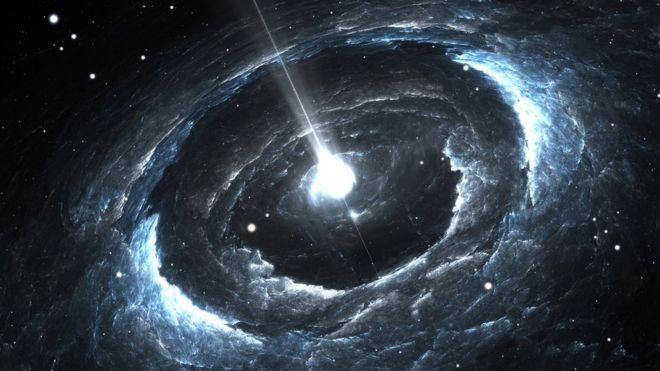
Neutron stars – the dead stellar remnants of old, burned-out stars – are some of the most extreme objects in the universe.

stronomy is entering an exciting new era of exploration.

Many scientists believe that anything sent into a black hole would probably be destroyed. But a new study suggests that this might not be the case after all.

As an astrophysicist, I live and breathe science. Much of what I read and hear is couched in the language of science which to outsiders can seem little more than jargon and gibberish. But one word is rarely spoken or printed in science and that word is “proof”. In fact, science has little to do with “proving” anything.

If the Big Bang theory is just a “theory,” are there other hypothetical explanations for the origin of the known universe?
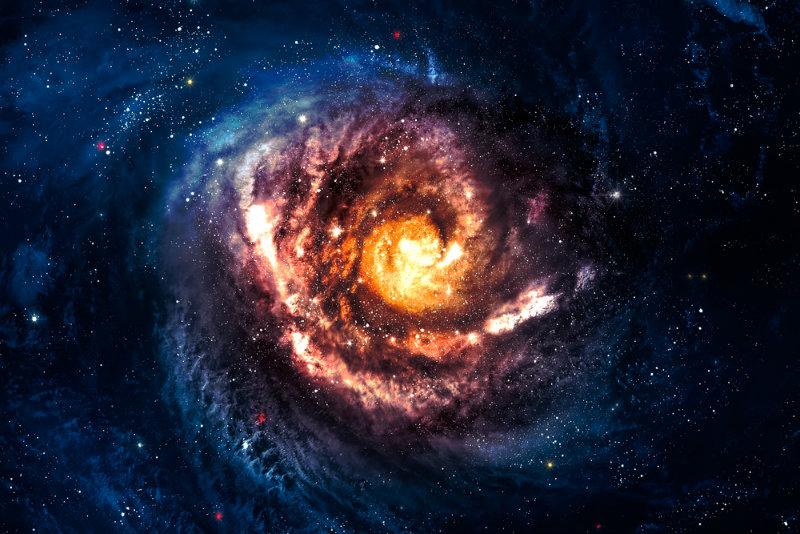
Could aliens be shrouded by dark matter and the event horizon of black holes? Astronomers understand particularly little of what goes on in these mysterious regions of the universe.

What’s it like to lead a NASA project that could revolutionize our understanding of the universe? John Mather shares his perspective with Epoch Times.

Katherine Mack, astrophysicist at the University of Melbourne, answered questions posed by the public on Reddit from black holes to dark matter...

This model could solve the problem of the relationship between matter and mind, and provide a framework for understanding phenomena such as dreams and out-of-body experiences.

The conventional understanding of gravity just doesn’t seem to fit with what we’re learning about the cosmos and physics, say some scientists.

We’ve never seen it, but we’re pretty sure it’s there, and as we learn more about it we may unlock some mysteries of the birth of our solar system.

A recently discovered super-Earth orbiting a nearby star may be at least one-third diamond.

New astrophysical research into understanding how light is affected by the expansion of space could help in planning for interstellar exploration.
Astronomers Adam Frank and Woodruff Sullivan, at the University of Rochester and the University of Washington respectively, published a paper in the May issue of the journal Astrobiology exploring what they call the “cosmic archaeological question.”
The universe is expanding 9 percent more quickly than expected, telling us there’s something we’re missing. Could it be a new type of particle?
For nearly 40 years, the phrase “a long time ago in a galaxy far, far away” has resonated in popular culture—forever linked to the iconic opening credits of Star Wars.
Neutron stars – the dead stellar remnants of old, burned-out stars – are some of the most extreme objects in the universe.
stronomy is entering an exciting new era of exploration.
Many scientists believe that anything sent into a black hole would probably be destroyed. But a new study suggests that this might not be the case after all.
As an astrophysicist, I live and breathe science. Much of what I read and hear is couched in the language of science which to outsiders can seem little more than jargon and gibberish. But one word is rarely spoken or printed in science and that word is “proof”. In fact, science has little to do with “proving” anything.
If the Big Bang theory is just a “theory,” are there other hypothetical explanations for the origin of the known universe?
Could aliens be shrouded by dark matter and the event horizon of black holes? Astronomers understand particularly little of what goes on in these mysterious regions of the universe.
What’s it like to lead a NASA project that could revolutionize our understanding of the universe? John Mather shares his perspective with Epoch Times.
Katherine Mack, astrophysicist at the University of Melbourne, answered questions posed by the public on Reddit from black holes to dark matter...
This model could solve the problem of the relationship between matter and mind, and provide a framework for understanding phenomena such as dreams and out-of-body experiences.
The conventional understanding of gravity just doesn’t seem to fit with what we’re learning about the cosmos and physics, say some scientists.
We’ve never seen it, but we’re pretty sure it’s there, and as we learn more about it we may unlock some mysteries of the birth of our solar system.
A recently discovered super-Earth orbiting a nearby star may be at least one-third diamond.
New astrophysical research into understanding how light is affected by the expansion of space could help in planning for interstellar exploration.