A mysterious inscription on a mysterious artifact has been theorized by some to be Cherokee, Semitic, or Welsh, all intriguing possibilities.

Ancient Origins investigates artifacts in Ecuador that could provide evidence of unknown civilizations, connections between America and Sumeria, a Vatican conspiracy, and more.

What appears to be an ancient Roman sword has been found off the East Coast of Canada, and it is just one of several indications that Romans were there around 200 A.D.

Ancient nuclear reactions on Mars and Earth are said to be “natural,” but are they?

Geologist Dr. Alexander Koltypin hypothesizes that prehistoric ruts in stone were left by heavy-duty ancient vehicles—not light chariots or wagons.

Did prehistoric civilizations possessed advanced technological knowledge that was lost throughout the ages only to be redeveloped in modern times?

This advanced device “comes from the consciousness of an indigenous society with no written language,” said anthropologist Ramiro Matos.

Did a time-traveler, a mouse, or a hoaxer involved in the dig leave this ring in the centuries-old tomb?
They had dug through 11 layers of limestone, each separated by a bed of sand mixed with clay, and there they found wooden hammer handles and other wooden tools petrified into agate.

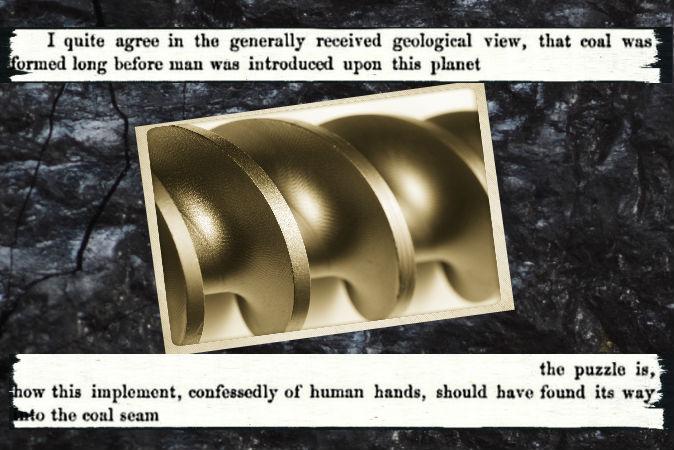
Oopart (out of place artifact) is a term applied to dozens of prehistoric objects found in various places around the world that seem to show a level of technological advancement incongruous with the times in which they were made.
Hesiod’s description of the ancient Greek dwelling place of gorgons seems to match the mysterious labyrinth ruins of Chavin de Huantar in the Peruvian Andes.

Do inscriptions on the coast of Uruguay tell of an expedition that could dramatically change history books?

Was there computer technology 250 million years ago? Epoch Times investigated this much-discussed discovery.
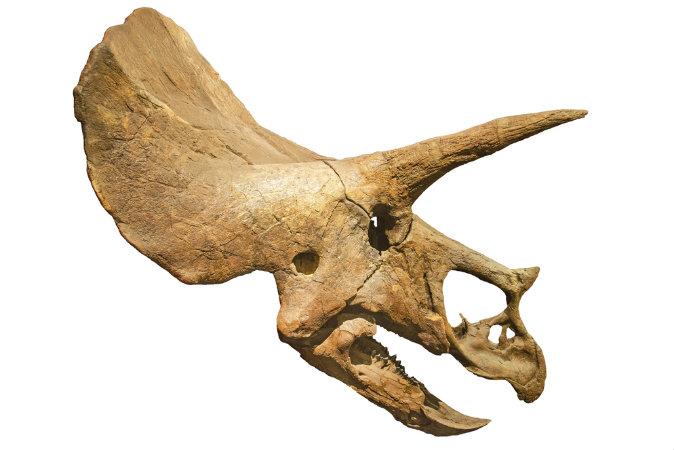
A triceratops brow horn discovered in Dawson County, Mont., has been controversially dated to around 33,500 years, challenging the view that dinosaurs died out around 65 million years ago.
A controversial paper presented at the prestigious science conference, the 102nd Indian Science Congress in Mumbai, claims human aviation and advanced space flight was achieved and mastered by the ancient Indians, thousands of years before the Wright brothers in 1903.

From the U.K. to the Middle East and beyond, megalithic structures entice the imagination, but sometimes leave few clues as to the nature or method of their construction. But, if giants did exist in prehistory, is it possible they built these structures to match their stature?

The pyramids and other advanced artifacts from ancient Egypt continue to awe archaeologists and archaeology enthusiasts, but is it possible the ancient Egyptians had aviation?