New research suggests that rather than making them look soft, acts of kindness and altruism increase leaders’ standing in a group.

The things we find funny can also tell us a lot about our cultural moment, our attitudes and the collective decisions we make.

Separation from iPhones can cause users serious psychological and physiological effects, including poor performance on cognitive tests, according to new research.

People known as “acquired savants” have spectacular abilities that emerge suddenly, usually after a brain injury. In these cases—as well as in the case of child prodigies—the individual “knows things they never learned” (the memorable phrase of savant syndrome expert Dr. Darold Treffert).
The famous theoretical physicist Stephen Hawking has revived the debate on whether our search for improved artificial intelligence will one day lead to thinking machines that will take over from us.

Democrats and Republicans are increasingly split along political party lines, and new research suggests those partisan sentiments are stronger than racial biases.

A warm egg, white shell almost translucent, plops into the wire mesh gutter and rolls forward. There is no let-up in the clucking din of the 16,000 other chickens in cages that stretch to the far end of the shed. They won’t survive more than a couple of years here, but their feces will be shovelled up for fertiliser and their eggs sold on for a few rupees each.

The sense that you’re not the only one tackling a challenge—even if you’re physically alone—can increase motivation, say researchers.

Our brains are able to judge the trustworthiness of a face even when we cannot consciously see it.

People who can’t talk after a stroke can often sing—and they are even able to access all the lyrics. A talented composer can hear the color blue. Here’s a look at our deep, and sometimes strange, connection to music.
Treeplanting is a job that brings extreme mental and physical challenges, and thus great personal growth. I spent seven summers planting trees in northern Canada, and this is what it taught me.

Is beauty universal or relative? Esther Honig contacted 40 designers from 25 countries, asking them to alter a photo of herself in Photoshop to meet the beauty standards of their respective countries.

Some of the fierce animals we dread have saved human children in distress and even taken care of them for many years, adopting them as their own. These wild children, when discovered, have had varying degrees of success in learning to act like humans again.

In a mysterious pyramid in China’s Qinghai Province near Mount Baigong are three caves filled with pipes leading to a nearby salt-water lake. The pipes may be about 150,000 years old. Who or what made them?

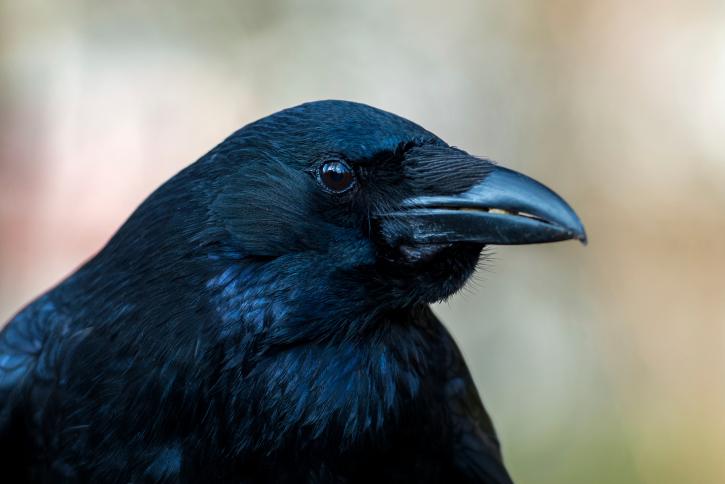
Why is a Raven like a writing desk? I don’t know, but here’s why a raven is like a human.
The colors we wear could affect how we feel and affect the “vibes” we give others, says Australian physicist Dr. Tom Chalko.

Without realizing it, we may be sensing a type of energy related to people’s thoughts and emotions.