Contrary to popular belief, the apparent increase in blooms of jellyfish around the world may simply be a natural rise and fall in populations over the decades.

Thorny seahorses, Hippocampus histrix, inhabit sandy and reef substrates in the Western Pacific.

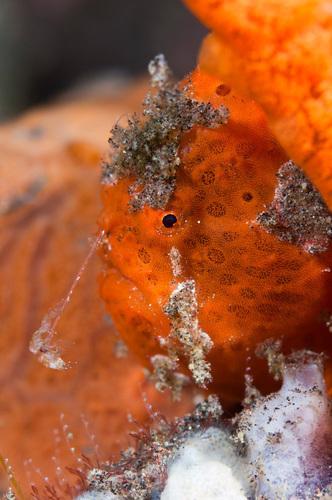
The painted frogfish, Antennarius pictus, is also known as the painted anglerfish because it uses a lure to attract prey, like all frogfish.
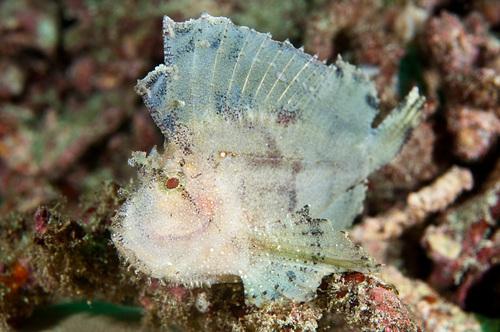
Leaf scorpionfish are found in various parts of the world, including the tropical Indo-Pacific and the Red Sea.
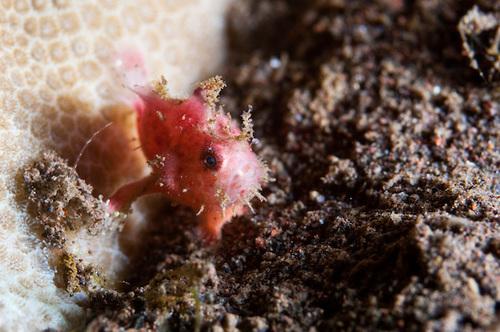
Juvenile frogfish are less than 1 cm long, almost the size of a thumb-nail.
Bumble bee shrimps, Caridina sp., are found throughout the Indo-Pacific.
A new type of meat-eating sponge called the harp sponge, Chondrocladia lyra, has been discovered off the coast of California near Monterey Bay.

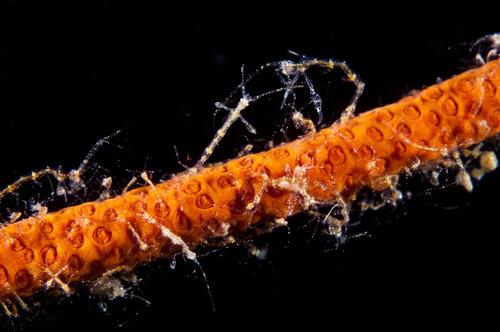
Skeleton shrimp belong to the family Caprellidae, and are sometimes also referred to as ghost shrimp.
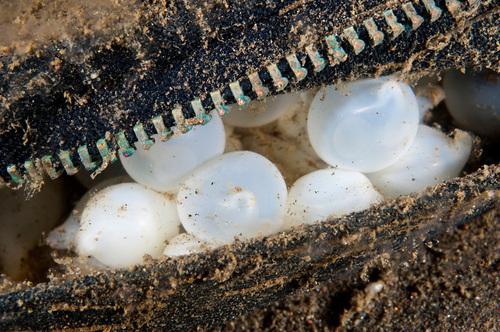
Cuttlefish eggs laid inside an old pair of pants, the zip of which is visible, at Puri Jati in Bali, Indonesia.
A species of coral in Fiji calls on goby fish to rescue it when under attack by a toxic seaweed.

A dead mother whale and her male calf stranded on a New Zealand beach have been identified as spade-toothed beaked whales, Mesoplodon traversii, previously only known from bones.
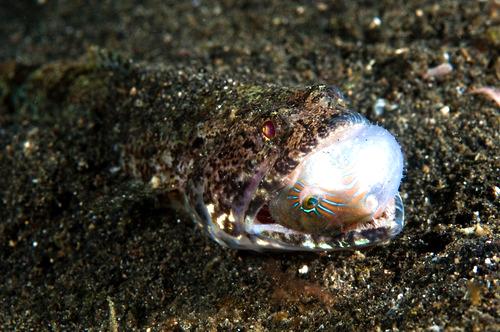
Lizardfish are bottom-dwelling fish found in tropical and subtropical waters. They are ambush predators, burying themselves in the substrate until a victim moves within reach.
Numerous species of shrimp belong to the genus Periclimenes and are often also called “anemone shrimp.”
The world’s largest fish swim to the surface to warm up, after diving for extended periods at chilly depths of hundreds of meters.

The orangutan crab, Achaeus japonicus, is a small crustacean in the decorator or spider crab family.
Bargibanti pygmy seahorses, Hippocampus bargibanti, are typically grey with red tubercles, but orange variations are commonly found at Seraya in Bali.

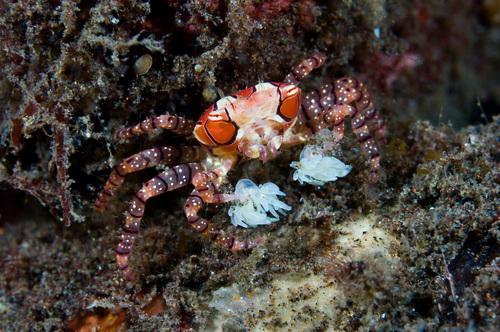
The boxer crab, Lybia sp., carries a pair of sea anemones on its pincers to ward off predators and fight duels with other crabs.