The newly discovered fossil is 3.77 billion years old.

Astronomers are finding new exoplanets in other parts of the galaxy all the time. So why is it so hard to pin down exactly what is orbiting our own sun?

For almost 40 years, astronomers have wondered whether an anomalous 72-second signal from space may have been a communication attempt by extraterrestrials.

On Oct. 28, the spacecraft Cassini will sweep through this liquid and analyze its cocktail of chemicals to give scientists an understanding of the moon’s alien ocean.

For the past few days, the media has been abuzz with one of the most peculiar astronomical observations for many years.

A mysterious, glowing object was spotted in the sky over Bakersfield, California. Some wonder if this was a UFO sighting.
One line from a NASA panel discussion is making headlines: a prediction that we will have signs of life within the next 20-30 years.
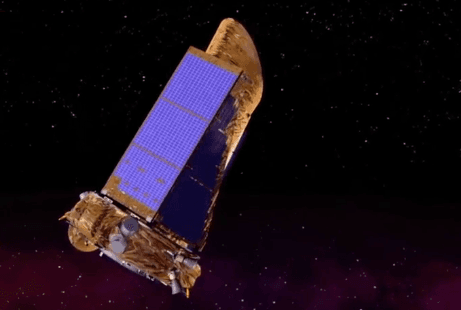
A new study of data from the Cassini mission, reveals Saturn’s moon Enceladus could potentially harbour life.

“UFO enthusiast” John Greenewald says he’s spent 20 years collecting these docs, and believes there’s a cover-up going on.


NASA’s Mars Curiosity rover has measured a tenfold spike in methane, an organic chemical, in the atmosphere around it and detected other organic molecules in a rock-powder sample collected by the robotic laboratory’s drill.

Exoplanets are prime targets in the search for extraterrestrial life, but intense heat during early years may have left some uninhabitable, say astronomers.