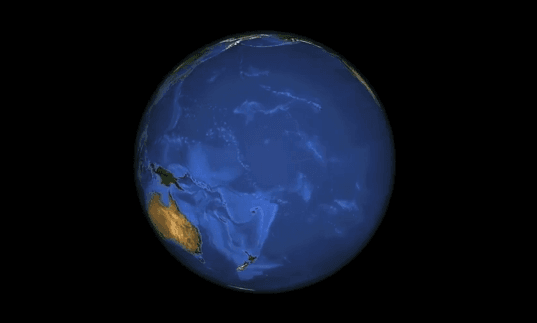
‘The destiny of science has been to find out how unique we really are,’ says a renowned biologist.

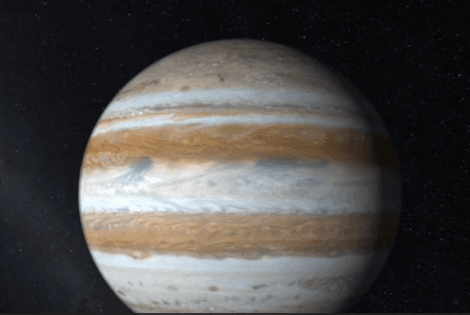
On Friday, NASA released an audio file which includes radio signals associated with Jupiter’s aurora after they have been shifted into the audio frequency range.
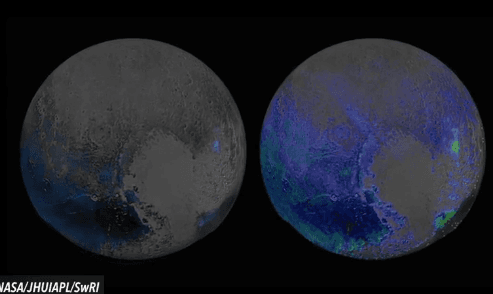
New data gathered from the New Horizons spacecraft suggests that Pluto has a far more abundant reserve of water ice than previously believed.
The weather report predicted widespread clouds on the night of the lunar eclipse. But the clouds cleared in Manhattan by 8:30 p.m., as a mirthful crowd gathered on the 14th St. entrance of the High Line to watch the eclipse.

By piecing together an increasing number of clues, cosmologists are getting closer to understanding what the future and ultimate fate of the universe will be.

When we think of cosmology, we often imagine the largest telescopes peering into the deepest space, collecting the feeble light from exploding stars or the first galaxies.

Curiosity’s hard work has once again proven to pay off, turning up evidence that liquid water quite likely exists on Mars at this time.

Researchers looking for habitable planets in the galaxy are using a model that estimates more planets could support life than previously thought.
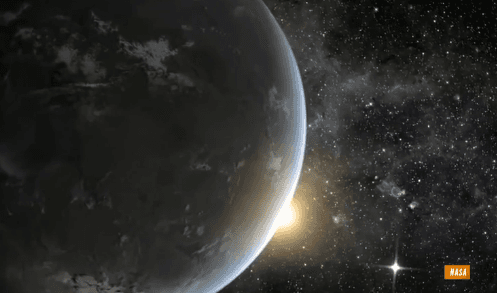
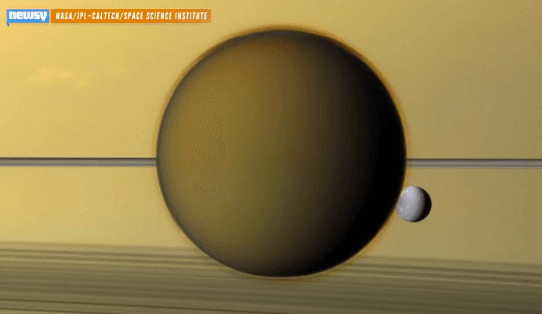
Researchers at Cornell University theorize life might exist on Saturn’s largest moon as nitrogen-based organisms.
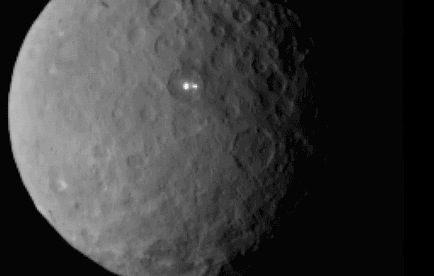
NASA scientists still don’t have a clear picture of the bright spots showing up on the surface of Ceres, a minor planet in the asteroid belt.
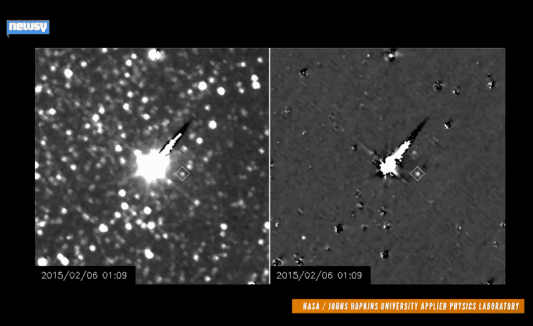
NASA’s New Horizons spacecraft has sent back the clearest images yet of two of Pluto’s moons as it approaches the dwarf planet to collect more data.
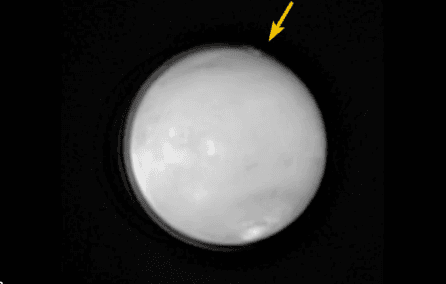
A mysterious plume seen hovering high above the Martian surface in 2012 continues to confound astronomers.
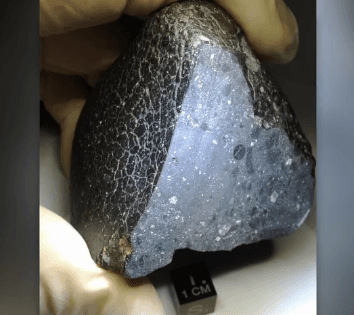
The 4.4 billion-year-old meteorite is like nothing ever discovered on Earth and gives researchers insight into the makeup of the Red Planet’s surface.
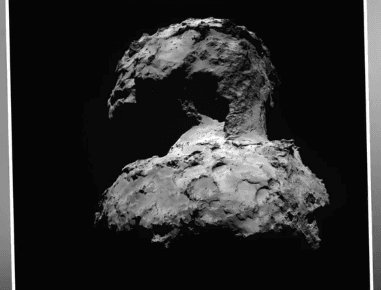
The first images of the European Space Agency’s Rosetta probe comet orbit could provide clues about its origin and how it got its unique shape.
In examining a layer of seafloor sediment, researchers learned that regular supernovae may not have had much to do with delivering key heavy metals to Earth.
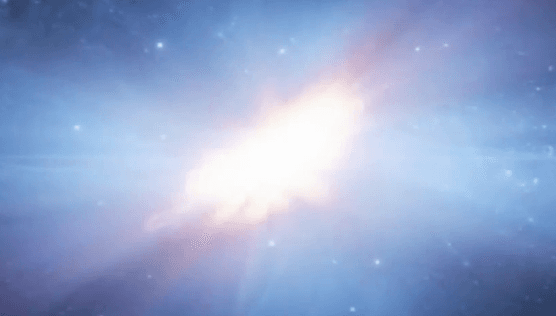
Is it possible that we are overlooking extraterrestrial signals in our search of the skies for intelligent alien life? If alien life does exist in our galaxy and beyond, is it possible that its signals could be similar to what we detect and label as pulsars? We see pulsars as a natural phenomenon, but what if that’s not the case?

Two new exoplanets discovered via NASA’s Kepler Space Telescope are more like our own planet than any far-off celestial body ever examined.