The People’s Republic of China’s head of state, Xi Jinping, and U.S. President Barack Obama will get to know each other in face-to-face meetings June 7 and 8. Here is a peek at what they will say to each other.

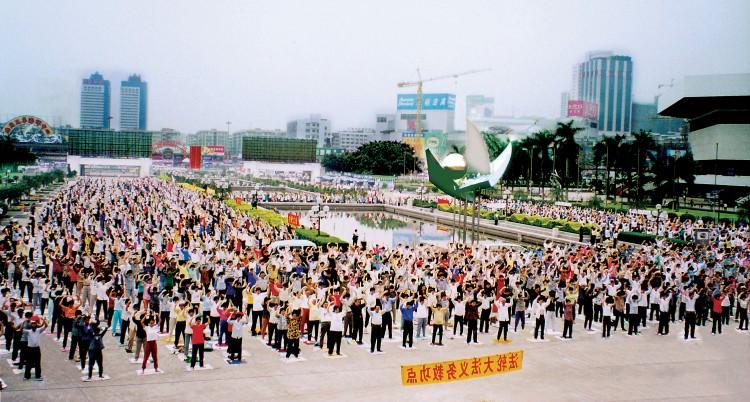
In modern China under the rule of the Chinese Communist Party, the Chinese have suffered through several political campaigns. The most recent of these, the attempt to eradicate the spiritual discipline of Falun Gong, has now become the theme of China’s principle political drama.
Ten years ago, when Hu Jintao became the general secretary of the Chinese Communist Party (CCP), there was much uncertainty mixed with hope about who Hu would turn about to be. At the 18th Party Congress held last month, Hu gave his final answer: Hu Jintao is a loyal adherent of the CCP who always put the Party’s interests first.

The next Party head, Xi Jinping, appears to genuinely favor political reform. He also is in a position where forces inside and outside the Party force reform upon him, even though such reform may not be possible.

Chinese Communist Party Head Hu Jintao will leave office soon. As he departs, he leaves behind an unresolved crisis that will eventually bring unknown repercussions to the Party.

Jiang Zemin began his career as head of the CCP fearing he might be purged. Out of that fear grew a great calamity for China.

The China Model came up against the villagers of Wukan in southern China, and for the moment, the villagers have won.

Americans have been given the impression China is an economic success. The reality is something different.

China’s paramount leader, Hu Jintao, is scheduled to attend a Nuclear Security Summit April 12-13 in Washington, D.C.
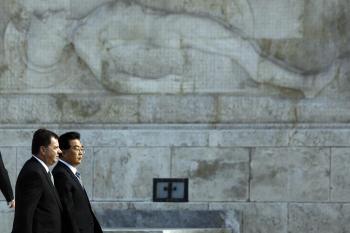
Apparently, Confucius was politically rehabilitated by the Chinese Communist Party (CCP).