

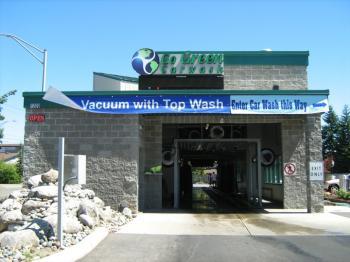
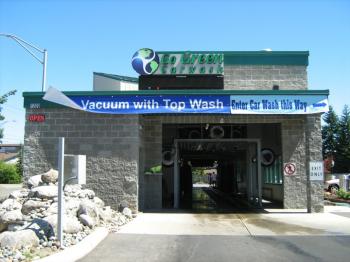
By cleaning their cars at a commercial car wash, residents in the Puget Sound region can help protect the area’s delicate ecosystem. Area residents are taking small actions like this to allow Puget Sound the chance to regain its pre-industrial vitality.
When residents wash cars in their driveways, the runoff water mixes with oil, grease, and other toxins, and goes into the storm drain. It goes directly into the Puget Sound watershed.
“Car wash facilities recapture all the water and make sure that it’s discharged, after going through oil-water separators, into the sewer rather than the storm drain,” Steve Palmer, CFO of Brown Bear Carwash, in Olympia, Wash., told The Epoch Times. Palmer said he has about 45 locations.
Palmer said water cleaning and conservation has been part of his business practice for a long time, and he can’t remember when car washes began doing that. “It’s part of our business practice rather than some marketing strategy,” he said.
Washing at a car wash is one very simple way people can help the Puget Sound ecosystem, and there are many more. The environment around Puget Sound has been degrading since industry first came to the region. Currently the biggest cause of pollution, about 85 percent, comes from the activities of daily life, non-point sources, rather than industry, and point source pollution, according to Frank Mendizabel of the Puget Sound Partnership (PSP), a state agency that oversees restoration projects of Puget Sound.
Point-source pollution comes from a single identifiable, usually fixed source, “a big factory on the shoreline that’s spewing,” said Mendizabel. Most of these big areas of concern are under remediation, he said.
Now the pollution problems come from things like brake dust, poorly functioning septic systems, and pet feces. Every time a driver brakes, a layer of residue is scraped off the brake pad (which is why they wear out). Historically, these pads contained pollutants like copper and arsenic. Earlier this year Washington passed a law to phase out these toxins in brake pads sold in the state.
When pet feces enter the water cycle for example, it increases the nitrogen concentration causing excessive plant growth, throwing the ecosystem out of balance.
When residents wash cars in their driveways, the runoff water mixes with oil, grease, and other toxins, and goes into the storm drain. It goes directly into the Puget Sound watershed.
“Car wash facilities recapture all the water and make sure that it’s discharged, after going through oil-water separators, into the sewer rather than the storm drain,” Steve Palmer, CFO of Brown Bear Carwash, in Olympia, Wash., told The Epoch Times. Palmer said he has about 45 locations.
Palmer said water cleaning and conservation has been part of his business practice for a long time, and he can’t remember when car washes began doing that. “It’s part of our business practice rather than some marketing strategy,” he said.
Washing at a car wash is one very simple way people can help the Puget Sound ecosystem, and there are many more. The environment around Puget Sound has been degrading since industry first came to the region. Currently the biggest cause of pollution, about 85 percent, comes from the activities of daily life, non-point sources, rather than industry, and point source pollution, according to Frank Mendizabel of the Puget Sound Partnership (PSP), a state agency that oversees restoration projects of Puget Sound.
Point-source pollution comes from a single identifiable, usually fixed source, “a big factory on the shoreline that’s spewing,” said Mendizabel. Most of these big areas of concern are under remediation, he said.
Now the pollution problems come from things like brake dust, poorly functioning septic systems, and pet feces. Every time a driver brakes, a layer of residue is scraped off the brake pad (which is why they wear out). Historically, these pads contained pollutants like copper and arsenic. Earlier this year Washington passed a law to phase out these toxins in brake pads sold in the state.
When pet feces enter the water cycle for example, it increases the nitrogen concentration causing excessive plant growth, throwing the ecosystem out of balance.