For over 25 years, Hubble Space Telescope has become a staple name for bringing us crystal-clear images of distant galaxies. Check out some less known ones.

Astronomers have identified nine massive stars that are more than 100 times the mass of the sun.

The Hubble Space Telescope has broke a new record, peering 13.4 billion years into the past to observe an infant galaxy that may have formed just 400 million years after the Big Bang.

The hubble space telescope catches two galaxies in the process of merging.

New research cuts the estimated number of the most distant galaxies by 10 to 100 times.
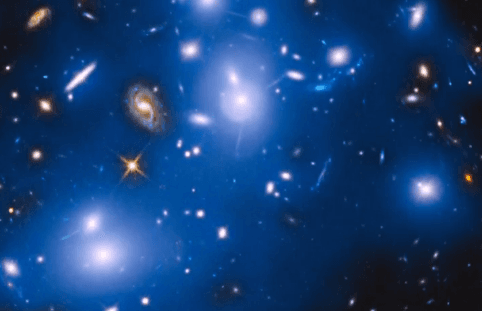
With the help of the Hubble Space Telescope, NASA astronomers spotted a cluster of faint ghostlike stars orphaned from galaxies billions of years ago.
Despite discovering hundreds of exoplanets known as “super-Earths,” astronomers still don’t know what they’re made of.
World Space Week is one of a series of events co-ordinated by the UN to celebrate the global nature of space exploration. It was established in 1999.

The most detailed weather map ever made of an exoplanet orbiting another star 260 light-years away from Earth shows a world with daytime temperatures hot enough to melt steel.

A comet carrying enough water to fill a small lake provided astronomers with the first tangible evidence to support a controversial theory that Earth’s water may have arrived on comets billions of years ago.

NASA revealed yesterday that the iconic Great Red Spot on Jupiter has shrunk to its smallest size ever – and astronomers have no idea why.

What’s it like to lead a NASA project that could revolutionize our understanding of the universe? John Mather shares his perspective with Epoch Times.

For over 25 years, Hubble Space Telescope has become a staple name for bringing us crystal-clear images of distant galaxies. Check out some less known ones.
Astronomers have identified nine massive stars that are more than 100 times the mass of the sun.
The Hubble Space Telescope has broke a new record, peering 13.4 billion years into the past to observe an infant galaxy that may have formed just 400 million years after the Big Bang.
The hubble space telescope catches two galaxies in the process of merging.
New research cuts the estimated number of the most distant galaxies by 10 to 100 times.
With the help of the Hubble Space Telescope, NASA astronomers spotted a cluster of faint ghostlike stars orphaned from galaxies billions of years ago.
Despite discovering hundreds of exoplanets known as “super-Earths,” astronomers still don’t know what they’re made of.
World Space Week is one of a series of events co-ordinated by the UN to celebrate the global nature of space exploration. It was established in 1999.
The most detailed weather map ever made of an exoplanet orbiting another star 260 light-years away from Earth shows a world with daytime temperatures hot enough to melt steel.
A comet carrying enough water to fill a small lake provided astronomers with the first tangible evidence to support a controversial theory that Earth’s water may have arrived on comets billions of years ago.
NASA revealed yesterday that the iconic Great Red Spot on Jupiter has shrunk to its smallest size ever – and astronomers have no idea why.
What’s it like to lead a NASA project that could revolutionize our understanding of the universe? John Mather shares his perspective with Epoch Times.