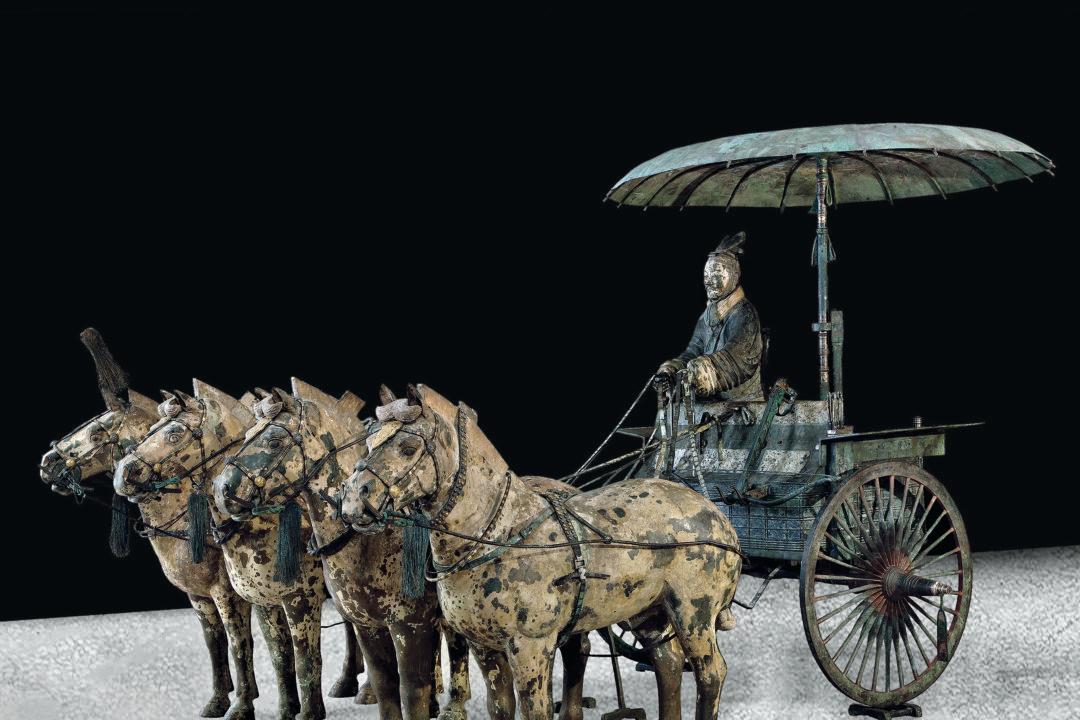
For Confucius, to follow what the ancients called the Mandate of Heaven was a way of life, the way of the superior man.

The Han Dynasty imperial officers never found the Celestial Steeds they were searching for. What they did find was even more valuable.

Xun Shuang wrote about traditional values and etiquette during the Han Dynasty, quoting the classics in hopes of correcting the improper notions and actions of the people of his time.

On Chinese New Year, the color red is splayed across displays and banners throughout the world. It’s a looming presence at festivities.

Under the reign of Emperor Wu of Han, the Han Dynasty saw a vast territorial expansion as well as a strong and centralized government.

Chinese archaeologists have discovered more than one hundred tombs from the Han Dynasty (25-220 AD) in Jiangsu province, Eastern China. Such a large cluster of Han tombs are a rare discovery and valuable for studies on funeral customs of the time.

A story in a collection of biographies of Daoist immortals from the Han Dynasty tells of a brush maker who lived for over 300 years in the human world.

Emperor Wen (202–157 B.C.) was the fifth emperor of the Han Dynasty.

Zhang Liang was a chief military strategist, minister, and adviser to Liu Bang (Emperor Gaozu), the founding emperor of the Han Dynasty.

For Confucius, to follow what the ancients called the Mandate of Heaven was a way of life, the way of the superior man.
The Han Dynasty imperial officers never found the Celestial Steeds they were searching for. What they did find was even more valuable.
Xun Shuang wrote about traditional values and etiquette during the Han Dynasty, quoting the classics in hopes of correcting the improper notions and actions of the people of his time.
On Chinese New Year, the color red is splayed across displays and banners throughout the world. It’s a looming presence at festivities.
Under the reign of Emperor Wu of Han, the Han Dynasty saw a vast territorial expansion as well as a strong and centralized government.
Chinese archaeologists have discovered more than one hundred tombs from the Han Dynasty (25-220 AD) in Jiangsu province, Eastern China. Such a large cluster of Han tombs are a rare discovery and valuable for studies on funeral customs of the time.
A story in a collection of biographies of Daoist immortals from the Han Dynasty tells of a brush maker who lived for over 300 years in the human world.
Emperor Wen (202–157 B.C.) was the fifth emperor of the Han Dynasty.
Zhang Liang was a chief military strategist, minister, and adviser to Liu Bang (Emperor Gaozu), the founding emperor of the Han Dynasty.