The world is about to go on a carbon diet. It won’t be easy—or cheap.

Nearly 200 nations adopted the first global pact to fight climate change on Saturday, calling on the world to collectively cut and then eliminate greenhouse gas pollution but imposing no sanctions on countries that don’t.

Competing national interests and even personal rivalries have cast a cloud over the international summit on climate change meeting here, and the issue of “climate justice” has proven to be a significant stumbling block in the way of any meaningful deal.

France presented what it called a “final draft” of an unprecedented deal to slow global warming by reducing greenhouse gas emissions to the levels that nature can absorb, and urged negotiators from nearly 200 nations to approve it Saturday.

A U.N.-sponsored climate change summit opened Monday, Dec. 30, amid gathering clouds of global conflict that threaten to overshadow the negotiations.

President Barack Obama said Tuesday that parts of the global warming deal being negotiated in Paris should be legally binding on the countries that sign on, setting up a potential fight with Republicans at home.

At the 2015 Paris Climate Conference, or COP21, President Obama plans to sign another bad deal for America.

With dramatic vows to save future generations from an overheated planet, the largest gathering ever of world leaders began two weeks of talks on Nov. 30, aimed at producing the most far-reaching pact yet to reduce greenhouse-gas emissions and avert environmental havoc.
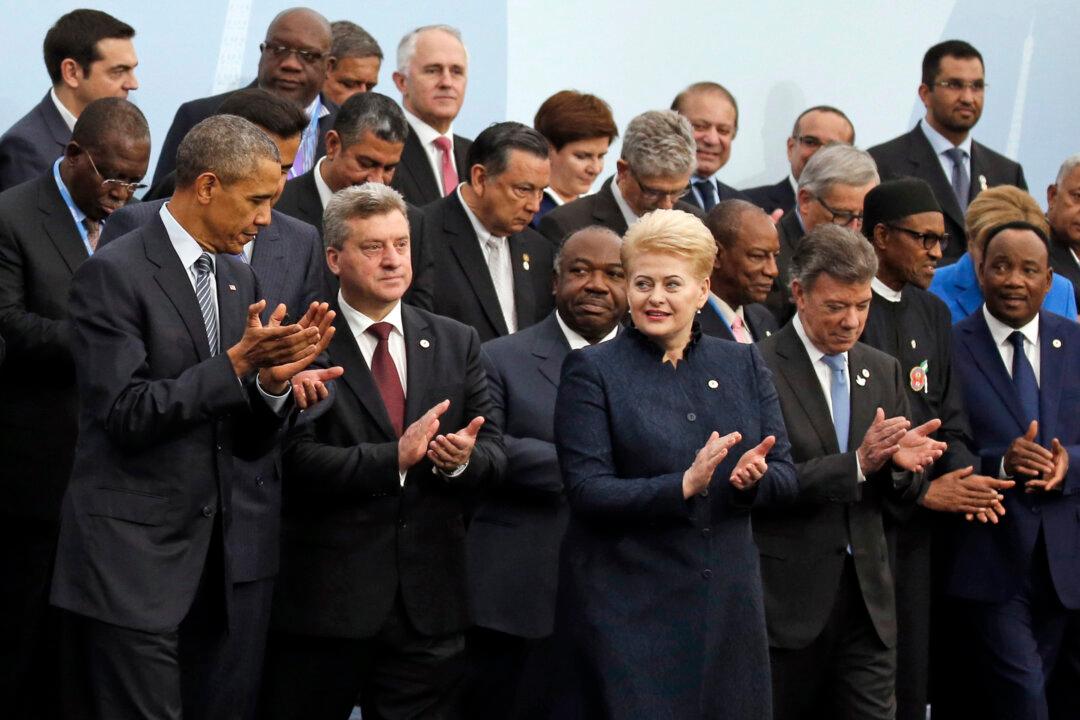
Pushing for a powerful climate deal, President Obama called the global talks opening Monday outside Paris an “act of defiance” against terrorism.

Hundreds of thousands of people have taken part in rallies around the world on Sunday, calling on leaders to halt climate change on the eve of a major conference in Paris.

The latest from the much-anticipated U.N. climate conference that gets underway in Paris on Monday.

Sometimes you wonder whether the negotiators are trying on purpose to make a simple idea sound more complex than it is. But it’s also a matter of international law.

French President Francois Hollande met with environmental groups Saturday, pushing for an ambitious global deal to reduce man-made emissions blamed for global warming—with emphasis on helping developing countries adapt to a changing world.

Developing countries have a role to play in climate action.

The world is about to go on a carbon diet. It won’t be easy—or cheap.
Nearly 200 nations adopted the first global pact to fight climate change on Saturday, calling on the world to collectively cut and then eliminate greenhouse gas pollution but imposing no sanctions on countries that don’t.
Competing national interests and even personal rivalries have cast a cloud over the international summit on climate change meeting here, and the issue of “climate justice” has proven to be a significant stumbling block in the way of any meaningful deal.
France presented what it called a “final draft” of an unprecedented deal to slow global warming by reducing greenhouse gas emissions to the levels that nature can absorb, and urged negotiators from nearly 200 nations to approve it Saturday.
A U.N.-sponsored climate change summit opened Monday, Dec. 30, amid gathering clouds of global conflict that threaten to overshadow the negotiations.
President Barack Obama said Tuesday that parts of the global warming deal being negotiated in Paris should be legally binding on the countries that sign on, setting up a potential fight with Republicans at home.
At the 2015 Paris Climate Conference, or COP21, President Obama plans to sign another bad deal for America.
With dramatic vows to save future generations from an overheated planet, the largest gathering ever of world leaders began two weeks of talks on Nov. 30, aimed at producing the most far-reaching pact yet to reduce greenhouse-gas emissions and avert environmental havoc.
Pushing for a powerful climate deal, President Obama called the global talks opening Monday outside Paris an “act of defiance” against terrorism.
Hundreds of thousands of people have taken part in rallies around the world on Sunday, calling on leaders to halt climate change on the eve of a major conference in Paris.
The latest from the much-anticipated U.N. climate conference that gets underway in Paris on Monday.
Sometimes you wonder whether the negotiators are trying on purpose to make a simple idea sound more complex than it is. But it’s also a matter of international law.
French President Francois Hollande met with environmental groups Saturday, pushing for an ambitious global deal to reduce man-made emissions blamed for global warming—with emphasis on helping developing countries adapt to a changing world.
Developing countries have a role to play in climate action.