Scientists have solved a longstanding mystery about how some fish can seem to disappear from predators.

In Afrikaans, they are called rysmiere, literally “rice ants,” although their name is more commonly rendered into English as “white ants.”

Few structures in nature are more durable than teeth or seashells.

Swans and geese are the envy of aeronautical engineers.

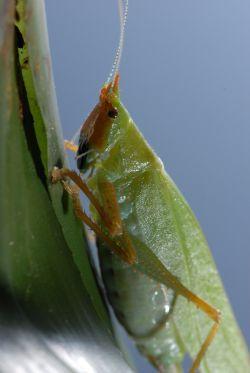
A newly identified hearing organ in the South American bushcricket, Copiphora gorgonensis, could lead to the creation of microscopic acoustic sensors.
A tiny “living,” swimming robot that could be used to detect diseases in the human body is being developed by U.K. and U.S. researchers.
Imagine an ultra lightweight material so buoyant that a one-pound boat constructed from it could carry 1,000 pounds–equivalent to five kitchen fridges.

Scientists have solved a longstanding mystery about how some fish can seem to disappear from predators.
In Afrikaans, they are called rysmiere, literally “rice ants,” although their name is more commonly rendered into English as “white ants.”
Few structures in nature are more durable than teeth or seashells.
Swans and geese are the envy of aeronautical engineers.
A newly identified hearing organ in the South American bushcricket, Copiphora gorgonensis, could lead to the creation of microscopic acoustic sensors.
A tiny “living,” swimming robot that could be used to detect diseases in the human body is being developed by U.K. and U.S. researchers.
Imagine an ultra lightweight material so buoyant that a one-pound boat constructed from it could carry 1,000 pounds–equivalent to five kitchen fridges.