How to decode your cat’s meows, body language, and baffling behaviors.

When playing the Ultimatum Game, chimpanzees can figure out how to cooperate with their partners and share the rewards like humans do.

Even while growing inside their egg cases, some embryonic sharks keep very still when predators are nearby to avoid being detected.

Miniature spiders have been discovered in Peru that create large fake spiders in their webs.

Thorny seahorses, Hippocampus histrix, inhabit sandy and reef substrates in the Western Pacific.

Singing while eating isn’t recommended for humans, but humpback whales have been recorded doing so in a new study.

The songs of male zebra finches may not always be truthful, according to new international research.

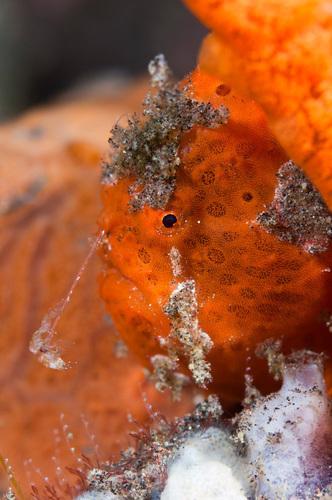
The painted frogfish, Antennarius pictus, is also known as the painted anglerfish because it uses a lure to attract prey, like all frogfish.
Termites can indicate the location of undiscovered deposits of gold and other metals, according to new Australian research.

A species of coral in Fiji calls on goby fish to rescue it when under attack by a toxic seaweed.

Female superb fairy-wrens, Malurus cyaneus, teach their unhatched chicks a unique note that later allows the parents to distinguish their babies from parasitic cuckoos when the nestlings beg for food.

A Goffin’s cockatoo has been observed making and using tools to reach objects, including food.
A new U.K. study of bumblebee foraging behavior has shown these insects may be following simple rules to locate multiple flowers across considerable distances.

Bones from small flying dinosaurs have been discovered in the stomach of Sinocalliopteryx gigas, a raptor-like bipedal dinosaur about the size of a wolf.

One thousand internationally protected wood ants will be fitted with tiny radio receivers to understand how they communicate within their multi-queen colonies and travel between their complex nests.

For three weeks during the Arctic summer, the sun never sets–if a male sandpiper doesn’t sleep as much, he can use all those extra hours of daylight to find more mates.
Research finds that dolphins that use sponges to protect their snouts while hunting on the seafloor prefer to associate with one another.

How to decode your cat’s meows, body language, and baffling behaviors.
When playing the Ultimatum Game, chimpanzees can figure out how to cooperate with their partners and share the rewards like humans do.
Even while growing inside their egg cases, some embryonic sharks keep very still when predators are nearby to avoid being detected.
Miniature spiders have been discovered in Peru that create large fake spiders in their webs.
Thorny seahorses, Hippocampus histrix, inhabit sandy and reef substrates in the Western Pacific.
Singing while eating isn’t recommended for humans, but humpback whales have been recorded doing so in a new study.
The songs of male zebra finches may not always be truthful, according to new international research.
The painted frogfish, Antennarius pictus, is also known as the painted anglerfish because it uses a lure to attract prey, like all frogfish.
Termites can indicate the location of undiscovered deposits of gold and other metals, according to new Australian research.
A species of coral in Fiji calls on goby fish to rescue it when under attack by a toxic seaweed.
Female superb fairy-wrens, Malurus cyaneus, teach their unhatched chicks a unique note that later allows the parents to distinguish their babies from parasitic cuckoos when the nestlings beg for food.
A Goffin’s cockatoo has been observed making and using tools to reach objects, including food.
A new U.K. study of bumblebee foraging behavior has shown these insects may be following simple rules to locate multiple flowers across considerable distances.
Bones from small flying dinosaurs have been discovered in the stomach of Sinocalliopteryx gigas, a raptor-like bipedal dinosaur about the size of a wolf.
One thousand internationally protected wood ants will be fitted with tiny radio receivers to understand how they communicate within their multi-queen colonies and travel between their complex nests.
For three weeks during the Arctic summer, the sun never sets–if a male sandpiper doesn’t sleep as much, he can use all those extra hours of daylight to find more mates.
Research finds that dolphins that use sponges to protect their snouts while hunting on the seafloor prefer to associate with one another.