Chinese businesspeople have good reason to harbor mixed feelings about Chinese leader Xi Jinping’s recent encouragement and promises of support. The only just-released text of an important speech he gave to select business leaders in February contains fulsome promises and a willingness to correct past failures.
Such rhetoric would, under most circumstances, be cause for enthusiasm, except that Chinese business owners and managers can recall that not too long ago, Xi and the Chinese Communist Party (CCP) had heaped statements of opprobrium on all private businesses in China. Now, hearing Xi sing a very different tune, these business leaders must (or should) wonder what the next turn in his attitude will be.
He promised “policies and measures to promote the development of the private economy,” insisting that those measures would be “implemented in a solid and thorough manner ... without ambiguity, delay, or compromise.”
He further promised that these commitments would “translate into concrete, substantive assistance [so that] all eligible enterprises of the same category should receive equal treatment.”

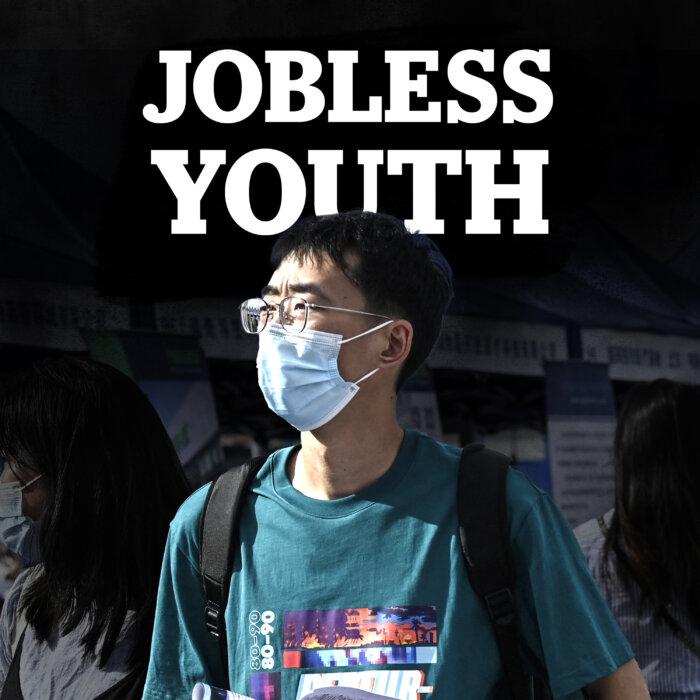
Xi even went so far as to acknowledge that in the past, “many private businesses report limited tangible benefits.”
At last measure, in July, retail sales in China were up only 3.7 percent from year-prior levels, a slowdown from the 4.8 percent registered in June. Industrial production in July showed only 5.7 percent growth from year-prior levels, slower than the 6.8 percent recorded in June. Private business is a part of this clear economic problem.
Still, there is reason to expect a less-than-enthusiastic response from private businesses. Encouraging as Xi must sound, owners and managers nonetheless have memories of a very different approach not too long ago. In 2021, Xi openly criticized the lack of civic virtue among private businesses, which many American observers described as a “crackdown” not just on private companies but also on individual entrepreneurs, including Alibaba CEO Jack Ma.
During that time, Beijing published guidelines demanding that private businesses abandon the single-minded pursuit of profits and instead “educate private businesspeople to weaponize their minds with socialist ideology.” Xi wanted businesspeople to become “politically sensible” and “firmly listen to the Party and follow the Party.” As recently as 2023, Chinese regulations were described as a way to reduce private power in favor of state-run enterprises.
Beyond such contradictions in both past and present rhetoric, as well as present actions, Chinese businesses have still other reasons for caution. The men and women in charge of these private enterprises can readily see that it is likely only current economic needs that have changed Xi from what they saw only a couple of years ago. Two to four years ago, when Beijing believed it had little need for help, Xi appeared hostile. Surely, these business managers can see the connection and ask themselves, if they respond positively and the economy strengthens, will Xi return to this former hostility? There are certainly no guarantees that he will not do so.
It is a difficult challenge for Xi and the CCP to get the economy back on track. A more positive attitude among business leaders could do a lot to bring success to Beijing’s economic efforts. Still, if private businesses’ response is only tepid or nonexistent, Xi will only have himself to blame. He overplayed his ideological hand when he and his planners thought (admittedly mistakenly) that things were going well. Now he must overcome the legacy of that error. At best, things will unfold much more slowly than they would have if he had not poisoned the relationship with private businesses in the first place.