China’s exports grew at a remarkably fast pace this past spring. There is a strong temptation to read the news as a sign that China has beaten off the effects of the Trump administration’s tariffs. The country’s export picture is more complicated than that and may in fact say nothing about the tariffs.
The surge in growth has emerged from a confluence of circumstances. Some of the influences will linger. Others will likely dissipate in time and some very soon. A distinct slowdown in the pace of expansion, and perhaps even some backsliding, is likely in the coming months.
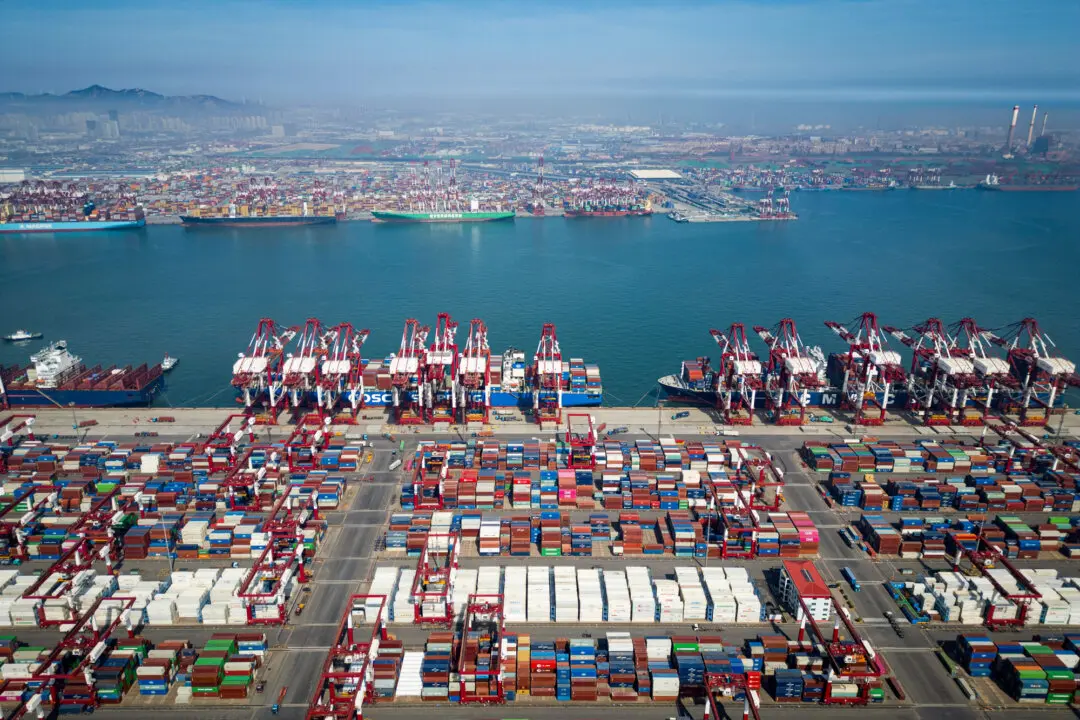
The aggregate figures are striking by almost any standard and have made headlines across business and financial media outlets. According to calculations made from figures provided by Beijing’s General Administration of Customs, China’s overall exports in May, the most recent period for which data are available, rose by some 19.4 percent from their level of May 2025. That constitutes an acceleration from the also impressive April gain of 14.1 percent. Shipments to the United States were up by a whopping 35 percent from a year ago, a huge acceleration over April’s 11 percent increase.
For the United States, gains more than a year ago make for an easy comparison, since last year’s levels were heavily depressed by the introduction of U.S. President Donald Trump’s tariffs in April of that year, but even considering this technical factor, the recent surge is impressive.
The details behind these gross figures offer a key to the origin of this largely unexpected surge in growth, as well as to its future prospects. Three factors played into the picture: indirect effects of the fighting in the Persian Gulf, China’s retention of a near-monopoly position in the world’s supply of rare-earth elements, and a major upgrade in China’s export product mix. Of these, the first two have expiration dates of a sort. The third’s potential is more open-ended.

The export upgrade is the primary aspect with “legs,” as the slang expression goes. For decades, China dominated aspects of world trade by offering a vast array of low-value products at the lowest cost. Among these were clothing, plastic toys, shoes, furniture, and assemblies of electrical gear from imports of more sophisticated components.
But Chinese wages have outstripped wages elsewhere in Asia and Latin America, erasing the low-cost advantage. Average Chinese wages, for instance, are two to three times those in Vietnam. The effect is to shift the advantage on these low-value products away from China to Vietnam and other, less-developed economies elsewhere in Asia, in India, and in Latin America.
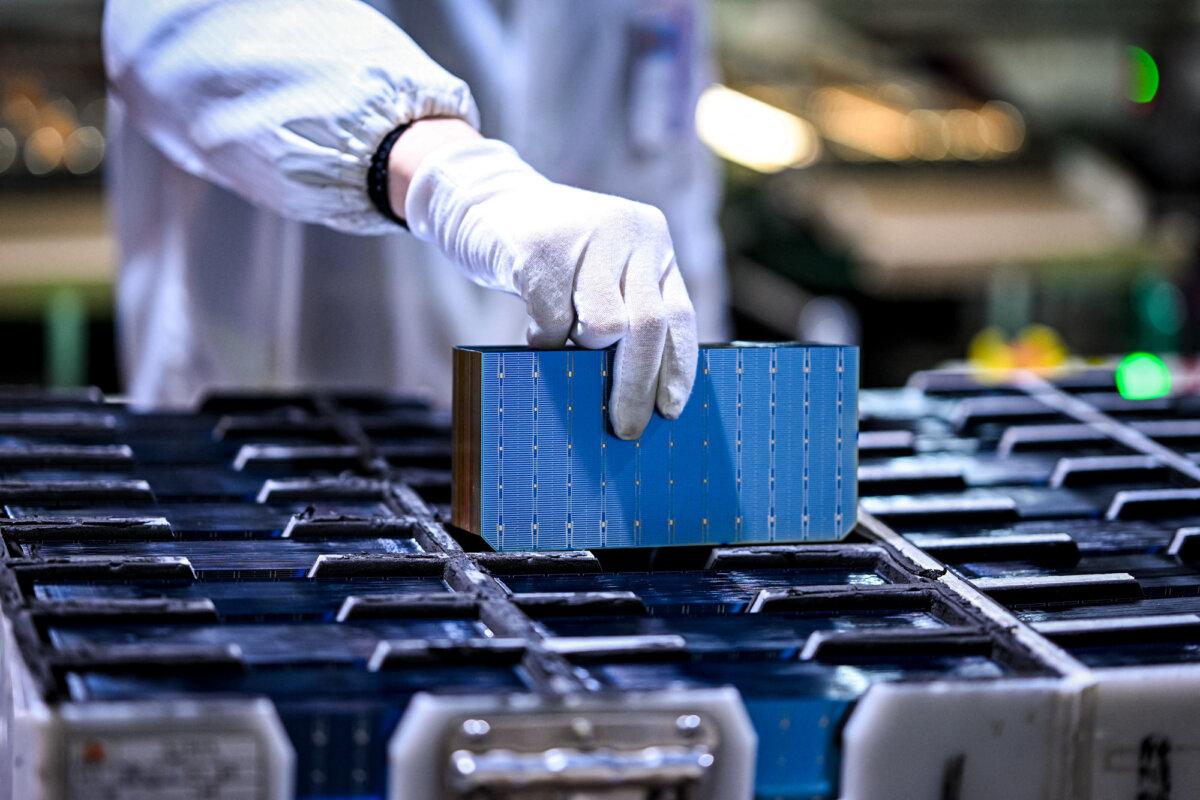
Against these developments, it augurs well for China that its recent export growth has centered on higher-value-added, more sophisticated products. Semiconductor exports in May, for instance, showed a 110 percent gain over May 2025.
The lion’s share of the gain came from a surge in semiconductor prices, which is unlikely to be repeated month after month, but volume was still up by about 6 percent. A surge in semiconductor imports showed that China still depends on other economies for the most advanced chips, but even simple semiconductors are a big upgrade from plastic toys. Auto exports showed a 39 percent gain, small by comparison with semiconductors, but still powerful. Exports of automatic data processing machines jumped by 66 percent. These are just a few examples of changes in the export mix. It is a trend that will likely persist.
But neither the fighting nor the acute awareness of fossil fuel vulnerability is likely to persist much longer, especially since even oil producers in the Arabian Peninsula are seeking shipping routes around the Strait of Hormuz. Indeed, reluctance toward trade with China in Europe may already be showing. The gain in May was 13 percent, a deceleration from April’s 15 percent.
China’s edge on rare-earth elements will likely persist longer than this sudden preference for alternatives. For now, these elements are critical to much of the technology, including artificial intelligence, whose applications are growing rapidly across the globe. The country controls some 60 percent of the world’s rare-earth mining and some 90 percent of rare-earth refining.
China’s exports have benefited directly. Rare-earth exports in May were 237 percent higher than a year ago, because prices have risen smartly. Upward pricing and volumes will likely persist and buoy Chinese exports for months to come, but the advantage is not endless. Government and private efforts in the United States, Europe, and elsewhere are focusing on alternative supplies, while technology aims to reduce the need for rare earths across all products.
At the same time, technology companies that now rely on rare-earth elements are striving to reduce that dependence. Doubtless this effort is widespread, given what has happened to rare-earth prices and concerns about Chinese sources.
Two examples illustrate the effort. Niron Magnetics, an American startup, claims to have developed magnets critical to many technologies without the need for rare-earth elements. The German automotive supplier ZF Friedrichshafen claims to have developed motors for EVs that do not require magnets. Both are new technologies and may not prove out, but their efforts indicate how keen the push is to find a technological way around China’s present dominance.
Government and technological efforts to erode China’s edge in rare earths will take time to have an impact, but ultimately they promise to remove this one support for Chinese exports. Acute fears about fossil fuel supplies and the shift of the world’s intense attention toward alternative fuels will develop sooner. However, China’s shift toward more value-added and sophisticated products will continue to help on the export front for the foreseeable future, but even that will require the continued striving of Chinese industry and its masters in Beijing, which, although not doubtful, is far from assured.