China is scheduled to face a 12.5 percent tariff. Beijing has objected but has not yet responded otherwise. Because this upsets the Sino–American trade truce of sorts that was established late last year and reaffirmed at the May summit between Trump and Chinese leader Xi Jinping, Beijing doubtless will do more than just complain, likely by adjusting export restrictions on critical rare-earth elements and possibly even on pharmaceutical supplies.
This piece of legislation enables the president to impose levies on goods from countries that do not adequately guard against the use of forced labor, wherever it occurs. For those so associated, which includes the People’s Republic of China, the tariff is set at 12.4 percent. For others who neither use forced labor nor receive goods associated with it, the tariffs are set at 10 percent.
These levies replace the now-expired 10 percent across-the-board tariffs that Trump imposed right after the Supreme Court decision under Section 122 of the Trade Act. According to U.S. Trade Representative Jamison Greer, the new “action will begin to correct what is both a human rights abuse and a distortive trade practice to improve the welfare of workers everywhere.”
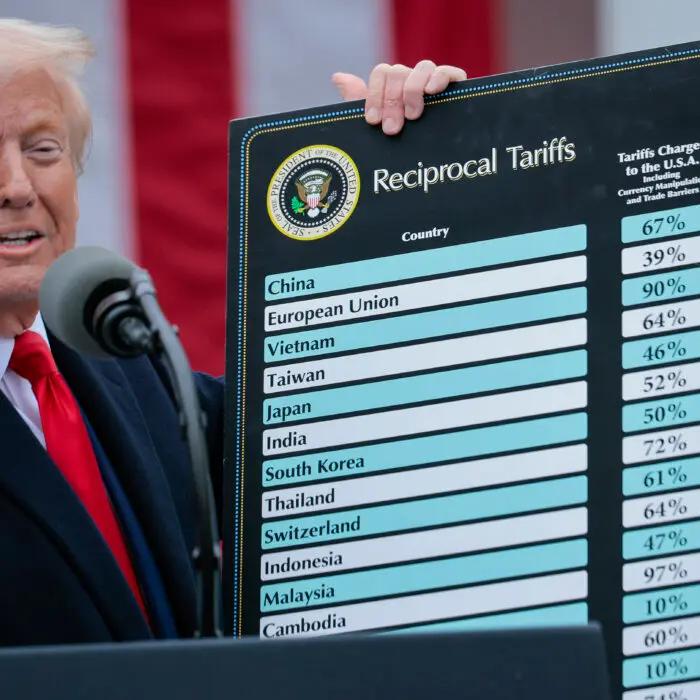
The direct effect on China and much of the rest of Asia will likely be small. These levies—added to other, more specific tariffs—will raise overall levies on Chinese exports to the United States to between 20 percent and 47.5 percent.
Though not a small number, these new levels are considerably below the 125 percent tariffs Trump first imposed on China in April 2025. Even at this, China, as well as other Asian trading partners of the United States, enjoys tariff carve-outs for most types of electronics, from consumer devices to semiconductors, products that are especially important to Beijing.
What may be of greater concern to Beijing is how the tariffs punish many of the countries that had become alternative buyers of Chinese goods when Trump’s various tariff moves largely blocked Chinese exports to the United States. After all, Beijing’s well-documented mistreatment of the Uyghurs and other Muslim minorities gives Washington a good case that the Chinese regime does use forced labor, as much as Beijing denies it.
Beijing’s fear could lie in how buyers of its products other than the United States—places such as Switzerland, Singapore, and others that buy Chinese exports or trans-ship Chinese goods, including electronics and pharmaceutical inputs—might rethink their relationship with China rather than face a 12.5 percent tariff on their exports to the United States.
Beyond lodging complaints, Beijing has yet to respond to Washington’s latest move. Most other nations have talked about negotiations instead of retaliatory tariffs. China could go a similar route.
China might also opt for limits on exports of pharmaceutical supplies, of which it has a considerable part, but so far that has not been mentioned.
Either way, this latest Trump move is far from the end of the ongoing Sino–American trade saga.