Beijing has at long last begun to yield to demographic reality. The authorities have decided to ease away from China’s rigid approach of household registration.
Called the hukou system, it required people to register in the region or town from which they came, regardless of where they were actually living and working. Because these registrations determined the social services to which a person was entitled as well as local obligations, the system (no doubt inadvertently) created a kind of underclass of Chinese workers and warped incentives for households across the country.
But now, Beijing appears to be willing to abandon this distorting system and register people where they live and work. It is a major step for a government that is often ridiculously rigid, and it will help alleviate some of China’s long-standing economic problems, but not as much as Beijing hopes.
The hukou system dates back to the late 1950s. It reflected then-Chinese Communist Party Chairman Mao Zedong’s concern that too many people would flock from the countryside to the cities to find work. Individuals and households were effectively forced to register where they were born, and their registration status as rural or urban determined the social services to which they were entitled, where they could claim those services, and the obligations of local governments toward them.
If, say, a worker and his family moved from the Manchurian countryside into Beijing for work, they remained registered as rural residents of Manchuria even if the breadwinner waited tables at a downtown restaurant. Nothing in this changed even as China opened up to the world and began its huge development drive.
Nothing changed, even as growth, development, and the increasing need for factory workers pushed the reality of Chinese economics and demographics further and further from the government’s system. In 1980, for instance, when China’s great development was just beginning, urban dwellers accounted for only about 19 percent of the population. By 2024, the most recent period for which data are available, urban dwellers constituted some two-thirds of the country’s population. That, of course, differed from what the hukou registrations said, but they, not reality, had control.
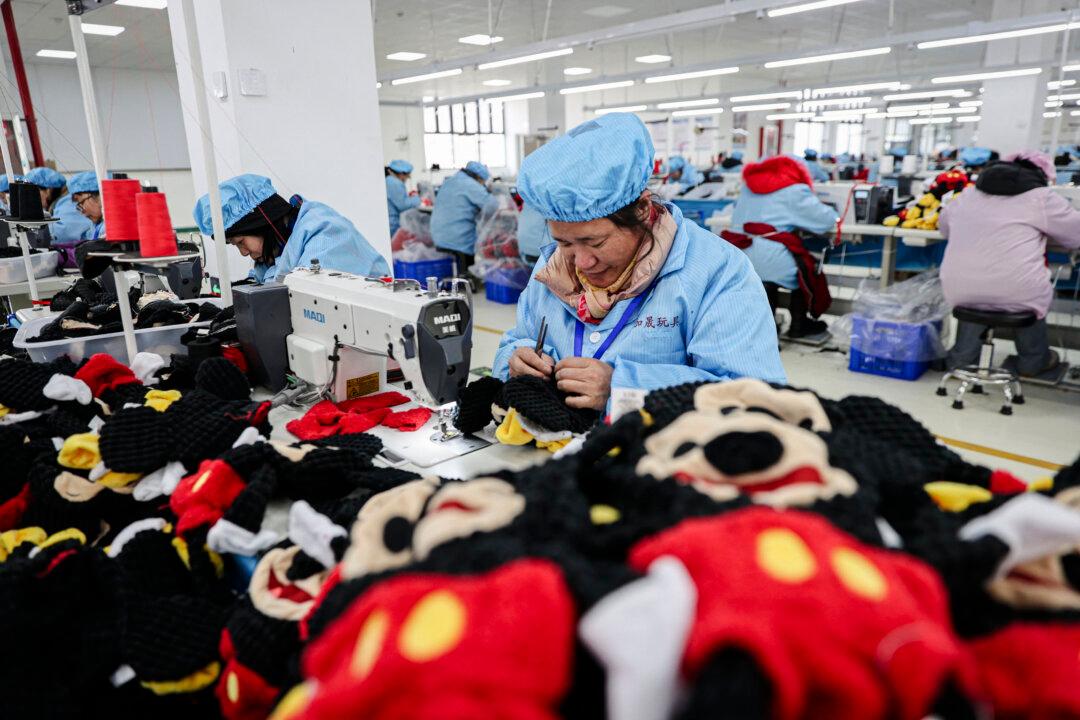
If there were layoffs, for instance, the out-of-work people had to return to the region of their registration to collect unemployment or other social benefits. These people could not use those benefits to tide themselves over while seeking new work in the more economically dynamic region that had originally lured them. Over time, this population of workers has grown into a huge underclass, variously estimated at between 200 million and 357 million, between 14 percent and 25 percent of the entire Chinese population.
Now, at last, Beijing may have begun to recognize the system’s inequity and awkwardness and has decided to remedy the matter. The move, though by now decades late, is nonetheless welcome on several counts. It will ease social tensions by finally giving this huge underclass the same rights and privileges as the rest of the population.
The change also promises to introduce efficiencies into China’s economy. Workers will no longer have to return to their “home” regions each time the economy makes an adjustment. This additional efficiency will help especially because the one-child policy Beijing enforced for decades has left China’s economy starved for young workers to replace the large generation now retiring. Indeed, the needs created by this demographic problem may be the reason Beijing has at last abandoned the hukou system.
Some in China speculate that these reforms will at last induce desperately needed growth in the economy’s consumer sector. They argue that the improved availability of social services, especially unemployment insurance and access to pensions, will induce Chinese to save less and spend more.
Other Chinese optimists have expressed hope that the abandonment of the hukou system will relieve the effects of China’s long-standing property crisis. This hope is still more far-fetched than the expectation of a consumer spending boom. What the property crisis needs is a reduction in the inventory overhang of unoccupied apartments. An increase in household spending, even if it occurred, would take a long time to achieve.
While Beijing’s decision to jettison its antiquated worker registration system is far from the panacea some optimists would like to believe it is, the move nonetheless is welcome. It could improve the lot of a large part of the population and ease social tensions. To the extent that it makes labor markets more efficient, it will lessen—although not erase—the demographic squeeze in which China finds itself. But it may not answer all of China’s needs.