Many Western journalists, commentators, and politicians express fear of the ability of the Chinese Communist Party (CCP) to exert complete political and economic control. They see it as a competitive edge that China has over the seemingly chaotic, market-oriented approaches of the Western democracies. But they could not be more wrong. Beijing’s insistence on centralized control is, in fact, a source of economic weakness, and that is already clearly evident.
Indicative of these fear-filled claims of Chinese superiority is a recent article by reporter Greg Ip of The Wall Street Journal. Titled “Beijing’s ‘Industrial Policy of Everything’ Leaves the Rest of the World in the Dust,” it succinctly characterizes China’s approach to economic management, pointing out how Beijing “targets almost every industry and region, demand as well as supply, services as well as goods, the sophisticated and the mundane.”
The CCP’s control, Ip explains, is “macroeconomic and microeconomic” and advances Beijing’s “economic, technological, and strategic” goals. Ip’s accurate description is openly acknowledged within China’s leadership structure and indeed celebrated by Chinese leader Xi Jinping and the CCP. The planners in Beijing, following the Party’s guidance, do direct and control just about every aspect of Chinese production and economic life.
Ip’s piece and so many other articles like his go wrong by concluding that Beijing’s centralized and politically directed approach will allow China to leave its economic competitors, presumably the United States, in the “dust.” When Ip contended that China is “doing something that the world has never seen,” he (presumably unintentionally) ignores the largest bit of evidence contrary to his assertion.
The Soviet Union used just such an approach, and it was largely responsible for that country’s utter and dramatic economic failure a little less than 40 years ago. It is this same approach that lies at the root of many of the problems evident in China’s economy today.


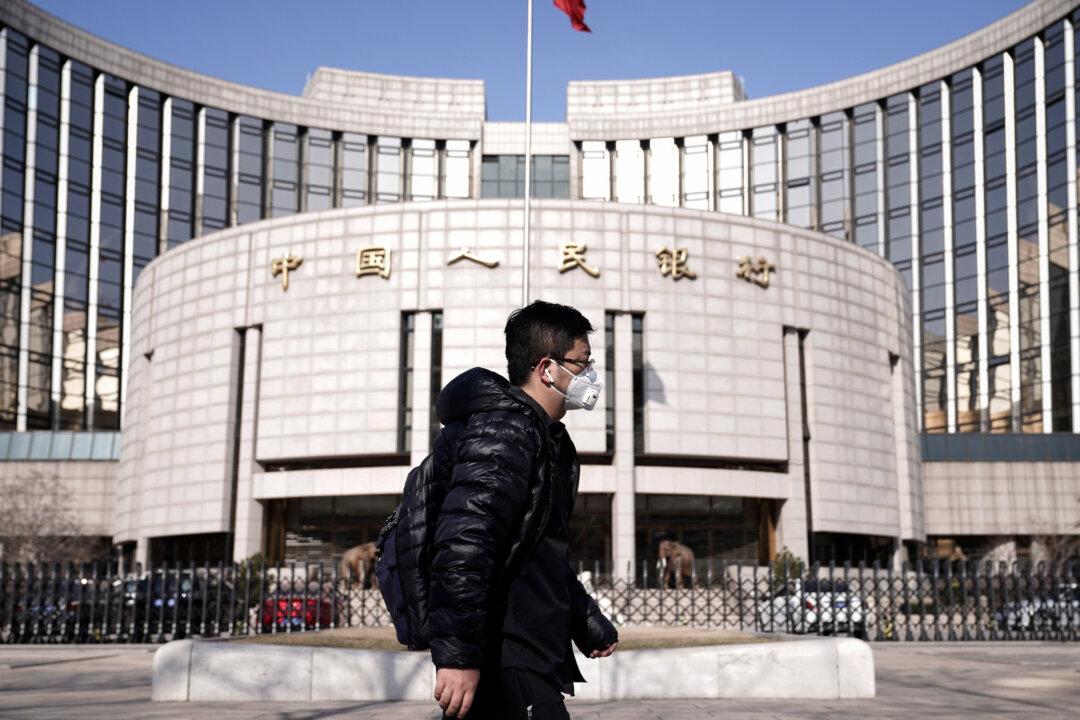
At the top of the list is China’s property crisis. It has held back the country’s economy since it began in 2021. Property developers surely deserve some of the blame for this economic disaster. They behaved in imprudent ways. But most of the blame lies with Beijing’s use of central planning. Those plans, for decades, encouraged aggressive property development by keeping interest rates low, providing subsidies, and fostering what became a partnership between local governments and developers.
Beijing’s direction all but demanded that developers extend themselves economically and financially so that residential construction became a major economic growth driver, rising at its peak to more than 25 percent of China’s economy, much higher than in any other country.

Then, after decades of pressing for aggressive expansion with no regard for prudence, the planners suddenly reversed course in 2020 by imposing the “three red lines” policy. In one fell swoop, authorities removed all the former support and encouragement for residential development. Having had neither warning nor time to adjust, the extended developers unsurprisingly failed.
The disaster began with the giant developer, Evergrande, and then expanded, turning this once growth-promoting sector into an economic drag and unleashing financial repercussions that have since severely limited the economy’s ability to finance other forms of growth-promoting investments. China’s economy, six years on, continues to suffer.
Faced with this ugly situation, China’s planners proceeded to do even more harm to the economy with the so-called Made in China 2025 plan. Partly, this effort reflected a new political ambition to leap ahead of the United States technologically. Partly, the planners saw it as a way to create a new growth engine for the economy to replace the loss of support from residential construction.
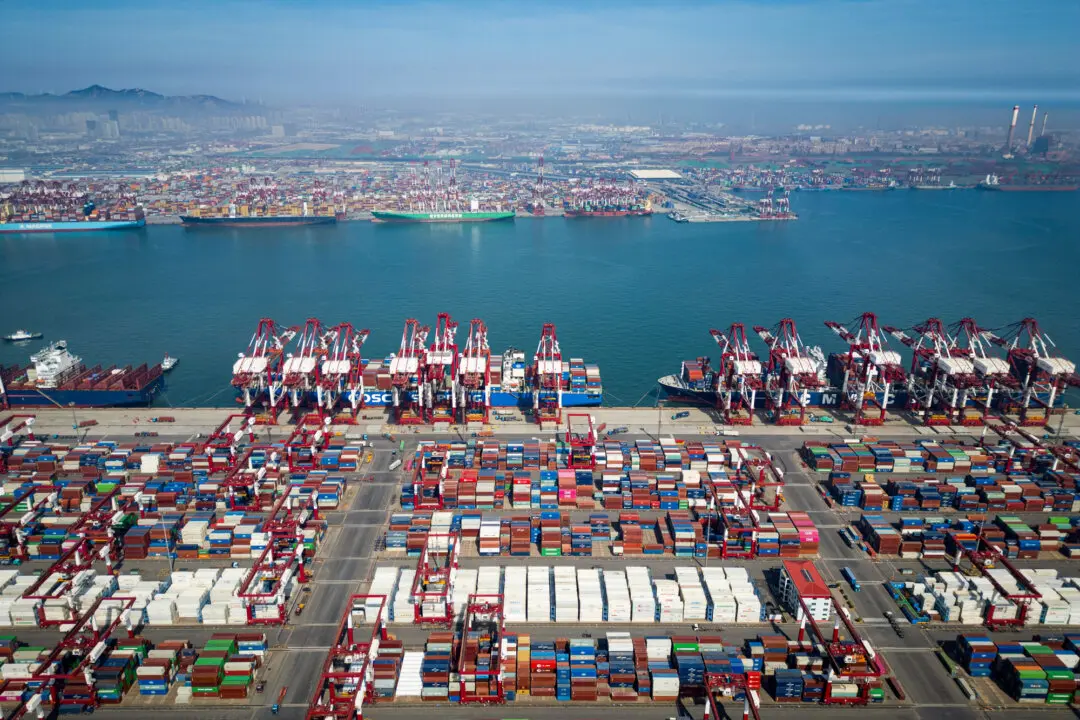
Under this plan’s guidance, Beijing used its state-owned banks to pour investment funds into a designated list of industries, among them electric vehicles, advanced semiconductors, quantum computing, artificial intelligence, and biomedical advances. The enormous flow of money has built production capacities in these favored industries far beyond the needs of China’s domestic economy, in part because the property crisis depressed real estate prices, household net worth, and consumer spending, and in part because the lagging Chinese consumer depressed the need for growth-supporting investments outside the areas favored by Beijing. With surplus capacity in the favored industries, China has suffered downward pressure on producer prices and the additional economic ills that accompany it.
These are only two of the pitfalls brought by China’s embrace of central planning. And they have done more than unbalance the economy and create great waste. Because one must borrow to build, all these misplaced projects have left a burdensome legacy of dodgy debt. China’s overall burden of non-financial debt—at all levels of government and in the private sector—has risen to some 300 percent of gross domestic product (GDP).
To be sure, comparable figures for the United States, at 719 percent, and for the EU, at 689 percent, are much higher, but that is to be expected for more thoroughly developed economies. A fairer comparison would be to India, where total debt amounts to about 83 percent of GDP.
These wasteful and burdensome mistakes may reflect poorly on the planners’ competence, but fundamentally, they highlight the weakness of the country’s centralized system of economic management. Central planning misses the economic fact that the root of economic prosperity lies in the dubious task of anticipating the future needs of consumers, businesses, national security, whatever.
Although some guesses are better informed than others, at base, all are guesses. No one, not even the cleverest planner, can see the future. Failure to anticipate correctly creates waste and a legacy of debt. Since central planning marshals huge amounts of economic resources—physical, labor, and financial—to support its guesses, the economic payoff can be huge when the guess is right, as it was in China when it was a much less developed country and future needs were obvious. When, as in China’s planned economy, a wrong move has marshaled huge resources, it creates great waste and mountains of dubious debt.
Of course, market-based economies make many bad guesses, too, and those failures also create waste and a legacy of troubling debt. But because each player in a market economy is a relatively small part of the whole, each mistake involves a smaller part of the nation’s economic resources, making both the waste and the debt legacy of mistakes easier to handle. Meanwhile, the greater diversity of effort in market systems—what can look chaotic—gives an economy a much greater chance than centralized, focused planning does that one or more of this multitude of guesses will meet a future need, promote growth, and create wealth.
China’s communist, planned, and centralized system at once reduces the economy’s potential for success, and when it makes mistakes, it does so on a grand and highly destructive scale. The country today faces economic and financial burdens from some huge planning errors, that is, poor guesses.
Although China’s centrally planned, command economy can dazzle when it is successful, its unavoidable tendency to make fewer guesses about the future renders it fundamentally disadvantaged compared to market-based systems. On this basis, it is hard to see how China can quickly recover from its past mistakes, much less command the future or leave others “in the dust.”