Just a few weeks ago, Beijing announced the country’s first-ever stand-alone five-year plan to increase consumer spending. China’s economy would benefit in several ways if the plan were to succeed, but that is doubtful. The plan itself understates the need, and the long-standing failure of such efforts hardly inspires confidence.
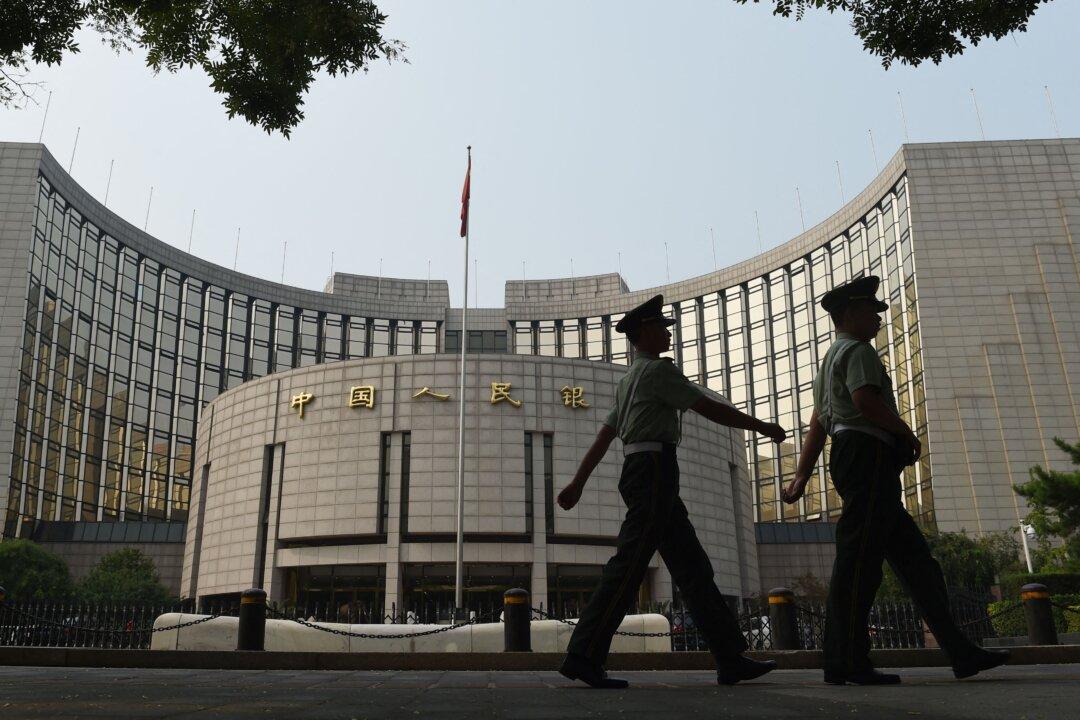
When announcing the new plan, the National Development and Reform Commission (NDRC) and the Commerce Ministry jointly characterized the revitalization of the household sector as necessary to secure a stable and prosperous future for China’s economy.
This latest effort identifies the greatest potential in consumer services, especially caring for the elderly and childcare, as well as tourism and sports. It also mentions auto sales and property development. This last is surprising, given that the country’s property crisis has entered its fifth year.
What is not surprising is that this plan, like so many others produced by the Chinese Communist Party (CCP) on a variety of topics, is long on rhetoric and targets but short on specific actions to achieve its goals.


Nor are its goals especially ambitious. The document calls for a 10 trillion yuan expansion in household spending over the five years to 2030, bringing it to 60 trillion yuan ($8.85 trillion). That is only a 3.66 percent annual rate of gain, slower than the 5 percent annual rate targeted for this sector by the Commerce Ministry in its previous five-year plan.
China fell short of that goal, but even if household spending rises to the new, modest goal, it will still fall short of the need to reorient the economy toward household spending. Other sectors will almost surely continue to outpace such a growth rate. Looking at the plan, Wang Peicheng, senior analyst for Orient Futures, declared that the targeted growth rate simply “will not suffice.”
Casting further doubt on the plans to revitalize the household sector is how Beijing, over many years, has aimed at this goal and failed. The sector has actually lost ground as a portion of the economy during this time.
The push began as far back as 2007, when then-Premier Wen Jiabao shocked the CCP by declaring the country’s economy “unbalanced” and that growth was “unsustainable” unless China could develop a vigorous consumer sector.
Ten years after Wen spoke, household spending constituted only 36 percent of the country’s gross domestic product. Since Wen called attention to the problem, other leaders have made similar efforts.
CCP leader Xi Jinping has stressed the same need several times. In 2023, he vowed to help raise consumer spending. He did so again at the Two Sessions Conferences in 2024 and in 2025, and again just this past spring.
Yet, for all this support, the household sector remains at less than 40 percent of the economy. China’s economy, in other words, has become increasingly dependent on investment—largely from state-owned enterprises—and exports.