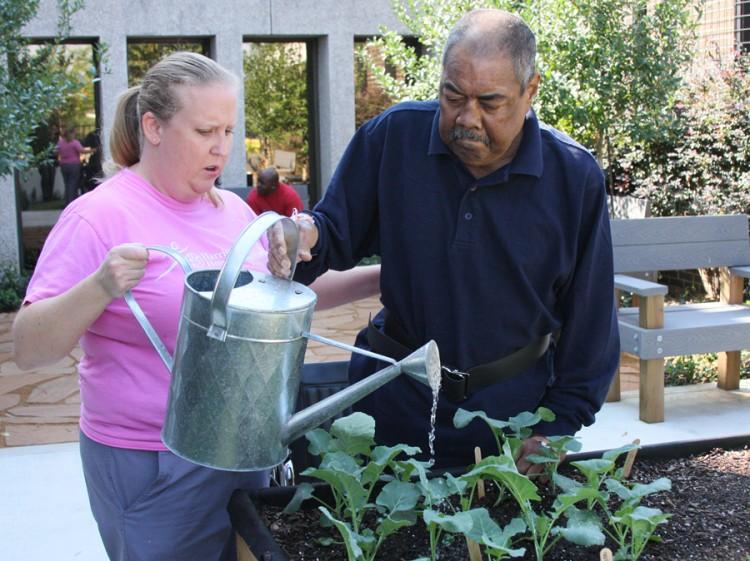
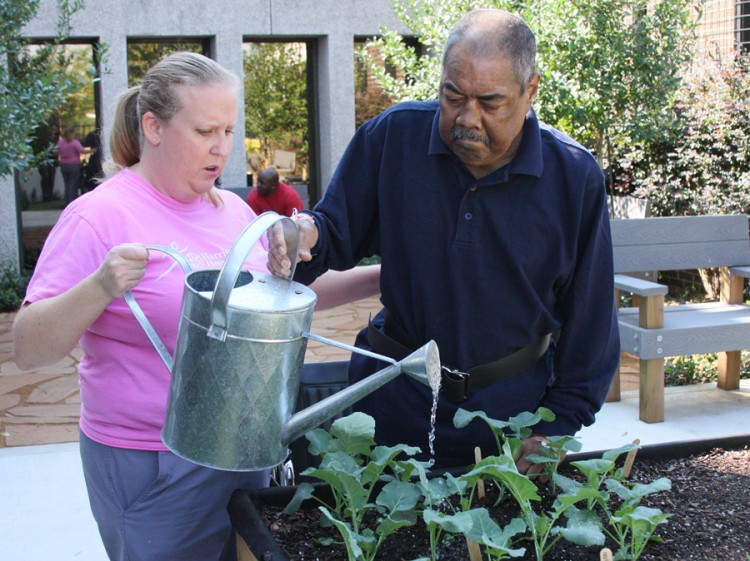
A once-barren spot at a Texas hospital is now a garden where people gain strength and hope.
“I had one gentleman stand for the first time” in the garden, said Amy Parker, recreational therapist and coordinator of the horticultural therapy program at Harris Health Quentin Mease Community Hospital in Houston.
The gentleman wanted to see a plant more closely, leaned forward in his wheelchair, and then pulled himself up and stood for the first time after having a stroke. Now he is using a walker, according to Parker.
The garden helps people emotionally as well as physically, Parker said. The garden is for people dealing with disabilities from strokes, heart attacks, amputations, and traumatic brain injuries, according to Harris Health.
Being in nature has a richness that indoor rehabilitation does not offer, according to Parker. “Everyone talks about how calming it is. We have folks who are highly agitated because they have a brain injury,” said Parker, adding that they are able to become calm in the garden.
The process of grasping a hose to water plants or digging with a trowel builds strength and dexterity, and adjusting the settings of a hose and observing and nurturing living things has “lots of cognitive benefits—improved memory and concentration,” said Parker. Watering is especially nice, because in the hot Texas weather, you hope to get a little side spray from the sprinkler, she added with a chuckle.
When she brings groups of people into the garden, they interact with each other as well.
Everything is adaptive, from ground-level plantings for the most able-bodied to shin-high raised beds and giant pots for those who can lean over. People using wheelchairs can pull up to the pots and touch a plant.