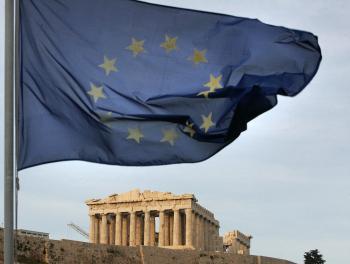
The European Commission announced on Thursday that Greece has met the requirements to be granted the second tranche of a $145 billion bailout scheme. Economic and Monetary Affairs Commissioner Olli Rehn praised Greece for its fast economic reforms but warned of possible problems during the rest of 2010.
The second tranche, totaling $11.5 billion will be provided by the other 15 eurozone members and the International Monetary Fund (IMF).
“Greece has managed impressive budgetary consolidation during the first half of 2010 and has achieved swift progress with major structural reforms,” said Rehn. “Despite the significant progress made, challenges and risks remain.”
After coming to terms with a huge debt of nearly $400 billion earlier this year, Greece asked its European counterparts for financial aid. The debt was blamed on decades of state mismanagement, topped by unchecked employment, and generous pay increases in the country’s gigantic bureaucracy. Mass protests and week-long strikes ensued throughout the country against the declared draconian cuts in public expenditures by the government.
According to the European commissioner, the Greek government now faces the difficulties of safeguarding adequate liquidity and financial stability of the banking sector. At the same time, its structural reform agenda needs to be pressed ahead to unleash the huge potential for promoting growth.
The second tranche, totaling $11.5 billion will be provided by the other 15 eurozone members and the International Monetary Fund (IMF).
“Greece has managed impressive budgetary consolidation during the first half of 2010 and has achieved swift progress with major structural reforms,” said Rehn. “Despite the significant progress made, challenges and risks remain.”
After coming to terms with a huge debt of nearly $400 billion earlier this year, Greece asked its European counterparts for financial aid. The debt was blamed on decades of state mismanagement, topped by unchecked employment, and generous pay increases in the country’s gigantic bureaucracy. Mass protests and week-long strikes ensued throughout the country against the declared draconian cuts in public expenditures by the government.
According to the European commissioner, the Greek government now faces the difficulties of safeguarding adequate liquidity and financial stability of the banking sector. At the same time, its structural reform agenda needs to be pressed ahead to unleash the huge potential for promoting growth.