Why are 120 high-ranking officials within China’s military currently under investigation? Factional struggles abound.

Psychological manipulation plays a key role in the arrests of China’s high-ranking officials targeted by corruption busters.

As the ongoing anti-corruption drive launched by China’s ruling communist administration clamps down on thousands of Party officials, even the family of general secretary Xi Jinping has to take heed of the changing political environment.

State-run China Military Online reported that 16 military officials, from five of the seven military regions, military schools, and the powerful Central Military Commission, have been under investigation since the beginning of 2014.

Former Chinese communist leaders Jiang Zemin and Zeng Qinghong were absent from a mourning list of dozens of high level leaders and retired officials invited to the funeral of a former party secretary of Shaanxi Province, hinting at the fading power of Jiang.

Chinese regime leader Xi Jinping has announced as an objective for 2015 no factions in the Chinese Communist Party—something at least one commentator views as impossible.

Recently, a Hong Kong magazine published an exposé on the crimes and sexual transgressions of the Chinese regime’s former security czar Zhou Yongkang.
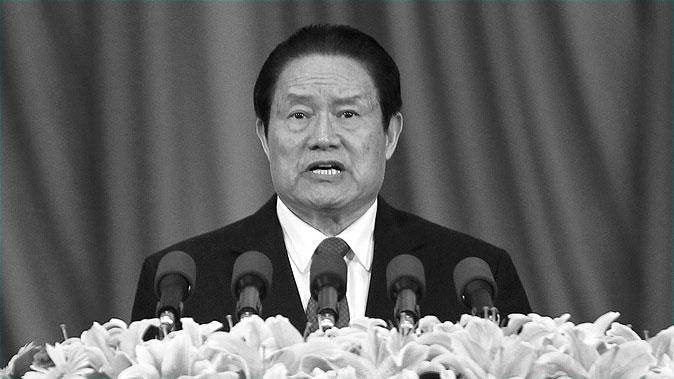
For the last two years, Chinese Communist Party leader Xi Jinping has been working relentlessly to dismantle the political network that had previously controlled China. That group’s power is now effectively broken—though observers are still waiting for the final nails in the coffin.

Following the sudden dismissal of Yang Yuliang, former president of the prestigious Fudan University in Shanghai, fifteen other senior staff from the institution have come under investigation.

China’s Ministry of Public Security has recently launched a special campaign called “Fox Hunting 2014” seeking to arrest economic criminals who fled China, including many corrupt officials.

A top Chinese general is likely facing a political purge in the next round of shakeups of the military.