Despite being one of the Chinese Communist Party’s most powerful men, Qiao Shi was something of a moderate, even liberal personality on the Chinese political scene.

Who is Zhou Yongkang and why is he such an important figure in the Chinese regime’s factional infighting?

The action began on Dec. 4 when Xi gave a speech on the occasion of the 30th anniversary of the adoption of China’s constitution in which he pledged to implement the rule of law in China.
An associate of the former chief of the Chinese communist regime’s security apparatus was taken into custody for interrogation recently, according to Chinese media reports.
Law professors in China call for the establishment of an independent judicial system.

The deputy chief of the Guangzhou public security bureau killed himself on the evening of Jan. 8.
In a recent speech Xi Jinping indicated that he may be seeking to take direct control of the security forces.
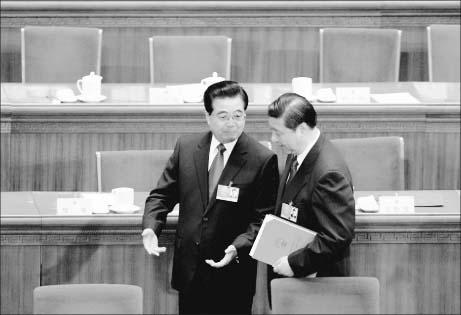
The new Chinese Communist Party head and former leader have been hard at work reshuffling key officials to curtail a rival faction.
Recent reports by Chinese media and in propaganda outlets belonging to the regime say that the Chinese Communist Party may overhaul its reeducation through forced labor system this year, though the reports offered little detail on the claims.
Disguised as an anti-corruption campaign to save the Party and the state, Xi Jinping, China’s new communist Party head, has inherited the unfinished business of controlling and purging rival forces.

People from around China have gathered in Beijing to petition former security chief Zhou Yongkang for a detailed breakdown of the state’s stability maintenance expenditure, which totaled 701.8 billion yuan (US$112.54 billion) in 2012.
Mao Zedong’s former secretary, Li Rui, says the Party’s committee that oversees law enforcement should be abolished.

Bo Xilai is likely to be expelled from the Communist Party, according to the Japanese newspaper Asahi Shimbun.

More than a dozen police officers from around China gathered in Beijing recently to protest Party corruption in the political and legal system, and in an open letter to the authorities they called for fair treatment of their complaints.
While the fate of Bo Xilai, the ousted Chongqing Party chief, is still being secretly deliberated by China’s top leaders, Party official Rao Wenwei remains in prison, having been sentenced to 12 years for writing articles critical of Bo.

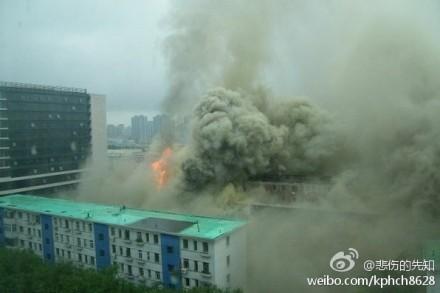
A section of the Beijing 301 Military Hospital, where top Chinese Communist Party leaders go for treatment, caught fire on on Aug. 1, according to photographs, videos, and accounts online.
Bizarre political events in China have an underlying explanation, say Washington D.C. forum participants—in an Epoch Times-sponsored event held at the U.S. Capitol.

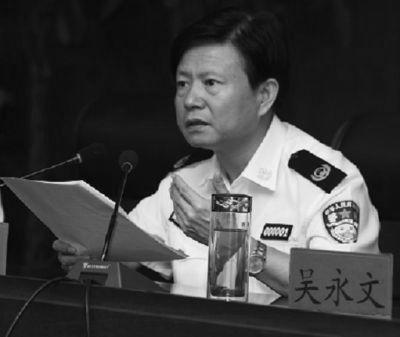
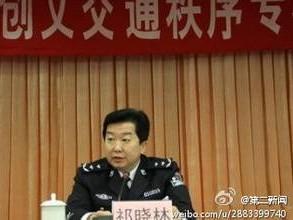
A recently organized mass training for police chiefs around the country appears to be part of an overall effort to take important security functions from the control of a Communist Party security committee.

Chinese media reports suggest revealing accounts of the changing political fortunes in China.

Police, in China’s Guangdong Province, arrest a prominent Chinese-American business owner, Hu Weisheng, from Los Angeles.