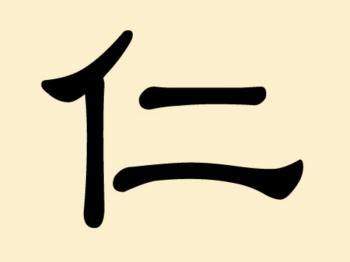
The Chinese character ’ren', consists of two components, and represents man’s correct ethical conduct in the world.
The Chinese character for medicine, Yi, shows how the language has evolved with changing cultural practices over history.

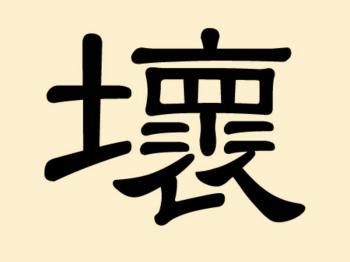
The Chinese character 壞 (huài) means bad, evil or nasty, and is the opposite of good. It derives its origin from the symbol 敗 (bài) meaning rot or loss, in combination with the symbol 土 (tŭ) meaning soil.
The Chinese ideogram for family, household, or home 家 “Jia” consists of the signs for house, 宀, on top, and pig 豕, below. The reason “a pig in the house” came to signify home, household or family in China is explained by history.

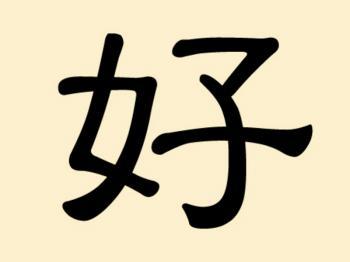
If something is good, the Chinese describe it as 好 (hăo). For example, in China people greet each other with 你好嗎 (nĭhăo ma?) “Are you doing well?”