A reporter from the Hong Kong newspaper Apple Daily recently went undercover as a university student to attend a mainland China tour organized by Hong Kong youth groups. In his article for Apple Daily, the reporter recounted what he called a “brainwashing tour,” revealing an itinerary filled with activities meant to encourage fervent nationalism and promote the Chinese’s regime propaganda.
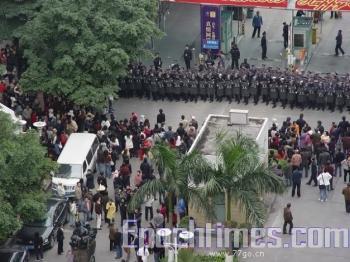
The day after the high-profile trial of Gu Kailai, the wife of disgraced Party official Bo Xilai, a Hong Kong reporter was beaten by plainclothes police while attempting to report on arrests outside the court. Uniformed police looked the other way.

In China, reports of a newspaper being shut down and censored changed to “rumors” days later.

Yu Yang and Wang Xiaoli, the Chinese badminton players who tried to lose a preliminary match at the Olympics on July 31, faced harsh criticism from their team and Chinese media after they were disqualified by the International Olympics Committee.

Journalists express concern that the Post has been increasingly culling important China-related news and replacing Western journalists with Beijing colleagues.
Jiao Guobiao told NTD Television that communist state-run organizations are often required to subscribe to the Party’s media.
The HBO drama series ‘The Newsroom’ appears to have stirred up criticism and resentment against the Chinese communist regime’s tight control over China’s media.
A Taiwanese engineer who took a quick three-day trip across the strait to southern China now faces the possibility of an extended prison term and torture. His alleged crime: wanting to break through the rigid censorship that controls China’s TV broadcasts.

While China’s Premier demands more “truth telling,” the Central Propaganda Department tightens its grip on media.

Chinese companies are informally required to buy advertising space in the four state-run financial newspapers, or risk being attacked.
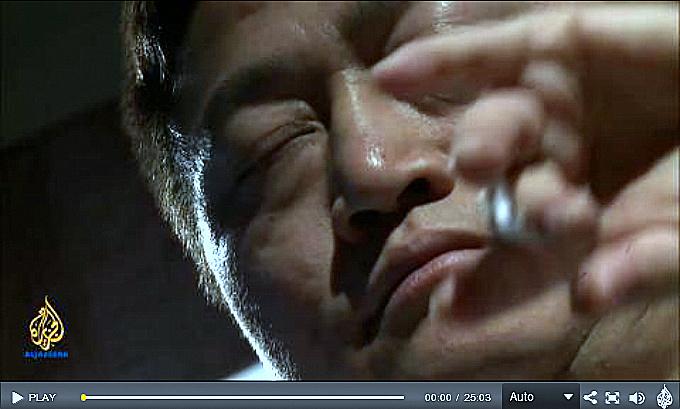
Why, after years of friendship, Al Jazeera became the Chinese regime’s enemy.
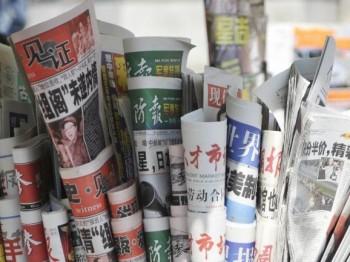
The state-controlled Chinese media is known for selective coverage of news to suit the interests of the Chinese Communist Party.
Often docile, newspapers in China have become the center of controversy over hard-hitting investigations challenging the Chinese regime.
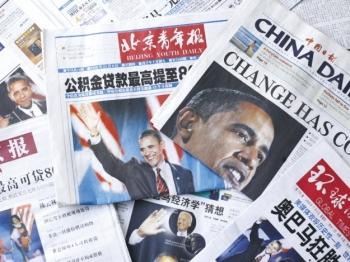
CCTV (China’s mouthpiece) releases a survey which has scholars and netizens alike saying it’s public manipulation.
A soldier has told The Epoch Times that Tibetan independence activists in the quake area could be shot.
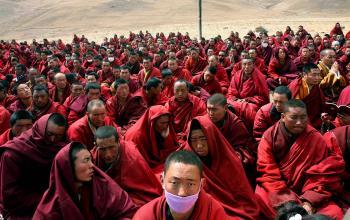
Speculations are running rampant that the “miracle” rescue of 115 trapped miners was staged.
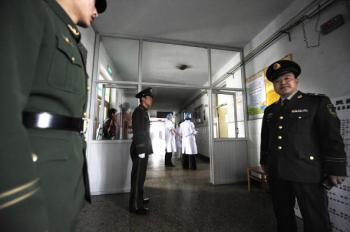
Soon after the closure of its eastern U.S. edition, Ming Pao is now folding its western U.S. operations.
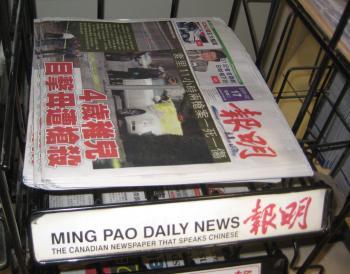
On January 5, the Chinese Communist Party’s (CCP) Xinhua.net unexpectedly published an article entitled “2009 Will Be a Prime Year For Public Protests and They Shall Be Dealt With Properly.”