NASA has discovered an Earth-like exoplanet in a habitable zone known to harbor carbon-bearing molecules—meaning the planet may support life.

The newly discovered fossil is 3.77 billion years old.

Three planets, that have just the right temperatures to possibly support life as we know it, have been discovered. The trio orbit a star 40 light years away and are much cooler and dimmer than our sun, researchers say.

Scientists are watching the birth of a planet orbiting a star 450 light years away and say what they learn could answer some of the biggest questions concerning how planets form around other stars.

An atmospheric haze around a distant planet—like the one which probably shrouded and cooled the young Earth—could show that the world is potentially habitable, or even be a sign of life itself.

During the past two decades, astronomers have discovered 300 “hot Jupiters,” but for the first time they’ve found one that has two close-in planetary companions.

For the past few days, the media has been abuzz with one of the most peculiar astronomical observations for many years.

Astronomers have discovered a planet that could be Earth’s older and bigger cousin.

Scientists have identified a “close cousin” to Earth that’s orbiting a sun-like star and might harbor life.

At “just” 335 light years away, HD 100546 is one of our near cosmic neighbors, and its age of five to ten million years makes it relatively young in astronomical terms.

To help find life beyond our solar system, scientists have created a colorful catalog containing reflection signatures of Earth life forms that might be found on the surfaces of far-flung planets.
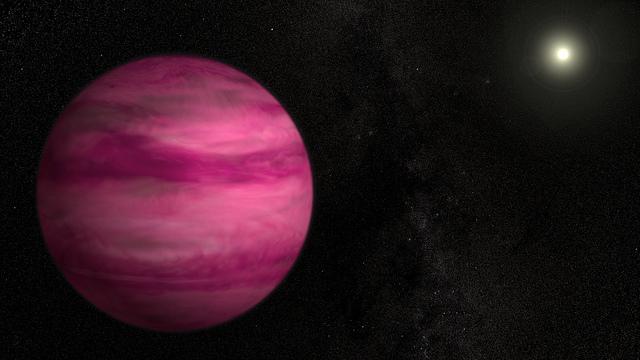
Two new exoplanets discovered via NASA’s Kepler Space Telescope are more like our own planet than any far-off celestial body ever examined.
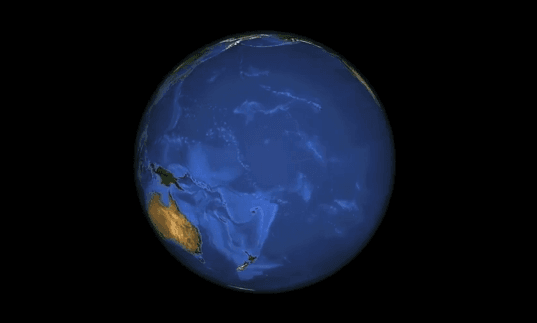
Exoplanets are prime targets in the search for extraterrestrial life, but intense heat during early years may have left some uninhabitable, say astronomers.
U.S. researchers have narrowed down their search for radio signals from intelligent life among the stars.

The Atacama Large Millimeter/submillimeter Array (ALMA) telescope has revealed huge streams of gas crossing a gap in the disc of matter orbiting a young star—a hypothesized stage in the formation of giant planets like Jupiter and Saturn.

Tau Ceti, one of our closest sun-like stars, has a planetary system, including a world in the habitable zone.