‘Embryos to me are babies,’ Ms. Haley told NBC News on Feb. 21, noting that she had her son, Nalin Haley, through artificial insemination.

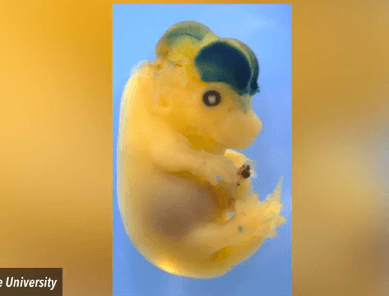
Scientists at Duke University have successfully isolated a gene sequence integral to human brain development and implanted it in a mouse embryo, causing its brain to grow bigger in the areas controlling higher level functions.
Bioengineers at the University of California, San Diego have discovered that mouse embryos are contemplating their cellular fates in the earliest stages after fertilization when the embryo has only two to four cells, a discovery that could upend the scientific consensus about when embryonic cells begin differentiating into cell types.